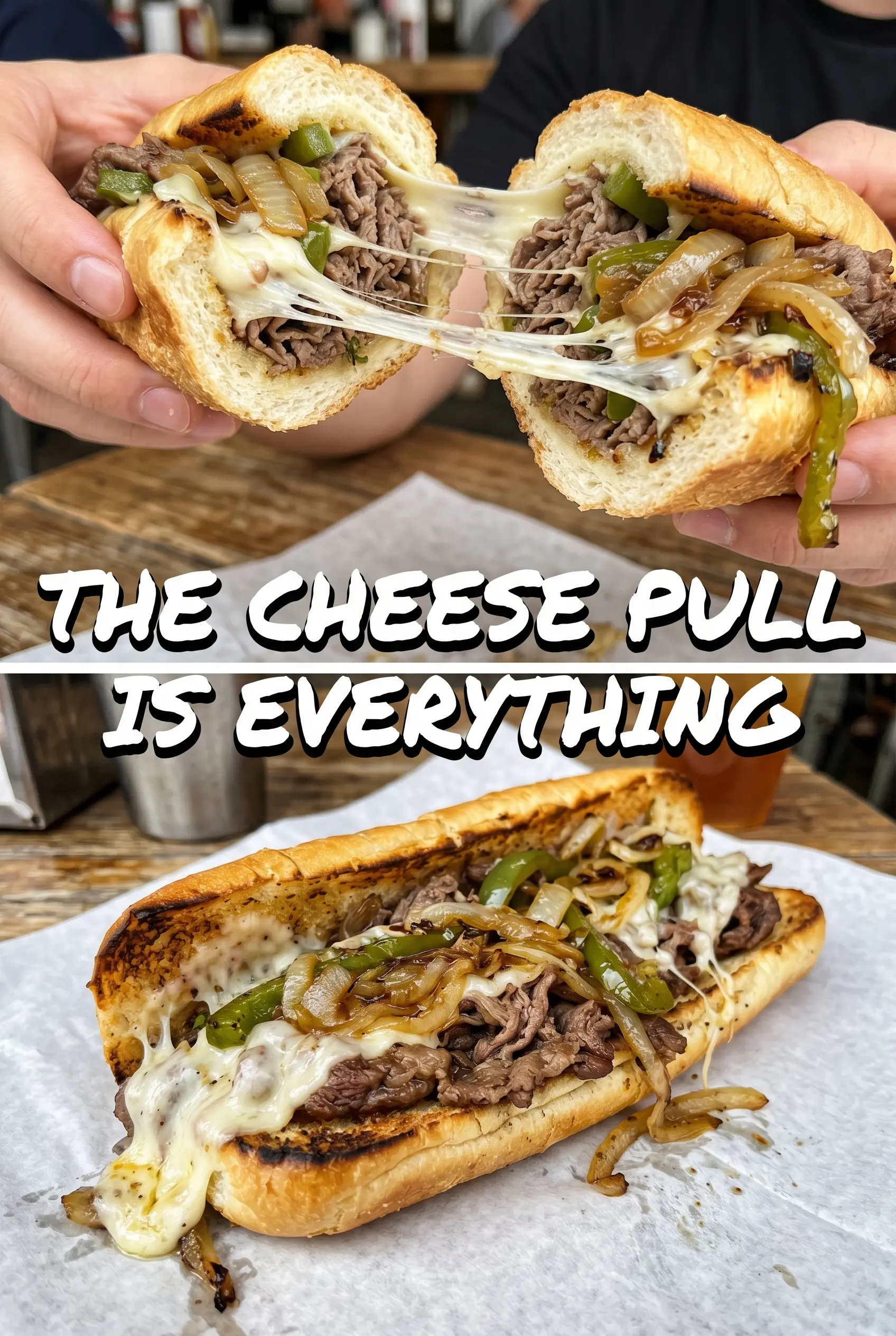
Thin-sliced ribeye, caramelized onions, and melted cheese on a toasted hoagie roll is the kind of sandwich that disappears fast and leaves a mess worth licking off the paper. The Blackstone gives you the best parts of a diner flat-top at home: fast heat, plenty of surface area, and enough room to cook the vegetables and steak side by side without steaming anything into submission.
What makes this version work is the order. The onions and peppers go first so they can soften and pick up color while the griddle is hot, then the steak hits the surface long enough to brown but not long enough to dry out. Cutting the meat thin matters more than almost anything else here, because ribeye only stays tender when it cooks quickly.
Below, I’ve included the small details that keep the sandwich from turning soggy, plus a few smart swaps if you want to use Cheese Whiz, skip the peppers, or make the whole thing a little easier on prep day.
The steak stayed juicy, the onions got sweet without burning, and the cheese melted right into everything instead of sliding off the roll. I used provolone and the sandwich held together perfectly.
Save this Blackstone Philly cheesesteak for the nights when you want thin ribeye, caramelized onions, and a real toasted roll.
The Part Most Cheesesteaks Get Wrong on a Flat-Top
The mistake is usually crowding. If the onions, peppers, and steak all pile up in one hot mess from the start, the vegetables steam and the meat loses its chance to brown. A Blackstone gives you room to control that, which is why this sandwich tastes more like a real shop version than a rushed skillet copy.
Ribeye is the right cut here because the fat keeps it tender even when it’s shaved thin. If you buy pre-sliced steak, check the thickness before you start cooking; thick slices need longer on the griddle, and that extra time is where toughness creeps in. The goal is browned edges and a just-cooked center, not a long sear.
- Ribeye steak — This is the backbone of the sandwich. It has enough marbling to stay juicy on high heat, and that fat is what gives you the rich bite people expect from a proper cheesesteak. If you slice it at home, chill it first so you can get it thin and even.
- Onions and green bell peppers — The onions bring sweetness; the peppers add the classic sharp, slightly grassy note. White onions work too if that’s what you have, but don’t skip the long cook on the onions if you want real caramelization instead of just softened slices.
- Provolone or Cheese Whiz — Provolone melts into a clean, stretchy layer, while Cheese Whiz gives you the classic diner-style finish and a saltier, sauce-like texture. Use provolone if you want a neater sandwich and Whiz if you want that unmistakable cheesesteak richness.
- Hoagie rolls — A soft but sturdy roll matters. If the bread is too airy, the filling tears through it; if it’s too crusty, it fights the bite. Toasting the inside with butter gives the sandwich structure and keeps the meat juices from soaking straight through.
Building the Steak, Vegetables, and Cheese Without Losing the Sear
Getting the Vegetables Sweet and Brown
Start with the onions and peppers on a hot griddle with oil and let them cook until they’ve softened and picked up deep golden edges. Stir them enough to keep them moving, but not so much that they never touch the surface long enough to brown. If the heat is too low, they’ll sweat and go limp; if it’s too high, the onions will scorch before they turn sweet.
Cooking the Steak Fast Enough to Stay Tender
Push the vegetables to the side and lay the ribeye on the hottest open section of the griddle. Season it right on the surface, then chop and turn it with spatulas so it cooks in small, even pieces. The steak should lose its raw sheen in a few minutes and pick up browned bits, but if it sits there too long it turns dry and chewy.
Melting the Cheese Into the Meat
Divide the steak into four piles and top each one with cheese while it’s still hot. Covering the mound briefly helps the cheese melt faster, but don’t leave it covered so long that the meat keeps cooking and tightens up. With provolone, you want a glossy melt; with Cheese Whiz, you want it warmed through and spoonable, not bubbling hard.
Toasting the Rolls and Bringing It All Together
Butter the rolls and toast them cut-side down until they’re golden and lightly crisp. That thin crust is what keeps the sandwich from collapsing under the filling. Scoop the cheesy steak and vegetables into the rolls right away and serve immediately, because once the bread sits, the steam from the meat starts softening everything underneath it.
How to Adapt This Blackstone Cheesesteak Without Losing What Makes It Good
Classic provolone version
Use all provolone if you want a cleaner, less salty sandwich with a softer melt. It won’t give you the thick saucy pull of Cheese Whiz, but it lets the beef and onions stay in front. This is the version I reach for when I want the filling to taste balanced instead of heavy.
Cheese Whiz for the most traditional feel
Swap the provolone for warmed Cheese Whiz if you want the classic steak-shop style. It coats the meat instead of layering over it, which makes every bite taste more unified. The tradeoff is a softer, richer sandwich that leans saltier, so the seasoning on the steak should stay simple.
No pepper version
Leave out the green peppers and double the onions if you want a more classic meat-and-onion profile. You’ll lose a little color and sharpness, but the sandwich tastes closer to what many old-school shops serve. This also keeps the filling a little less watery.
Gluten-free version
Serve the filling in gluten-free rolls or over roasted potatoes if you need to skip the bread entirely. The meat, onions, peppers, and cheese don’t need any changes. What matters most is using a sturdy gluten-free roll, because a soft one will fall apart under the hot filling.
Storage and Reheating
- Refrigerator: Store the steak, vegetables, and rolls separately for up to 3 days. The filling keeps well, but the bread turns soft fast once it’s assembled.
- Freezer: The cooked filling freezes well for up to 2 months. Freeze it flat in a sealed bag, then thaw in the fridge before reheating so it warms evenly.
- Reheating: Reheat the filling on a skillet or griddle over medium heat until hot. Don’t microwave it if you can help it; that makes the steak rubbery and the onions watery. Toast fresh rolls right before serving.