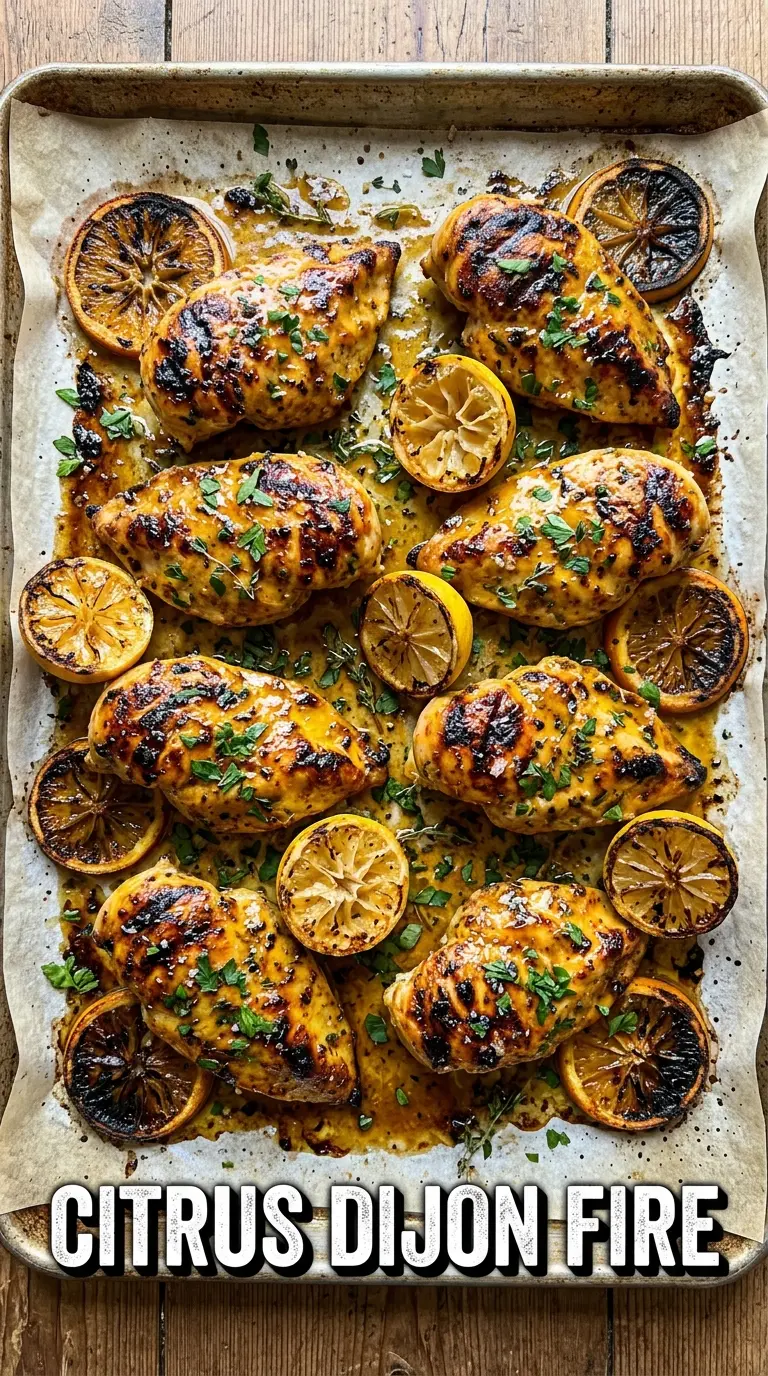
Citrus-Dijon grilled chicken lands with that rare combination of bright, savory, and deeply juicy, the kind of dinner that tastes like you spent a lot more time on it than you did. The marinade does the heavy lifting here: mustard gives it backbone, citrus keeps it lively, and a little honey smooths out the edges so the finished chicken tastes balanced instead of sharp.
The key is restraint with the acid and patience with the marinating time. Orange juice and lemon juice need enough time to season the chicken, but not so much that the texture turns mushy, especially if you’re using boneless pieces. Grilling over medium-high heat gives you those browned edges and keeps the sugars in the marinade from burning before the chicken is cooked through.
Below, I’ve laid out the small details that matter most: which chicken cuts handle this marinade best, how to keep the garlic from scorching, and what to change if you want to cook this indoors instead of firing up the grill.
The chicken came off the grill with a gorgeous browned crust and stayed juicy all the way through. The orange and Dijon mellowed into something tangy and balanced, and the marinade clung to every bite instead of running off.
Save this citrus Dijon grilled chicken marinade for juicy, tangy chicken with golden grill marks and almost no cleanup.
The Trick to Keeping Dijon Marinades Bright Instead of Bitter
Dijon and citrus are a great pair, but they can turn aggressive if you rush the balance. The mustard brings sharpness and emulsifies the marinade so it coats the chicken evenly, while the orange juice softens the lemon’s edge and keeps the whole thing from tasting thin. Honey matters here, too, because it rounds out the acid and helps the surface brown instead of drying out on the grill.
The mistake most people make is treating marinating time like a free-for-all. With this kind of marinade, 2 to 8 hours is the sweet spot. Much less than that and the flavor stays on the surface; much more and the citrus starts working the texture too hard, especially on lean cuts like chicken breast.
What Each Ingredient Is Actually Doing in This Marinade
- Dijon mustard — This is the backbone of the marinade. It brings sharpness, helps the oil and citrus stay blended, and leaves the chicken with a savory tang that plain yellow mustard can’t match.
- Orange juice — Orange juice softens the lemon and adds sweetness without turning the marinade sugary. Fresh-squeezed is best, but a decent bottled juice works fine if it’s 100% juice and not from concentrate-heavy cocktail mix.
- Lemon juice — Lemon gives the marinade its lift. It’s stronger than orange juice, so it keeps the flavor from going flat, but it shouldn’t dominate or the chicken will taste harsh after grilling.
- Olive oil — The oil carries the flavor and helps the chicken brown instead of sticking. You don’t need an expensive bottle here, but use one that tastes clean and fresh since it makes up a big part of the marinade.
- Honey — Honey smooths the acidity and helps the surface caramelize. If you leave it out, the marinade still works, but the chicken tastes a little sharper and won’t pick up quite as much color.
- Chicken cut — Thighs are the most forgiving because they stay juicy over the grill. Breasts work too, but they need careful timing and a little less heat if they’re thick; cutlets or tenders cook fast and are the easiest to dry out if you walk away.
Building Grill Marks Without Burning the Marinade
Whisk the marinade until it looks unified
Start by whisking the oil, mustard, citrus, garlic, honey, thyme, salt, and pepper until the mixture looks glossy and slightly thickened. You’re not looking for a sauce that stays perfectly still; you’re looking for one that clings to the chicken instead of separating in the bowl. If the mustard is clumped at the bottom, keep whisking. That’s the first sign the marinade won’t coat evenly.
Let the chicken soak, but don’t overdo it
Set the chicken in a zip-top bag or shallow dish and coat it well with the marinade. Turn it once or twice during the marinating time so the flavor reaches all sides, then stop there and let it do its work in the refrigerator. The failure point here is over-marinating thin pieces until they get mealy or dull. Thicker cuts can handle the full 8 hours; delicate pieces don’t need that long.
Grill over medium-high heat for color first, then doneness
Preheat the grill before the chicken goes on. You want a hot grates-and-sizzle situation so the surface starts browning right away, but not such intense heat that the honey and garlic scorch before the center is cooked. If the chicken sticks when you first try to move it, give it another minute. Proper searing releases cleanly once the crust sets.
Rest before slicing
Take the chicken off when it reaches 165°F in the thickest part and let it sit for 5 minutes. That short rest keeps the juices inside the meat instead of running across the cutting board. Slice too soon and you’ll lose the best part of what the marinade and grill just worked for.
How to Adjust This Marinade for Different Cuts and Cooking Setups
For chicken thighs, lean into the full marinating time
Thighs handle the citrus better than breast meat, so they’re the best choice if you want the deepest flavor and the juiciest result. They can sit in the marinade closer to 8 hours without drying out, and they stay tender even if the grill heat runs a little high.
For chicken breasts, shorten the marinating window
Breasts still work well, but keep the marinating time closer to 2 to 4 hours so the citrus doesn’t soften the texture too much. Pull them off the grill as soon as they hit 165°F, then rest them before slicing to keep every drop of juice in the meat.
For a dairy-free, gluten-free dinner, keep the recipe as written
This marinade already fits both needs without any special swaps. Just check that your Dijon mustard is labeled gluten-free if that matters for your kitchen, since some brands use additives that vary by manufacturer.
For oven cooking, broil at the end for color
If you don’t have a grill, bake the chicken until nearly done, then finish under the broiler for a minute or two to pick up that browned edge. Watch it closely because the honey in the marinade can go from golden to burnt fast under direct heat.
Storage and Reheating
- Refrigerator: Store cooked chicken for up to 4 days. It stays moist, though the grilled exterior softens a little after chilling.
- Freezer: The cooked chicken freezes well for up to 2 months. Wrap it tightly and freeze in portions so it thaws evenly.
- Reheating: Reheat gently in a covered skillet with a splash of water or broth over low heat, or warm it in the oven at 300°F. High heat dries out lean chicken fast, especially if it was already grilled.
Questions I Get Asked About This Recipe

Citrus Dijon Grilled Chicken Marinade
Ingredients
Equipment
Method
- Whisk olive oil, Dijon mustard, orange juice, lemon juice, garlic, honey, thyme, salt, and pepper in a bowl until smooth and evenly combined.
- Place chicken in a large zip-top bag and pour the marinade over it so the surface is coated.
- Marinate in the refrigerator for 2-8 hours so the chicken absorbs the citrus-Dijon flavor.
- Preheat the grill to medium-high heat (about 375°F to 450°F) and clean the grates if needed.
- Grill the chicken until the internal temperature reaches 165°F, timing varies by cut and thickness, aiming for golden grill marks.
- Transfer the chicken to a plate and let rest for 5 minutes before serving for juicier results.