Golden grilled chicken skewers carry a lot of weight on a dinner table, and this version earns it with bright lemon, a punch of garlic, and just enough oregano to keep the flavor clean instead of muddy. The edges pick up a little char, the centers stay juicy, and every bite tastes fresh enough to cut through a heavy side dish without losing the comfort of grilled chicken.
The trick here is in the marinade balance. Lemon juice brings the zip, but too much acid for too long can turn chicken breast chalky, so the rest of the flavor comes from zest, olive oil, and garlic working together. Cutting the chicken into even chunks matters too; uneven pieces finish at different times, and that’s how you end up with dry skewers and undercooked pieces on the same stick.
Below, I’ve included the little details that make these skewers cook evenly on a hot grill, plus a few smart swaps if you need to work around what’s in your kitchen.
The lemon-garlic marinade gave the chicken such a clean, bright flavor, and the pieces came off the grill juicy with just the right char. I left it in for 2 hours and it was perfect.
Save these grilled lemon garlic chicken skewers for a fast dinner with bright marinade and perfect grill marks.
The Reason These Chicken Skewers Stay Juicy Instead of Drying Out
Chicken breast is lean, which is exactly why grilled skewers can go wrong fast. The fix is not a longer marinade or a hotter fire. It’s even cutting, enough oil in the marinade, and a grill that is hot enough to sear without blasting the outside before the center catches up.
Another common problem is crowding the skewers too tightly. When the pieces are packed together, they steam against each other and lose the edges that make grilled chicken taste grilled. Leave a little space between chunks so the heat can move around them. That small gap gives you better browning and helps the chicken cook through more evenly.
- Even chicken pieces — Cut the chicken into similar-sized chunks so every piece reaches 165°F at the same time.
- Olive oil — This carries the garlic and lemon flavor across the chicken and helps protect the surface from drying out on the grill.
- Lemon zest — Zest gives the marinade a stronger citrus aroma than juice alone, and it doesn’t toughen the meat the way too much acid can.
- Oregano and paprika — These add warmth and color without competing with the lemon-garlic base.
What Each Ingredient Is Actually Doing in the Marinade

- Chicken breasts — Breast meat stays light and clean with this marinade, but it needs careful timing. If you want a little more forgiveness on the grill, boneless thighs work too and stay juicier with a slightly richer bite.
- Lemon juice and zest — Juice brings acidity, but zest brings the aroma that makes the chicken smell grilled and fresh instead of sharp. If you skip the zest, the marinade tastes flatter even if the chicken is seasoned well.
- Garlic — Fresh minced garlic gives the skewers their bite. Jarred garlic can work in a pinch, but the flavor is softer and less bright.
- Olive oil — Don’t swap this for a light oil unless you have to. Olive oil gives the marinade body and helps the seasoning cling to the chicken chunks.
- Dried oregano and paprika — Oregano leans Mediterranean, while paprika rounds out the marinade and adds color as the chicken chars.
- Wooden skewers — Soak them long enough that they don’t scorch at the edges. If they’re dry, they can darken fast before the chicken is done.
Getting the Heat and Timing Right on the Grill
Building the Marinade
Whisk the oil, lemon juice, zest, garlic, oregano, paprika, salt, and pepper until the mixture looks loose and evenly flecked with herbs. The oil and lemon won’t fully combine for long, and that’s fine; just keep the garlic and spices suspended so they coat the chicken. If the marinade tastes harsh at this stage, don’t panic. It always softens after it hits the chicken.
Letting the Chicken Marinate
Add the chicken and turn it until every surface is coated, then refrigerate it for 1 to 4 hours. Less than an hour and the flavor stays mostly on the outside; much longer than 4 hours and the lemon starts to work against the texture of the meat. If the pieces look pale and slightly firm after marinating, that’s normal. They’ll pick up color and flavor on the grill.
Grilling to a Clean Char
Preheat the grill to medium-high and let it get genuinely hot before the chicken goes on. If the grates are only warm, the skewers can stick and pale instead of searing. Grill for about 5 to 6 minutes per side, turning once, until the chicken is charred in spots and the thickest pieces reach 165°F. Pull them off as soon as they’re done; chicken breast dries out quickly once it crosses that line.
Resting Before Serving
Let the skewers rest for a few minutes before you serve them. That short pause keeps the juices in the meat instead of spilling onto the plate the moment you bite in. Finish with parsley and lemon wedges for a fresh hit of color and brightness right at the table.
How to Adapt These Skewers for Different Grills and Diet Needs
Use chicken thighs for a juicier, more forgiving skewer
Boneless thighs stay tender longer on the grill and handle a little extra heat better than breasts. They’ll taste a bit richer, and the texture comes out softer, which is a good trade if you’re nervous about overcooking.
Make it dairy-free and gluten-free without changing anything
This recipe is naturally both dairy-free and gluten-free as written, which makes it an easy crowd-pleaser when you need a simple main dish with minimal label checking. Keep an eye on any side dishes or sauces you serve with it.
Add vegetables to stretch the skewers
Bell peppers, red onion, or zucchini can go between the chicken pieces, but cut them into chunks that cook in the same window as the meat. If the vegetables are too small, they’ll soften before the chicken is finished.
Storage and Reheating
- Refrigerator: Store cooked skewers for up to 4 days. The chicken stays flavorful, though the outside won’t have quite the same fresh-off-the-grill snap.
- Freezer: Freeze cooked chicken off the skewers in an airtight container for up to 2 months. The texture softens a little after thawing, but it still works well for bowls, salads, or wraps.
- Reheating: Warm gently in a skillet over medium-low heat or in a 300°F oven until just heated through. High heat is the fastest way to turn grilled chicken breast dry.
Answers to the Questions Worth Asking
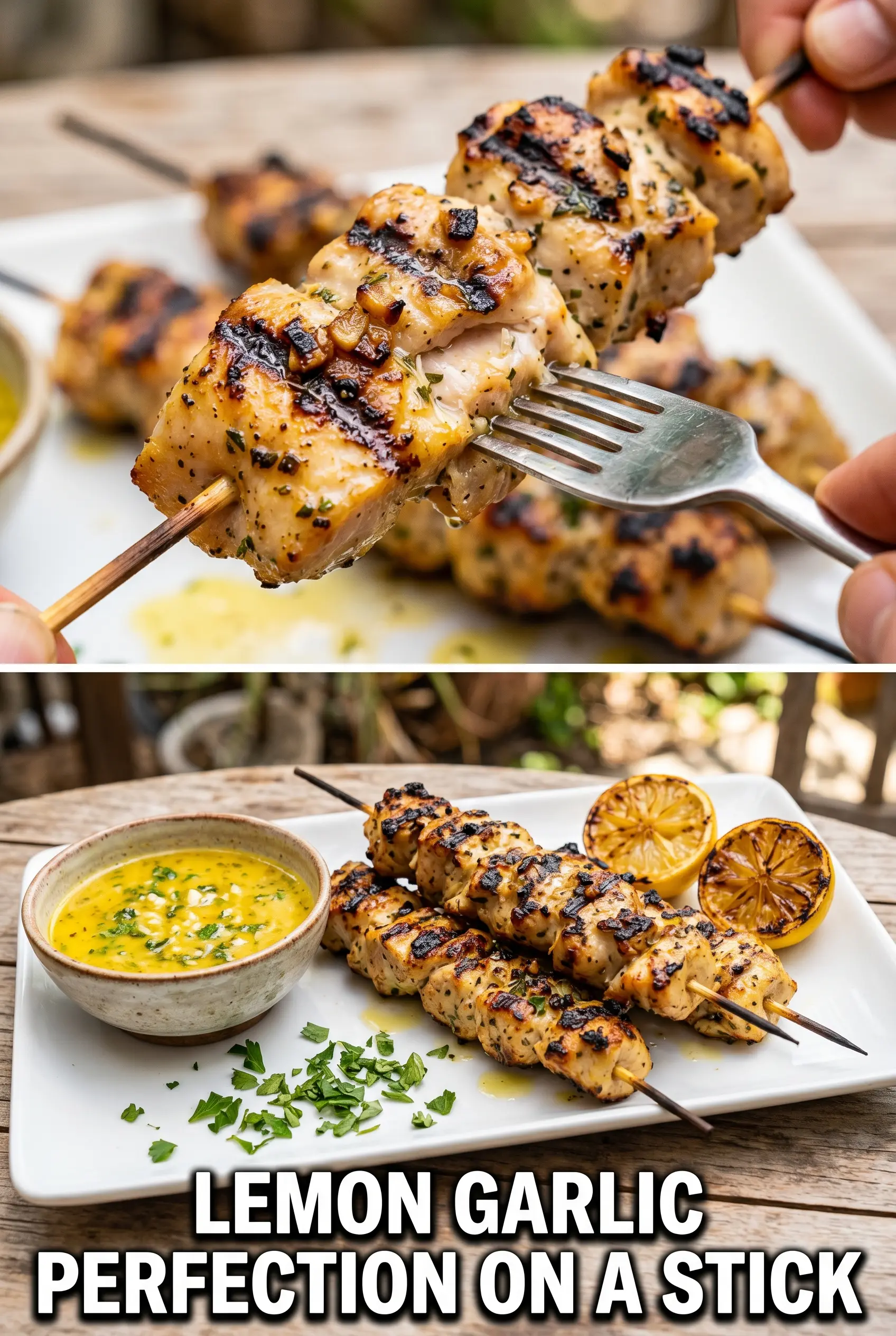
Grilled Lemon Garlic Chicken Skewers
Ingredients
Equipment
Method
- Combine olive oil, lemon juice, lemon zest, minced garlic, dried oregano, paprika, salt, and black pepper in a bowl until evenly mixed.
- Add the chicken chunks to the marinade and toss to coat each piece.
- Refrigerate the chicken in the marinade for 1-4 hours, covered, until the chicken looks well-seasoned and glossy.
- Thread the marinated chicken onto soaked wooden skewers, leaving a little space between pieces.
- Preheat the grill to medium-high heat and lightly oil the grates so the skewers release easily.
- Grill the skewers for 5-6 minutes per side, turning once, until the chicken reaches 165°F and develops nice char marks.
- Remove skewers from the grill and garnish with fresh parsley.
- Serve hot with lemon wedges for bright finishing flavor.