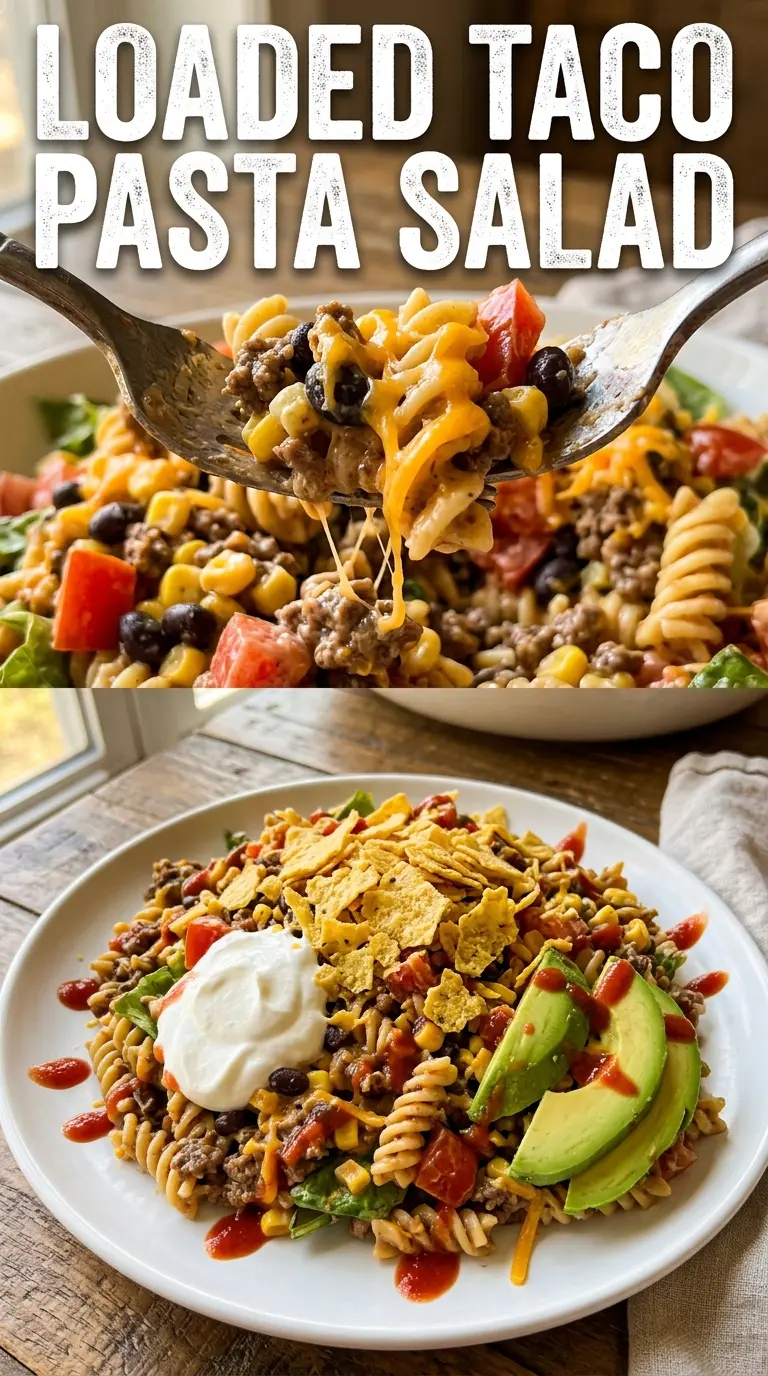
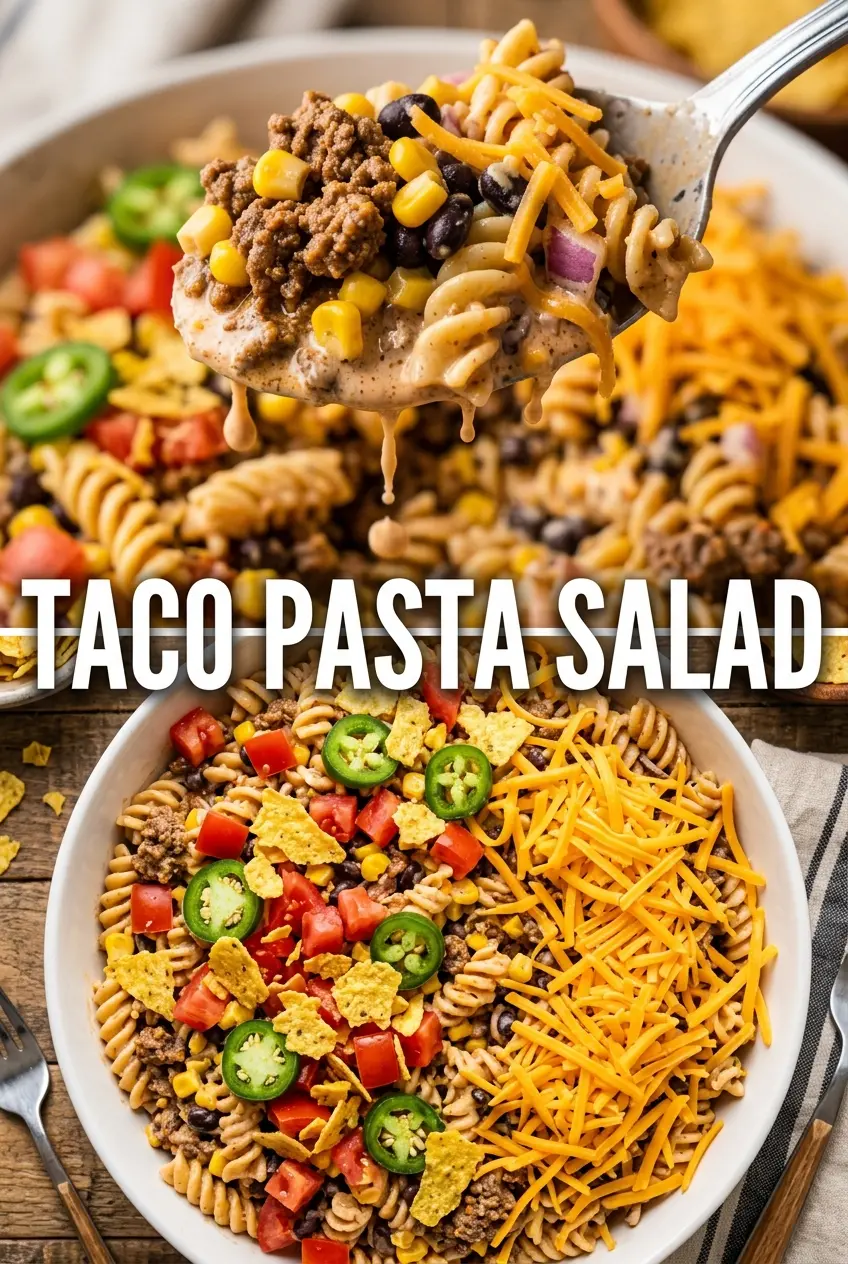
Mexican taco pasta salad hits the sweet spot between potluck crowd-pleaser and weeknight dinner shortcut. You get the hearty bite of pasta, taco-seasoned beef, cool crunch from vegetables, and a creamy dressing that clings to every shell instead of pooling at the bottom of the bowl. The final handful of crushed Doritos on top seals the deal with salty crunch and makes the whole thing taste like taco night in salad form.
What makes this version work is the balance of textures and the chill time. Rinsing the pasta after cooking stops it from turning gummy and keeps the salad from getting heavy, while the ranch-salsa dressing gets into the nooks of the shells and softens the edges of the taco seasoning. The salad needs at least two hours in the fridge so the flavors settle together, but it still tastes fresh because the toppings stay layered until the end.
Below, I’ve broken down the ingredients that matter most, the step that keeps the dressing from tasting flat, and the small change that helps this salad hold up when you need to make it ahead.
The dressing coated every shell, and after chilling for a couple of hours the taco flavor came through even stronger. I topped it with Doritos right before serving, and that crunch against the creamy salad was perfect.
Love the creamy taco shells and crunchy Doritos topping? Save this Mexican Taco Pasta Salad for your next potluck or taco night.
The Trick to Keeping Taco Pasta Salad Creamy, Not Soggy
The most common mistake with pasta salad like this is dressing it while the pasta is still warm and then serving it right away. Warm pasta keeps absorbing liquid, which sounds helpful until the salad turns soft and the ranch gets thin. Rinsing the shells under cold water stops the cooking fast and gives you a cool, sturdy base that can sit in the fridge without falling apart.
The other thing that matters is when you add the crunchy toppings. Doritos belong on top at the very end, not mixed in early, because they soften fast once they hit the dressing. The same goes for lettuce if you’re using it as a serving base; keep it separate until serving so it stays crisp instead of wilting under the weight of the pasta.
What Each Ingredient Is Actually Doing in This Salad
- Shell pasta — The curves catch the dressing, beef, and bits of cheese better than long pasta does. Small shells or rotini work too, but you want a shape with ridges or pockets so the salad doesn’t taste like plain pasta coated in sauce.
- Ground beef and taco seasoning — This is the backbone of the dish. Lean beef keeps the salad from turning greasy, and the seasoning needs a splash of water only if the packet calls for it; let it cook until the beef is fully coated and the liquid has mostly cooked off so it doesn’t water down the dressing.
- Ranch dressing and salsa — Ranch gives the creamy base, while salsa adds salt, acid, and a little heat. Thick salsa works best because watery salsa can loosen the dressing too much; if yours is especially thin, drain off a spoonful before mixing.
- Cheddar cheese — Shredded cheddar melts slightly into the warm beef and pasta, which helps everything feel unified once chilled. Pre-shredded cheese is fine here, though freshly shredded melts a little better and tastes sharper.
- Black beans, corn, tomatoes, and red onion — These ingredients bring the taco salad energy and keep the bowl from feeling heavy. If the red onion is strong, soak it in cold water for 10 minutes and drain well before adding it.
- Doritos — They’re not just garnish; they bring the salty crunch that makes this salad taste finished. Crush them lightly so you get bite-sized pieces instead of dust, and add them right before serving.
Building the Bowl So Every Bite Tastes Like Taco Night
Cooking the Pasta to Hold Its Shape
Cook the shells just until al dente, then drain and rinse them under cold water until they’re no longer steaming. That quick rinse matters because it stops the pasta from overcooking while the salad chills. If the shells get too soft now, they’ll break down once the dressing goes in and the whole bowl turns mushy.
Seasoning the Beef Without Making It Watery
Brown the ground beef until there’s no pink left, then drain off the excess fat if needed before adding the taco seasoning. Let the seasoning cook long enough to smell fragrant and cling to the meat instead of sitting in loose liquid. If the pan looks wet at the end, keep it on the heat a minute or two longer so the salad doesn’t end up soupy.
Mixing the Dressing and Assembling the Salad
Stir the ranch and salsa together before adding them to the bowl. That gives you a smoother dressing and prevents streaks of plain ranch from coating some bites while others stay dry. Toss the pasta, beef, cheese, vegetables, and beans while everything is fully cool, then chill the salad for at least two hours so the dressing settles into the shells.
Finishing with Crunch
Add the lettuce and crushed Doritos right before serving. If you add them early, the lettuce softens and the chips lose their crunch fast. A final sprinkle of cilantro and a spoonful of sour cream on top make the salad taste fresh and give each serving the look of a loaded taco bowl.
How to Adapt This for Different Tables and Diets
Make it vegetarian
Swap the ground beef for an extra can of black beans, pinto beans, or a plant-based crumble. You’ll lose a little of the rich, savory depth that browned beef brings, so taste the salad after chilling and add a pinch more taco seasoning or a squeeze of lime if it needs more punch.
Make it gluten-free
Use a gluten-free pasta made from rice, corn, or chickpeas, and check that your taco seasoning and chips are certified gluten-free. Gluten-free pasta can go soft faster than regular pasta, so keep it firmly al dente and chill it quickly after rinsing.
Skip the Doritos for a cleaner crunch
If you want less salt or fewer processed ingredients, top the salad with crushed tortilla chips instead. You’ll still get crunch, but the flavor is more neutral and less cheesy, so the taco seasoning in the beef and the salsa in the dressing come through more clearly.
Storage and Reheating
- Refrigerator: Store the salad, without Doritos or lettuce mixed in, for up to 3 days. The pasta will soften a little as it sits, but the flavor holds up well.
- Freezer: This one doesn’t freeze well. The dressing separates, the pasta turns soft, and the fresh vegetables lose their texture.
- Reheating: This salad is meant to be served cold. If you want it slightly less chilled, let it sit at room temperature for 15 to 20 minutes, then add fresh toppings right before serving. Don’t microwave it; the dressing can break and the vegetables will turn limp.
Questions I Get Asked About This Recipe
Mexican Taco Pasta Salad
Ingredients
Equipment
Method
- Cook the pasta shells according to package directions until al dente, then drain and rinse with cold water. Stir to cool quickly so the shells don’t clump (target visual: separate, glossy shells).
- Brown the ground beef in a skillet until no pink remains. Add the taco seasoning and cook according to package directions until the meat looks evenly coated and slightly thickened.
- Mix the ranch dressing with the salsa until the color is consistently speckled and creamy. Taste and adjust only if your salsa is very mild (visual cue: uniform dressing with no streaks).
- Combine the cooled pasta, cooked taco beef, shredded cheddar, cherry tomatoes, corn kernels, black beans, and diced red onion in a large bowl. Toss just to distribute (visual cue: bright, layered mix throughout).
- Pour the ranch-salsa dressing over the salad and toss to coat everything evenly. Keep tossing until the pasta and beef are glossy with dressing (visual cue: no dry pockets).
- Refrigerate the salad for at least 2 hours. Cover well so it sets up and the pasta firms slightly (visual cue: chilled, cohesive salad).
- Top with crushed Doritos, lettuce, sour cream, and cilantro before serving. Add the Doritos last so they stay crisp (visual cue: colorful toppings piled on top).