Bright lemon dressing clings to every strand of pasta here, and the arugula stays just sharp enough to keep each bite from feeling flat. The result is light but not flimsy: tender noodles, peppery greens, salty Parmesan, and toasted pine nuts that bring a little crunch at the end. It’s the kind of side dish that disappears fast because it tastes clean and fresh without trying too hard.
The trick is tossing the pasta with the dressing while it’s still a little warm. That helps the lemon, garlic, and olive oil settle into the noodles instead of sitting on top of them. The arugula goes in after that, so it softens just slightly without turning limp, and the chill time gives everything a chance to mellow and come together.
Below, I’ve included the one step that keeps this salad from tasting sharp or oily, plus a few practical swaps if you need to work around what’s in your pantry.
The pasta soaked up the lemon dressing after a quick chill, and the arugula stayed bright instead of getting soggy. I served it with grilled chicken and there wasn’t a bite left.
Save this lemon arugula pasta salad for the days you want a bright, chilled side with peppery greens and shaved Parmesan.
The Reason This Salad Stays Bright Instead of Going Flat
A lot of pasta salads lose their edge because the dressing gets diluted, the greens wilt too early, or the noodles absorb all the acid and taste harsh by the time you serve them. This version avoids that by seasoning the pasta while it’s still warm, then letting it chill long enough for the lemon and olive oil to settle into the noodles without turning the arugula dull. The result is balanced, not sharp.
Rinsing the pasta with cold water stops the cooking fast, which matters here because angel hair or thin spaghetti goes from tender to mushy in a hurry. The 30-minute chill does more than cool the bowl; it gives the lemon zest time to bloom and the garlic time to soften so the dressing tastes integrated instead of punchy and raw.
What Each Ingredient Is Actually Doing in This Dish
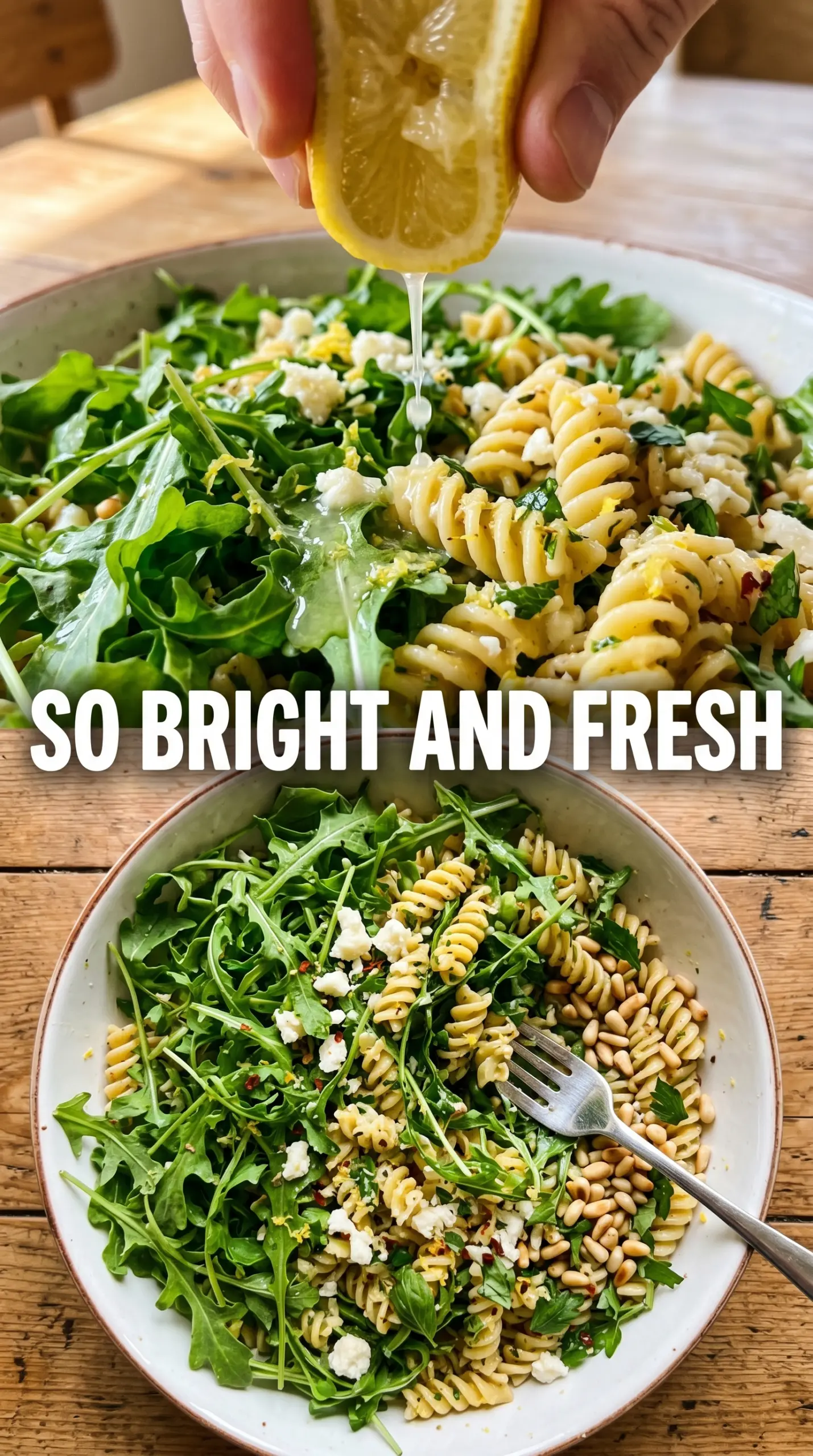
- Angel hair or thin spaghetti — A slender pasta gives you the best dressing-to-noodle ratio and keeps the salad feeling light. Thicker shapes can work, but they need more dressing and never twirl up as delicately.
- Lemon juice and zest — The juice brings the acid, but the zest carries the perfume that makes this taste fresh instead of just tart. Don’t skip the zest; it’s the part that gives the salad its lemony top note.
- Olive oil — This is what rounds out the dressing and keeps the lemon from tasting thin. Use a good everyday olive oil, not necessarily your most expensive bottle, but avoid anything that tastes harsh on its own.
- Arugula — The peppery bite is what keeps the salad from feeling like plain citrus pasta. Add it after the pasta is dressed so it softens a little from the residual heat without collapsing.
- Parmesan — Shaved Parmesan gives salty pockets instead of blending into the dressing. If you only have grated Parmesan, it will work, but the texture won’t be as clean.
- Pine nuts — Toasting them brings out their buttery flavor and gives the salad a little crunch. If pine nuts are expensive or hard to find, chopped almonds or walnuts are the easiest swap.
Keeping the Pasta Light Without Letting It Turn Watery
Toss the Dressing Into the Warm Pasta
Drain the pasta, rinse it cold, then let it sit just long enough to stop steaming before you add the dressing. If the noodles are still hot enough to wilt the arugula hard, wait another minute or two. Warm pasta takes in flavor better than cold pasta, and that’s what keeps the lemon from sitting on the surface like a vinaigrette puddle.
Let the Greens Bend, Not Collapse
Add the arugula after the pasta is dressed and toss gently until the leaves look just barely softened. If you add it too early, the leaves bruise and turn limp before the salad even hits the table. You want a little darkening and a soft edge, not a cooked texture.
Finish After the Chill
The salad needs that 30-minute rest so the flavors settle and the pasta finishes absorbing the dressing. Toss it again before serving because the oil and lemon will settle in the bowl, then taste for salt and pepper one last time. If it tastes a little flat after chilling, it usually needs a pinch of salt more than extra lemon.
Make It Dairy-Free Without Losing the Finish
Leave out the Parmesan and add a pinch more salt plus a little extra lemon zest. You lose the salty, savory edge that cheese gives the salad, but the citrus and arugula still carry the dish cleanly.
How to Make It Gluten-Free
Use your favorite gluten-free spaghetti and cook it just until tender, then rinse it well so it doesn’t keep softening. Gluten-free pasta can break down faster once dressed, so keep the chill time closer to the low end and toss gently when serving.
Swap the Nuts for What You Already Have
Chopped almonds, walnuts, or even sunflower seeds can stand in for the pine nuts. Toast them first so they still bring a warm, nutty crunch; otherwise the salad can taste a little one-note.
Storage and Reheating
- Refrigerator: Keep covered for up to 3 days. The arugula will soften more each day, but the flavor stays good.
- Freezer: This one doesn’t freeze well. The greens wilt and the pasta texture turns soft after thawing.
- Reheating: Don’t reheat it. Serve it chilled or at cool room temperature, and toss in a fresh handful of arugula if it needs more life after sitting in the fridge.
Questions I Get Asked About This Recipe
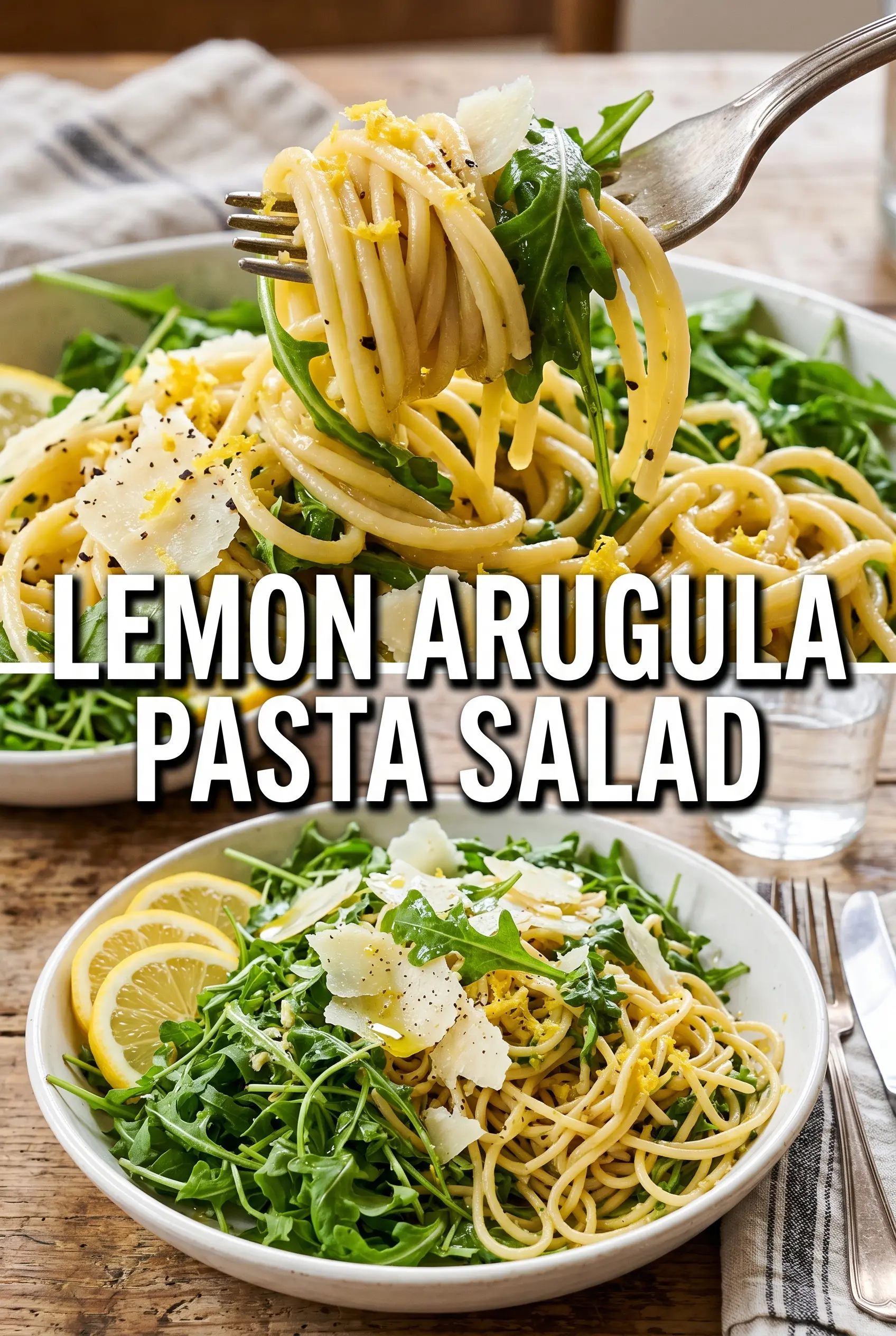
Lemon Arugula Pasta Salad
Ingredients
Method
- Cook the angel hair pasta according to package directions, then drain and rinse with cold water.
- Transfer pasta to a bowl and let it cool slightly so it stays warm but not steaming.
- Chill the salad for 30 minutes before serving.
- Whisk olive oil, lemon juice, lemon zest, minced garlic, salt, and pepper until smooth and fragrant.
- Toss the pasta with the lemon dressing while the pasta is still slightly warm.
- Add arugula and toss gently until wilted slightly, keeping it vibrant green.
- Top with shaved Parmesan and toasted pine nuts.
- Toss again right before serving and adjust seasoning with more salt and pepper if needed.