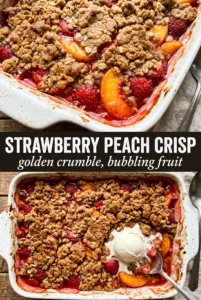
Deeply golden and packed with soft peach pieces, this brown sugar peach cake bakes up with a tender crumb and a warm caramel note that makes each slice taste like it took far more effort than it did. The brown sugar doesn’t just sweeten the batter; it gives the cake a deeper color and a faint molasses edge that plays beautifully against the fresh fruit. With caramel cream cheese frosting in the middle and over the top, the whole cake lands somewhere between a classic layer cake and a summer bakery special.
The structure here matters. Sour cream keeps the crumb moist without making it heavy, while the butter-and-sugar base gives the cake enough lift to hold diced peaches without collapsing. I like to peel the peaches, dice them fairly small, and fold them in at the very end so they stay distributed instead of sinking. The frosting is the part that ties it all together: cream cheese keeps it tangy, caramel sauce gives it that cooked-sugar depth, and a little extra vanilla rounds off the edges.
Below, you’ll find the detail that makes this cake slice cleanly, the ingredient choices that matter most, and a few smart swaps for when your peaches are extra juicy or your schedule needs a make-ahead option.
The cake stayed incredibly moist for two days, and the peaches didn’t sink to the bottom like they usually do. The caramel cream cheese frosting set up enough to stack clean layers, which made slicing easy.
Love the caramel-kissed crumb and fresh peach layers? Save this Brown Sugar Peach Cake for the next time you want a bakery-style layer cake at home.
The Trick to Keeping the Peaches in the Crumb Instead of the Bottom
The most common mistake with peach cake is treating the fruit like a mix-in that can handle anything. Fresh peaches carry a lot of juice, and if you cut them too large or fold them in too early, they slide downward while the batter is still loose. Small dice is the answer here. It gives you peach in almost every bite without turning the batter heavy or wet.
Brown sugar also changes the game. It brings moisture and a deeper caramel note, but it can make batters feel denser if the butter and sugar aren’t beaten until they turn pale and fluffy. That first mixing stage gives the cake lift. Skip it and you’ll get a tighter crumb that can’t support the fruit as cleanly.
- Brown sugar — This is where the cake gets its warm, almost toffee-like depth. Packed brown sugar matters here; loose scoops will throw off the moisture balance.
- Sour cream — It keeps the crumb tender and helps the cake stay soft for days. Plain full-fat Greek yogurt works in a pinch, but the cake will be a touch less rich.
- Peaches — Use ripe but still structured peaches. If they feel overly soft, dice them small and blot the pieces with a paper towel before folding them in.
- Cream cheese frosting — The tang cuts through the sweetness and keeps the caramel from tasting flat. Softened cream cheese blends smooth; cold cream cheese leaves little lumps that never fully disappear.
What Each Ingredient Is Actually Doing in This Peach Dessert
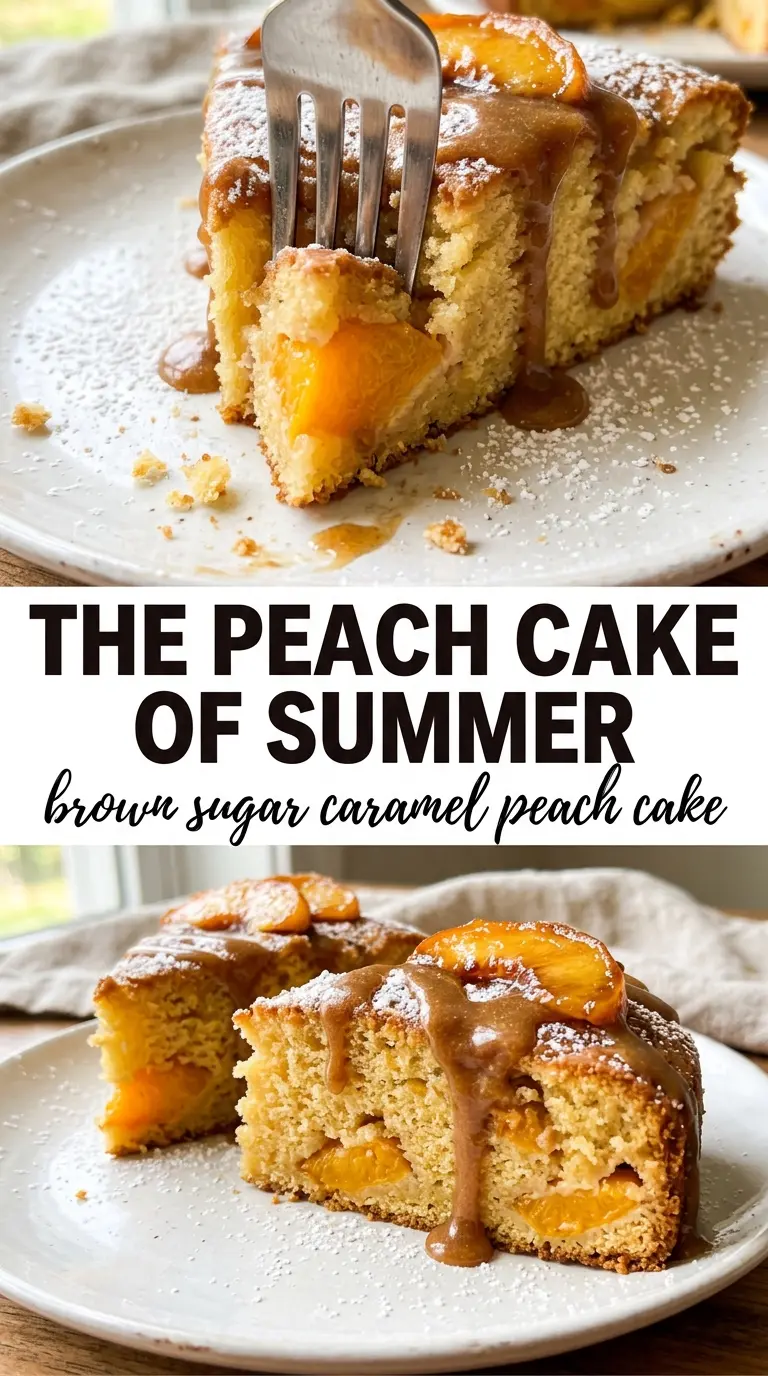
- Peaches (ripe, quality fruit) — Ripeness is critical. Ripe peaches are sweeter and more flavorful. Use perfectly ripe fruit.
- Sugar or sweetener (brown or white) — This complements natural peach sweetness. Don’t oversweeten or peach flavor disappears.
- Flour or crust base (pie crust, pastry, or cake) — This provides structure. Choose based on dessert type.
- Butter or fat (richness and moisture) — This adds flavor and prevents dryness. Don’t skip the fat.
- Acid (lemon juice or vinegar) — This brightens peach flavor and prevents one-dimensional sweetness.
- Spices (cinnamon, nutmeg, or ginger) — These complement peach flavor without overpowering it.
- Eggs (if cake-based, the binder) — These hold ingredients together and add structure.
- Cream cheese or frosting (optional, the complement) — This adds richness and balances peach sweetness.
Building the Batter So the Cake Stays Light and Tall
Whipping the Butter and Sugars
Start by beating the butter with both sugars until the mixture looks lighter in color and feels fluffy, not grainy. This step traps air, and that air is what gives the layers enough lift to rise around the peaches. If the butter is too cold, the mixture stays clumpy; if it’s melted, the cake bakes up dense.
Adding the Eggs and Dairy Without Curdling the Batter
Beat in the eggs one at a time so the batter stays smooth and emulsified. Then alternate the dry ingredients with the sour cream, ending with flour mixture so the batter doesn’t break or turn greasy. The batter should look thick and creamy, not runny. If it starts to look separated, stop and scrape the bowl before continuing.
Folding in the Peaches Gently
Stir the diced peaches in by hand with a spatula and stop as soon as they’re evenly distributed. Overmixing at this stage knocks out the air you built earlier and increases the chance that the fruit breaks down into the batter. Divide the batter right away between the pans so the peaches don’t have time to settle.
Baking and Cooling Without Rushing the Finish
Bake until the tops are set, the edges pull just slightly from the pan, and a toothpick comes out clean or with a few moist crumbs. Let the cakes cool in the pans before turning them out, because hot peach cake is fragile and tears easily. Cool them completely before frosting. If you rush the frosting onto warm layers, the filling will slide and the whole cake will lean.
How to Adapt This Cake for Different Kitchens and Schedules
Make it dairy-free
Use a plant-based butter and a thick dairy-free yogurt in place of the sour cream. For the frosting, swap in dairy-free cream cheese and beat it a little less than the dairy version, since many alternatives soften fast. The cake will still be moist, but the frosting will taste a little less tangy and a touch sweeter.
Use frozen peaches when fresh ones are out of season
Thaw the peaches completely, drain them well, then pat them dry before folding them in. Frozen fruit holds more water, so skipping that step can make the crumb gummy around the peach pieces. The flavor is still good, but the fruit will be softer and less defined than with fresh peaches.
Turn it into a sheet cake
Bake the batter in a greased 9×13-inch pan instead of layers and start checking a few minutes early, since the batter will bake faster in a larger surface area. You can spread the frosting over the top instead of filling layers, which makes the cake easier to transport and serve. The tradeoff is presentation, not flavor.
Storage and Reheating
- Refrigerator: Store covered for up to 4 days. The crumb stays moist, but the frosting firms up in the fridge.
- Freezer: Freeze unfrosted layers tightly wrapped for up to 2 months. Thaw them in the refrigerator before frosting; frosted cake can be frozen, but the texture of the cream cheese frosting softens after thawing.
- Reheating: Let slices sit at room temperature for 20 to 30 minutes before serving. Warming this kind of cake in the microwave can melt the frosting and make the crumb feel greasy.
Questions I Get Asked About This Cake
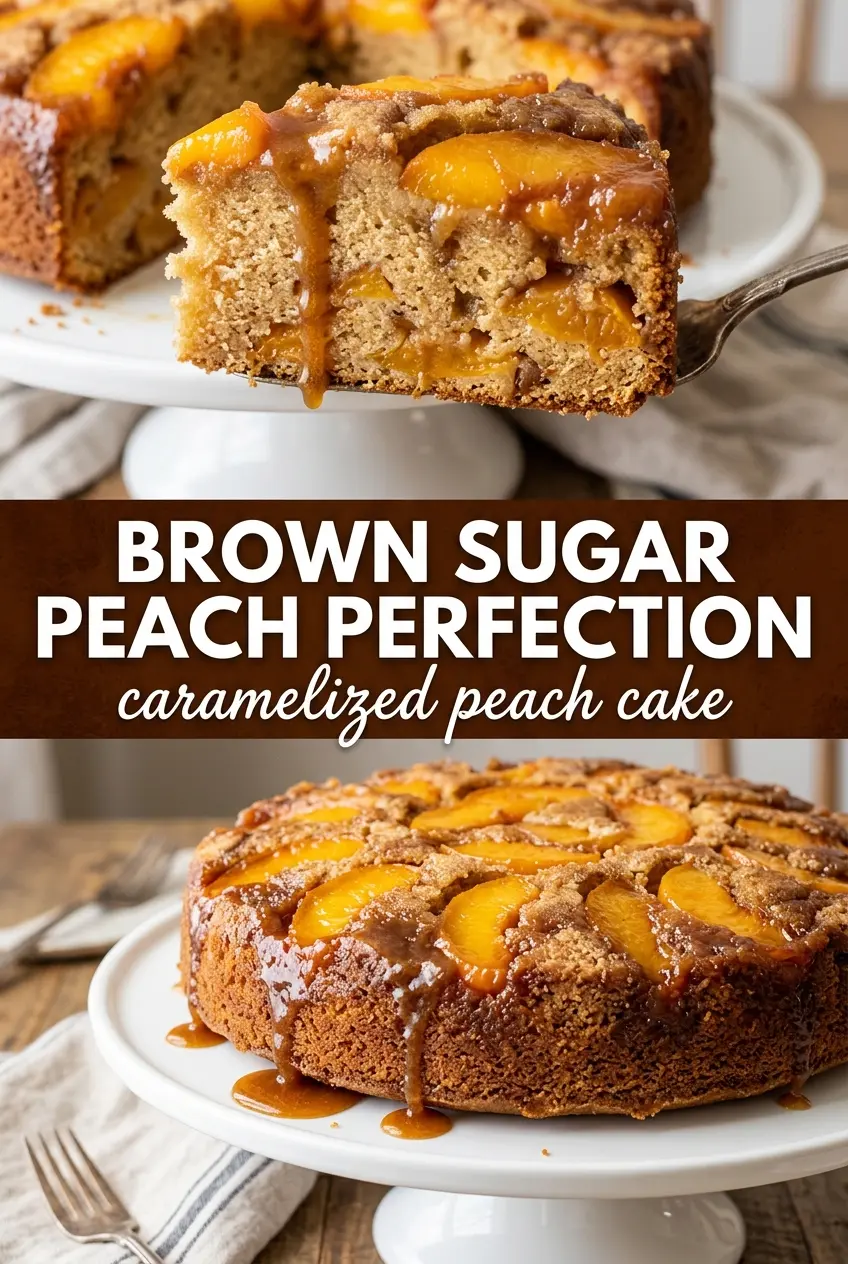
Brown Sugar Peach Cake
Ingredients
Equipment
Method
- Preheat the oven to 350°F and grease two 9-inch round cake pans; line with parchment.
- In the mixer bowl, beat the softened butter with the brown sugar and granulated sugar until light and fluffy.
- Add the eggs one at a time, then mix in the vanilla extract.
- Alternately mix in the flour mixture (all-purpose flour, baking powder, baking soda, salt, and cinnamon) and the sour cream until just combined.
- Gently fold in the diced peaches so the batter stays thick and peach-studded.
- Divide the batter evenly between the two pans and bake for 35-40 minutes, until a toothpick comes out clean.
- Cool the cakes completely, about 30 minutes, before frosting to keep the frosting from melting.
- Beat the softened cream cheese and butter until smooth.
- Add the powdered sugar, caramel sauce, and vanilla extract, then beat until fluffy.
- Fill and frost the cooled cake with the caramel cream cheese frosting.
- Arrange fresh peach slices on top and drizzle with extra caramel before serving.