Garlic Parmesan Meatloaf comes out with a savory crust, a juicy center, and the kind of garlicky, cheesy finish that makes a plain weeknight dinner feel like something you actually planned. The parmesan on top bakes into a golden shell, while the garlic butter keeps the surface glossy and gives every slice a rich, fragrant finish.
What makes this version work is balance. Breadcrumbs and milk keep the loaf tender, eggs hold it together, and the Worcestershire adds depth without making it taste like sauce. The garlic goes into both the meat mixture and the butter topping, so the flavor is layered instead of sharp, and the parmesan gets used in two ways: mixed in for savoriness and pressed on top for that crust you can hear when you cut into it.
Below, I’ve included the timing detail that keeps meatloaf from drying out, plus a few smart variations if you want to adjust the cheese, the meat, or the make-ahead plan.
The parmesan crust turned golden and the garlic butter kept the top from drying out. Mine held together perfectly when sliced, and even the leftovers were just as good the next day.
Like this garlic parmesan meatloaf? Save it to Pinterest for a juicy meatloaf with a golden parmesan crust and garlic butter finish.
The Reason This Meatloaf Stays Juicy Instead of Crumbling
The biggest mistake with meatloaf is treating it like a dense roast. If you pack it too tightly, it turns heavy and slices poorly. If you under-season it, the parmesan and breadcrumbs just mute the beef instead of supporting it. This version stays tender because the milk hydrates the breadcrumbs before baking, and the eggs bind without making the loaf rubbery.
Baking it free-form on a sheet pan helps too. The edges brown instead of steaming in a loaf pan, and that gives you more of the golden crust you want. The rest time matters just as much as the bake. Cut too early and the juices run out onto the board instead of staying in the slice.
What Each Ingredient Is Actually Doing in the Loaf
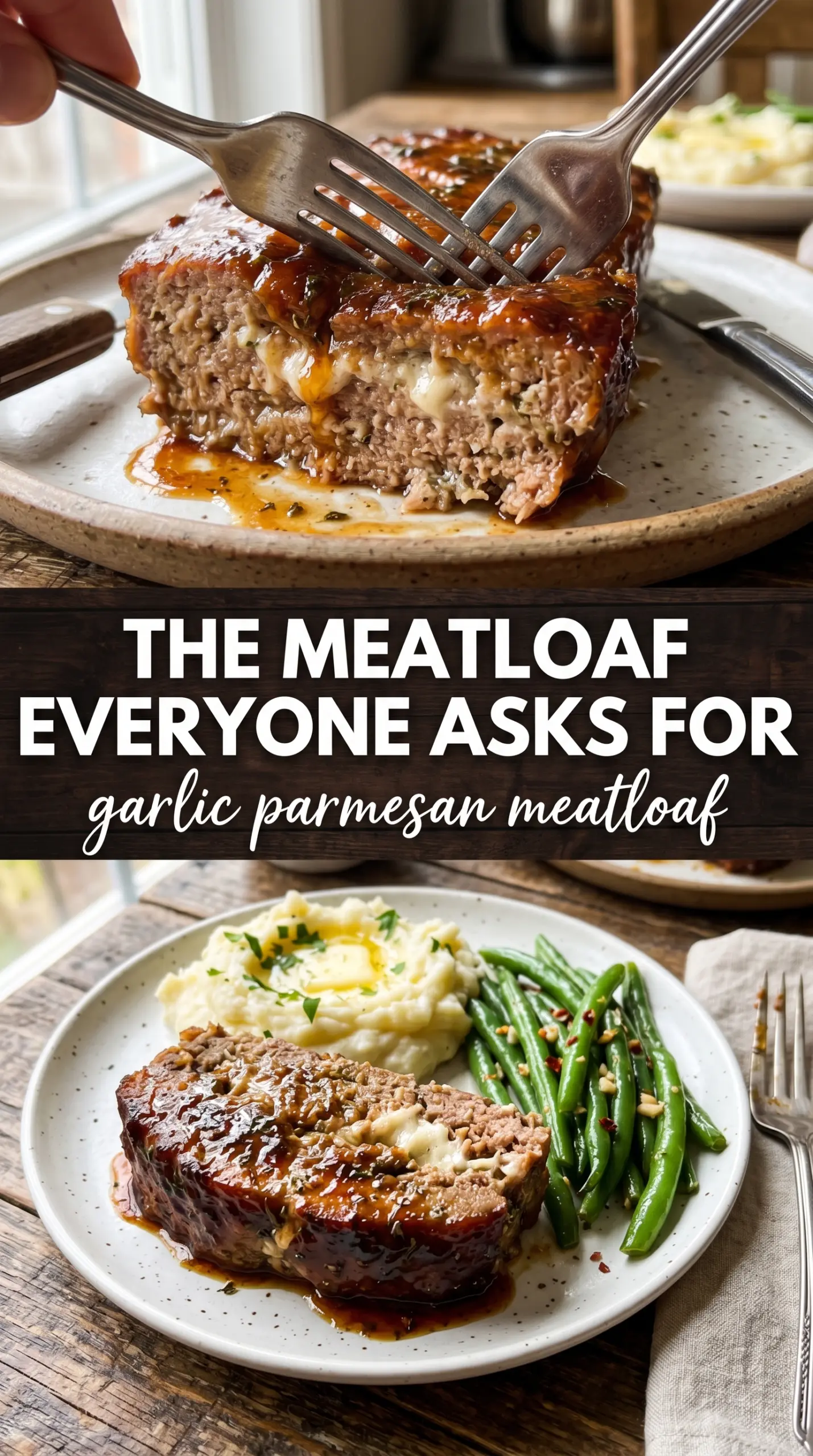
- Ground beef — Use an 80/20 blend if you can. Leaner beef dries out faster, and meatloaf needs enough fat to stay sliceable after baking.
- Parmesan cheese — This is one of the main flavor builders, not just a garnish. Grate it finely so it melts into the loaf and also forms a crust on top. Pre-shredded cheese won’t melt as cleanly.
- Breadcrumbs and milk — Together, they act like a panade, which keeps the meatloaf soft instead of compacted. If you need a swap, use crushed saltines or gluten-free breadcrumbs in the same amount.
- Garlic — The fresh minced garlic gives the loaf its backbone, while the garlic butter topping adds the rounded, roasted finish. Jarred garlic works in a pinch, but the flavor won’t be as clean.
- Worcestershire sauce — This deepens the beefy flavor without making the loaf taste saucy. Don’t skip it unless you have to; soy sauce can stand in, but use a little less because it’s saltier.
- Garlic butter topping — This is what keeps the top from baking up dry. Brushing it on halfway through gives you a glossy finish and helps the parmesan on top turn golden instead of dusty.
Building the Loaf So the Crust Stays Crisp and the Center Stays Tender
Mixing the Meat Without Overworking It
Combine the ingredients just until everything looks evenly distributed. If you knead the mixture like bread dough, the proteins tighten up and the meatloaf turns dense. The mixture should hold together when pressed, but it shouldn’t feel pasty or sticky.
Shaping for Even Browning
Form a free-form loaf on a parchment-lined baking sheet and keep the shape fairly even from end to end. A mound that’s too thick in the middle will need extra time and can dry out at the edges before the center is done. Press the top just enough to smooth it, then leave the sides slightly rounded so they brown well.
Layering on the Garlic Butter and Parmesan
Brush half the garlic butter over the top before baking, then press extra parmesan into the surface. That gives the loaf a head start on forming a crust. If the cheese looks like it’s sliding off, the loaf is too warm and too wet on top, so pat the surface lightly before adding the topping.
Knowing When It’s Done
Bake until the center reaches 160°F and the edges look deeply browned. If you only go by time, you’ll miss the difference between a thick loaf and a smaller one. Brush on the remaining garlic butter halfway through baking so the top doesn’t dry out while the center finishes.
Use a Mix of Beef and Pork for a Softer Slice
Swap one pound of the beef for ground pork if you want a richer, softer meatloaf. Pork adds a little sweetness and helps the texture stay tender, but the flavor becomes milder, so keep the parmesan and garlic fully seasoned.
Gluten-Free Without Losing Structure
Use certified gluten-free breadcrumbs in place of regular breadcrumbs. The texture stays close to the original, and the milk still does the work of softening the crumb. Don’t reduce the milk or the loaf can turn firm.
Dairy-Free Adaptation
Use unsweetened plain plant milk and swap in a dairy-free parmesan-style cheese. You’ll lose some of the sharp nuttiness from real parmesan, so add a little extra salt and a touch more garlic to keep the loaf bold.
Storage and Reheating
- Refrigerator: Store sliced or whole for up to 4 days. The crust softens a bit, but the flavor holds up well.
- Freezer: Freeze individual slices wrapped tightly, then packed in a freezer bag for up to 3 months. Thaw in the fridge before reheating so the center warms evenly.
- Reheating: Warm covered in a 325°F oven with a splash of broth or water in the pan. Microwaving works for single slices, but use short bursts so the edges don’t turn tough.
Questions I Get Asked About This Recipe
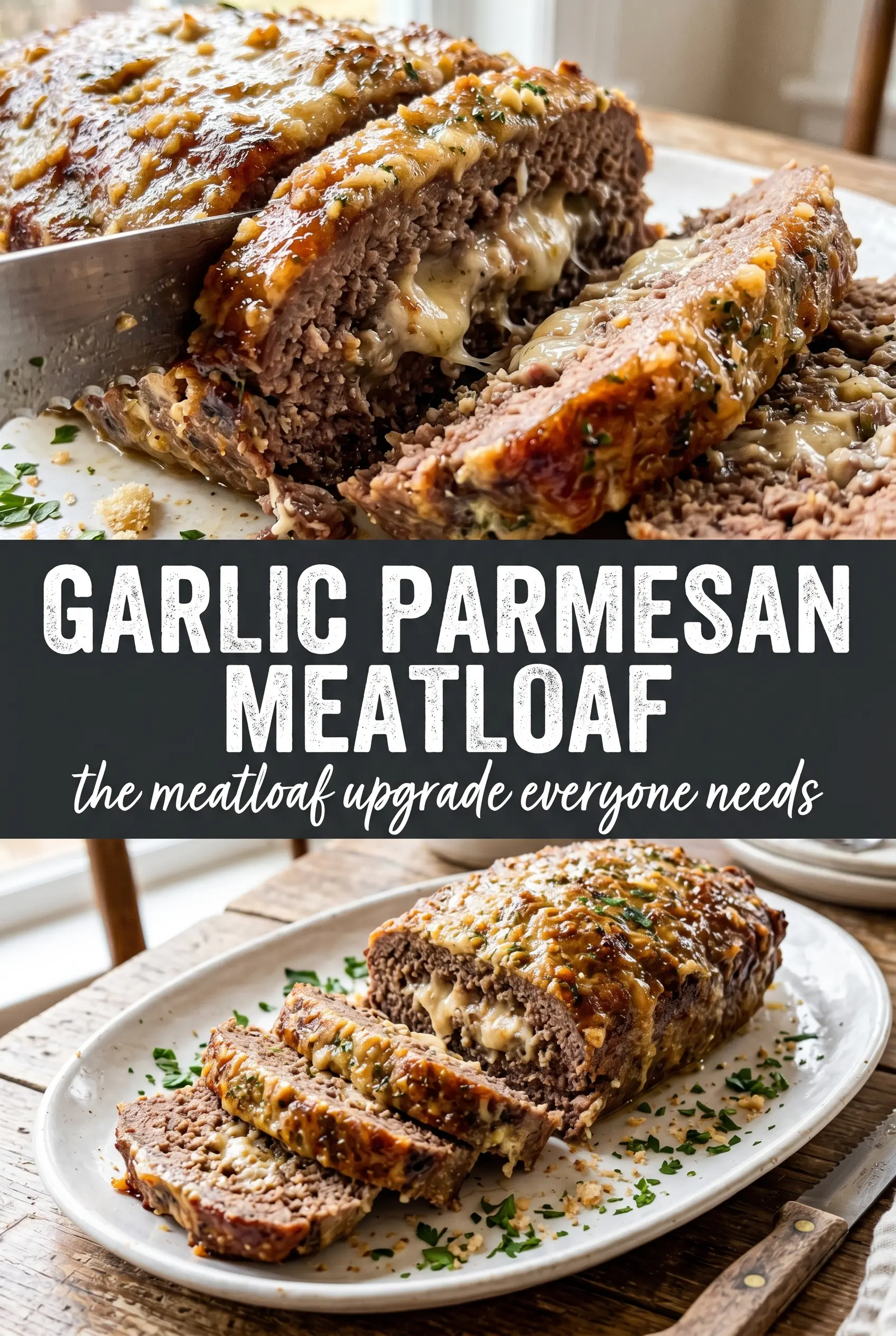
Garlic Parmesan Meatloaf
Ingredients
Equipment
Method
- Preheat oven to 350°F and line a baking sheet with parchment (visual cue: parchment fully covers the pan).
- Combine ground beef, parmesan cheese, breadcrumbs, eggs, whole milk, minced garlic, fresh parsley, Italian seasoning, Worcestershire sauce, salt, and black pepper until evenly mixed (visual cue: no dry breadcrumb pockets remain).
- Shape the mixture into a free-form loaf on the lined baking sheet (visual cue: a cohesive loaf with smooth sides).
- Mix garlic butter topping and brush half over the top, then press extra parmesan into the surface (visual cue: top looks glossy and speckled).
- Bake for 55–65 minutes total, brushing with the remaining garlic butter halfway through (visual cue: surface turns golden-brown).
- Bake until the internal temperature reaches 160°F (visual cue: center is fully cooked with no pink).
- Rest the meatloaf 10 minutes before slicing (visual cue: juices settle and the slice holds together).
- Garnish with fresh parsley and slice to reveal a herb-flecked, juicy interior (visual cue: interior looks moist and tender).