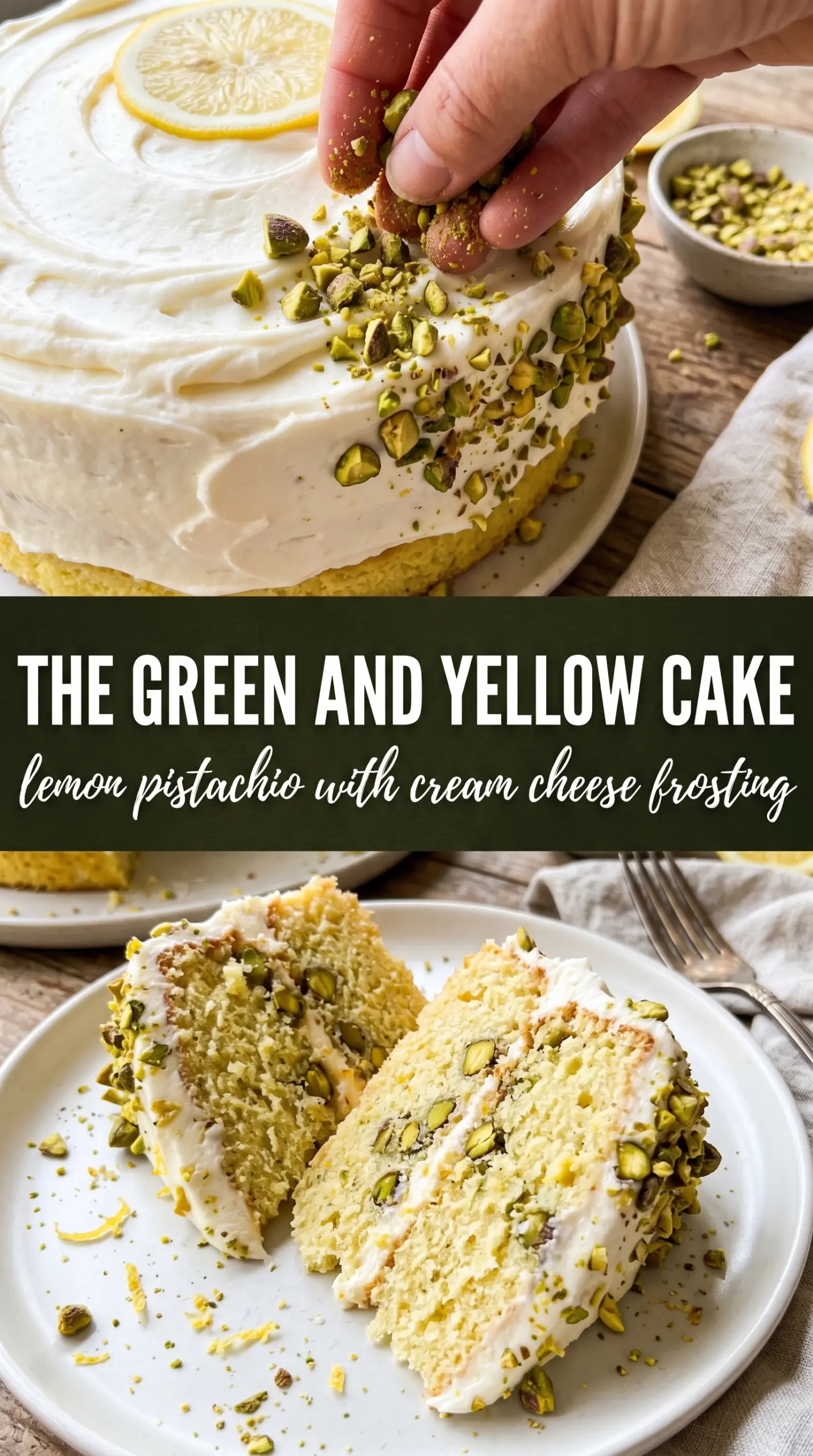
Lemon pistachio cake earns its place by tasting light and rich at the same time. The crumb stays tender and pale green from the finely ground pistachios, while the lemon cuts through with a clean, bright edge that keeps every bite from feeling heavy. Finished with lemon cream cheese frosting, it slices like a celebration cake but still eats like something you’d want with coffee in the afternoon.
The texture depends on two things: grinding the pistachios finely enough that they behave like part of the flour, and stopping the cake at the right moment so it stays moist instead of dry. Sour cream keeps the crumb soft, and the butter-sugar base gives the cake enough lift to hold the layers without turning dense. The frosting leans tangy instead of cloying, which matters because the cake itself already brings a lot of sweetness.
Below, I’m breaking down the parts that matter most: how to keep the pistachio crumb delicate, why the lemon goes in two different ways, and how to frost the cake so the sides stay neat instead of sliding.
The pistachios baked right into the crumb, and the lemon frosting stayed fluffy without getting runny. I made it the night before and the layers sliced cleanly the next day.
Save this lemon pistachio cake for the kind of dessert that looks elegant, slices cleanly, and tastes bright with every pistachio-studded bite.
The Part Most Pistachio Cakes Get Wrong
The biggest mistake with pistachio cake is leaving the nuts too coarse. Big pieces don’t blend into the batter the way you want, so the cake bakes up gritty and uneven instead of tender. Grinding the pistachios finely gives you a softer crumb and a cleaner slice, almost like the nuts are part of the flour rather than a garnish hiding inside the batter.
The other place people run into trouble is treating this like a plain butter cake and overbaking it. Pistachios add richness, but they don’t protect the crumb from drying out. Pull the cake when the center springs back and a toothpick comes out clean or with a few moist crumbs; if it goes fully dry in the oven, the lemon frosting won’t be enough to bring that softness back.
- Finely ground pistachios — This is the ingredient that gives the cake its color, flavor, and signature texture. Use unsalted shelled pistachios and grind them with the flour so they don’t turn into a paste.
- Sour cream — It keeps the crumb plush and helps the cake stay moist for more than a day. Plain full-fat Greek yogurt can stand in if needed, but the cake will be slightly firmer and a touch tangier.
- Lemon zest and juice — The zest carries most of the lemon aroma, while the juice sharpens the batter and frosting. Don’t skip the zest; juice alone tastes flat here.
- Cream cheese frosting — This frosting balances the sweetness and gives the cake a little tang, which matters with a nut-heavy crumb. Soften the cream cheese and butter fully before beating, or the frosting will turn lumpy.
What Each Ingredient Is Actually Doing in This Recipe
- Primary ingredient (the star) — Quality matters most. Choose the best you can find.
- Cooking medium (oil, butter, or broth) — This carries flavors and prevents dryness.
- Seasonings (salt, pepper, spices, herbs) — Layer flavors so nothing overpowers. Build depth gradually.
- Aromatics (garlic, onion, herbs) — Cook with fat to bloom flavors. Become the foundation.
- Supporting ingredients — Complement the main ingredient without overpowering it.
- Sauce or liquid (if applicable) — Brings flavors together. Balance richness with acid.
- Acid (lemon, vinegar, wine, or other) — Brightens and prevents flat-tasting results.
- Final finish (garnish, glaze, or sauce) — Prevents one-dimensional taste and adds visual appeal.
Building the Batter Without Crushing the Texture
Mix the Dry Ingredients First
Whisk the ground pistachios, flour, baking powder, and salt together before they ever touch the wet ingredients. That distributes the leavener evenly and keeps the pistachio meal from clumping in pockets. If the mixture looks a little sandy, that’s fine. The batter will come together once the wet ingredients are added.
Beat the Butter and Sugar Until Pale
Beat the softened butter and sugar until the mixture looks fluffy and a shade lighter. This is where the cake gets its lift, so don’t rush it. If the butter is too cold, the mixture will stay dense and grainy; if it’s melted, the cake won’t hold the structure you need for layers.
Fold in the Pistachio Flour at the End
Add the dry ingredients only after the eggs, lemon, and sour cream are in the bowl. Stir just until the batter looks uniform. Once you see the green flecks evenly distributed and no dry flour at the bottom, stop mixing. Overmixing at this stage makes the crumb tight and can turn the cake gummy.
Watch the Bake, Not the Clock
Divide the batter evenly between the pans and bake until the tops spring back and a tester comes out clean. Start checking early, because a thin layer cake can go from perfect to dry fast. Let the cakes cool in the pans for a short time before turning them out, then cool them completely before frosting or the layers will slide.
How to Adapt the Cake Without Losing the Good Parts
Make It Dairy-Free
Use a plant-based butter in both the cake and frosting, and swap the sour cream for a thick dairy-free yogurt. The cake will still be moist, but the frosting may be a little softer, so chill it briefly before assembling.
Gluten-Free Version
Replace the all-purpose flour with a 1:1 gluten-free baking blend that includes xanthan gum. The pistachio flour already helps keep the crumb tender, but the cake may need an extra minute or two in the oven to set fully.
Turn It Into Cupcakes
Portion the batter into lined muffin tins and bake until the tops spring back, usually much faster than the layer cakes. You’ll lose the dramatic stacked look, but you gain neat individual servings and a shorter bake time.
Storage and Reheating
- Refrigerator: Store covered for up to 4 days. The frosting stays stable, and the pistachio crumb actually tastes a little fuller on day two.
- Freezer: Freeze unfrosted layers wrapped tightly in plastic and foil for up to 2 months. Frosted slices can be frozen, but the texture of the cream cheese frosting softens slightly when thawed.
- Reheating: Let chilled slices sit at room temperature for 20 to 30 minutes before serving. Don’t microwave them to warm them through, or the frosting can turn greasy and the cake crumb can dry out at the edges.
Answers to the Questions Worth Asking
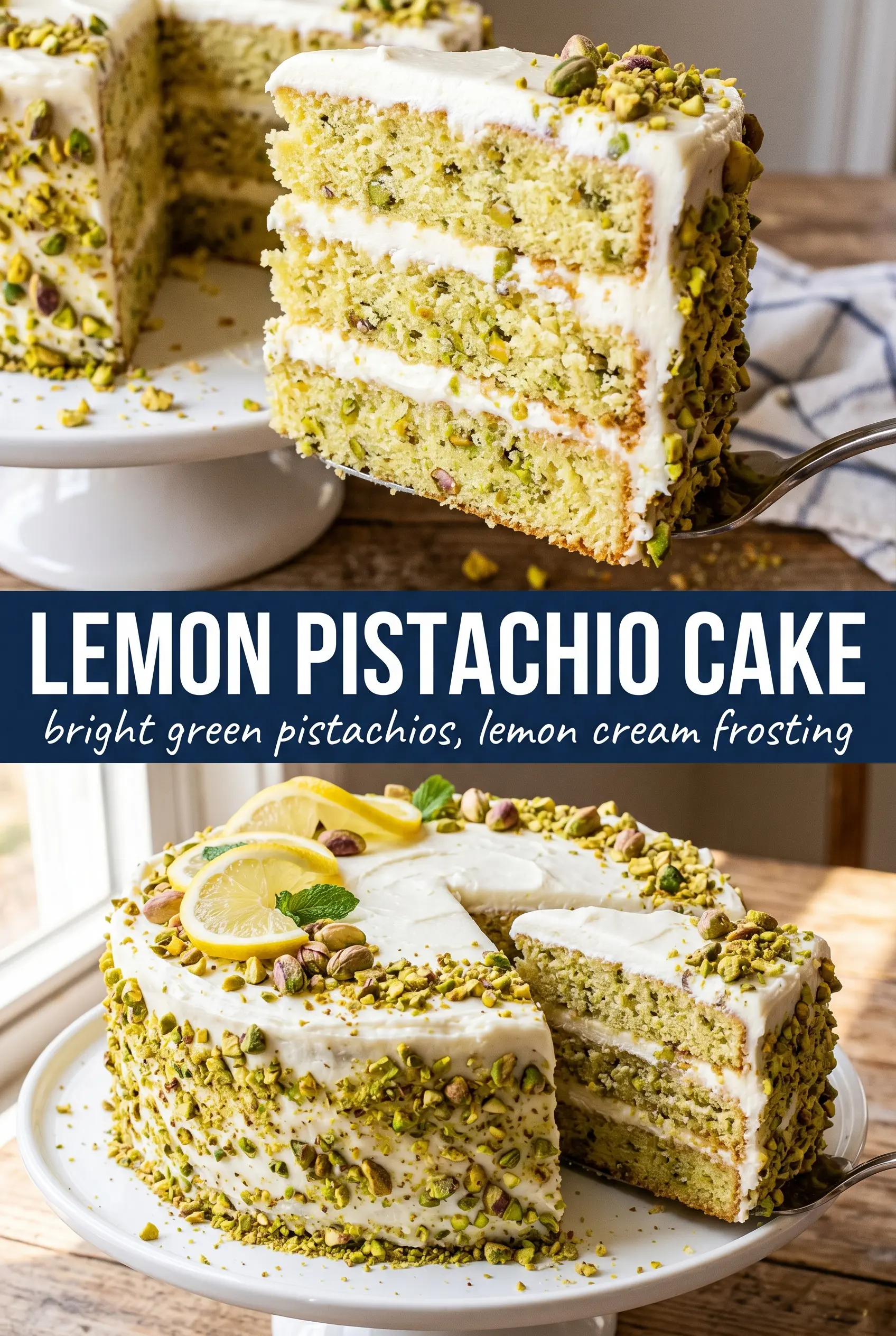
Lemon Pistachio Cake
Ingredients
Equipment
Method
- Preheat the oven to 350°F and grease two 9-inch round pans; line with parchment for easy release.
- Whisk together ground pistachios, flour, baking powder, and salt until evenly combined.
- Beat the softened butter and granulated sugar until fluffy and lighter in color.
- Add the eggs one at a time, mixing well after each addition until the batter looks smooth.
- Stir in lemon zest, fresh lemon juice, and sour cream until evenly streaked through the batter.
- Fold in the pistachio flour mixture just until no dry pockets remain, keeping the batter tender.
- Divide the batter between the two pans and bake for 30-35 minutes until a toothpick comes out clean.
- Cool the cakes completely before frosting, until fully room temperature so the frosting won’t melt.
- Beat the softened cream cheese and butter until smooth with a creamy, lump-free texture.
- Add powdered sugar, lemon juice, and lemon zest, then beat until fluffy and spreadable.
- Fill and frost the cake with a thick, even layer between and over the rounds for clean edges.
- Press crushed pistachios around the sides so the coating adheres and the pale green crumb shows through.
- Arrange lemon zest curls on top for a bright, citrusy finish and a visible crown effect.