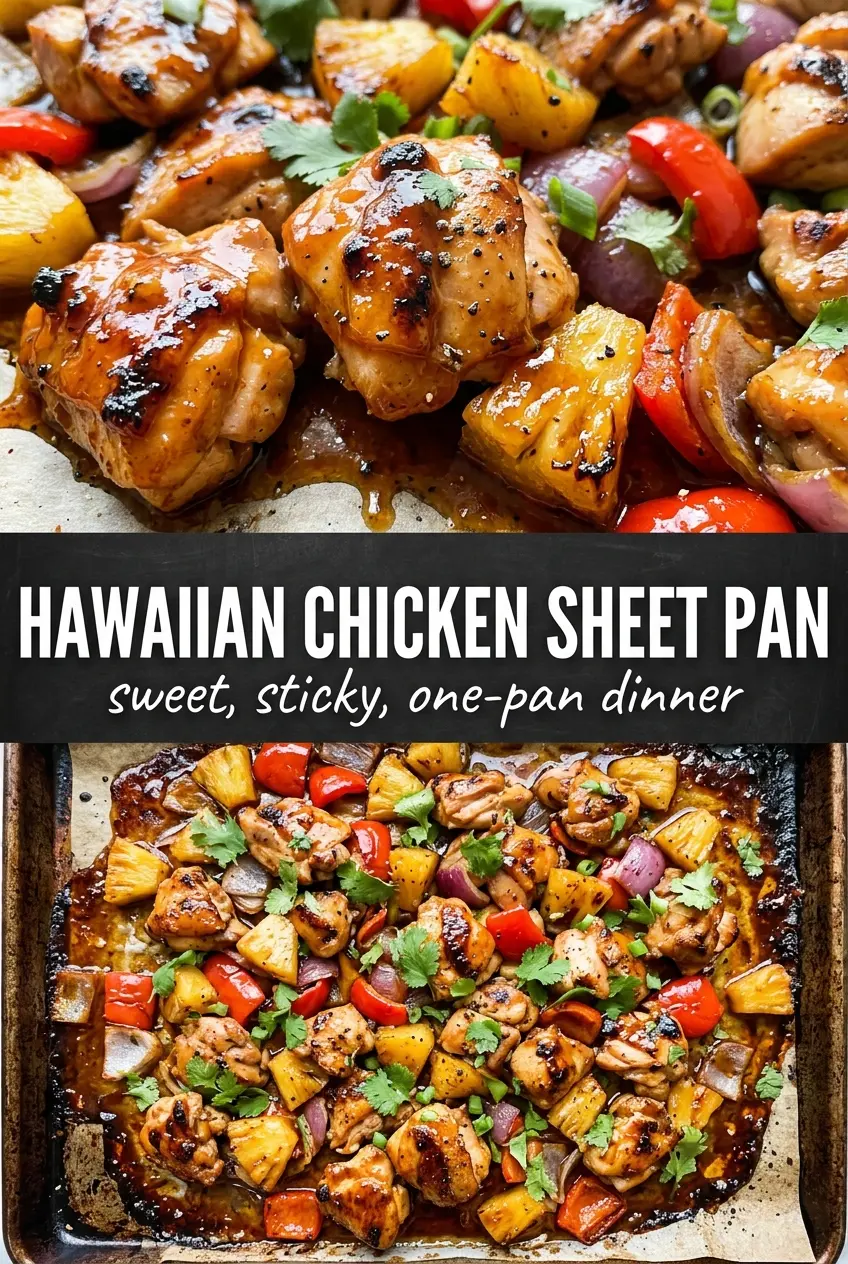
Sticky, caramelized Hawaiian chicken thighs are the kind of dinner that disappears fast because every bite hits something different: crisp-edged skin, sweet pineapple, charred peppers, and a glaze that clings to the pan instead of sliding off into a puddle. The chicken roasts right alongside the vegetables, so the juices from the thighs and the honey-soy marinade melt together into one glossy sauce with almost no extra work.
The key is balancing the sugar in the marinade so it browns instead of burns. Pineapple juice brings brightness and helps the glaze taste layered, while brown sugar and honey deepen the caramelization without making the dish cloying. Bone-in, skin-on thighs hold up best here because they stay juicy in a hot oven and give you that rich, roast-chicken flavor that boneless pieces just can’t match.
Below, you’ll find the small details that keep the glaze sticky, the vegetables crisp-tender, and the pineapple from turning mushy. I’ve also included a few smart swaps if you want to make it a little lighter, lower-sugar, or easier to adapt to what’s already in the fridge.
The chicken skin got beautifully crisp and the pineapple caramelized instead of melting away. I was worried the sauce would be too sweet, but it came out glossy and balanced, and the onions picked up all that flavor from the pan.
Save this Hawaiian Chicken Sheet Pan for the night you want sticky pineapple-glazed chicken, charred peppers, and one pan to clean.
The Trick to Keeping the Glaze Sticky Instead of Burned
Sheet pan chicken with a sweet marinade can go wrong in two directions: the sauce scorches before the chicken cooks through, or it turns watery and pools under everything. This recipe avoids both by using a short marinating time, a hot oven, and a reserved portion of the marinade poured around the vegetables instead of all over the skin. That keeps the chicken skin exposed so it can brown, while the vegetables catch the flavor as they roast.
Bone-in, skin-on thighs are the backbone here. They’re forgiving at 425°F, and the skin protects the meat from drying out while the sugars in the glaze turn deep amber. If you swap in boneless chicken, cut the roast time down and expect less richness and less contrast between the crisp edges and the juicy center.
- Short marinating time — Twenty minutes is enough to season the chicken without making the surface too wet. Longer isn’t better here because extra liquid on the skin slows browning.
- Pineapple juice — This adds brightness and helps the glaze taste rounded instead of flat. Canned juice works fine; just use 100% juice, not a sugary cocktail blend.
- Rice vinegar — It keeps the marinade from tasting heavy. If you skip it, the honey and brown sugar can make the dish feel one-note.
- Fresh pineapple chunks — Fresh pineapple stays intact and caramelizes at the edges. Canned pineapple can work in a pinch, but drain it well so the pan doesn’t steam.
What Each Ingredient Is Actually Doing in This Recipe

- Primary ingredient (the star) — Quality matters most. Choose the best you can find.
- Cooking medium (oil, butter, or broth) — This carries flavors and prevents dryness.
- Seasonings (salt, pepper, spices, herbs) — Layer flavors so nothing overpowers. Build depth gradually.
- Aromatics (garlic, onion, herbs) — Cook with fat to bloom flavors. Become the foundation.
- Supporting ingredients — Complement the main ingredient without overpowering it.
- Sauce or liquid (if applicable) — Brings flavors together. Balance richness with acid.
- Acid (lemon, vinegar, wine, or other) — Brightens and prevents flat-tasting results.
- Final finish (garnish, glaze, or sauce) — Prevents one-dimensional taste and adds visual appeal.
Roasting the Chicken So the Skin Browns and the Vegetables Don't Steam
Building the Marinade
Whisk the soy sauce, pineapple juice, honey, brown sugar, rice vinegar, garlic, ginger, and sesame oil until the sugar dissolves as much as it can. The marinade should look glossy, not grainy, before the chicken goes in. If the sugar sits in a pile at the bottom, it tends to burn in the oven instead of glazing the food.
Giving the Chicken Its Head Start
Toss the thighs in the marinade and let them sit for 20 minutes while the oven heats. That short rest seasons the meat without flooding the pan with excess liquid. If you leave them much longer, the skin can soften and you lose the crisp, lacquered finish that makes this dish worth making.
Arranging the Pan for Browning
Set the chicken skin-side up on a foil-lined sheet pan and scatter the peppers, onion, and pineapple around it. Keep the chicken pieces spaced apart so the skin isn’t touching anything wet. Pour the reserved marinade over the vegetables and around the chicken, not directly on top of the skin, or you’ll steam the very surface you’re trying to crisp.
Roasting to the Right Finish
Roast at 425°F for 22 to 25 minutes, until the chicken reaches 165°F and the skin looks deep golden with sticky edges. The vegetables should be tender with browned tips, and the pineapple should have caramelized spots instead of collapsing into puree. If the glaze looks pale at the end, give it a couple more minutes, but stay close — the sugars can move from amber to burnt fast.
Ways to Bend This Recipe Without Losing What Makes It Good
For a gluten-free version
Use tamari or a certified gluten-free soy sauce in place of standard soy sauce. The flavor stays close to the original, with the same salty-sweet balance and glossy finish.
To cut the sugar a little
Reduce the honey to 2 tablespoons and the brown sugar to 1 tablespoon. You’ll still get caramelization, but the glaze will be less sticky and a little sharper, which works well if your pineapple is very sweet.
If you want to use boneless chicken thighs
Boneless thighs cook faster and give you less pan drama, but they won’t render the same rich juices. Start checking them around 18 to 20 minutes and pull them as soon as they hit 165°F so they stay tender.
For a vegetable-heavy pan
Add chunks of zucchini, snap peas, or broccoli florets, but keep them in larger pieces so they don’t turn soft before the chicken finishes. Anything with a lot of water should be cut bigger than you think or added halfway through roasting.
Storage and Reheating
- Refrigerator: Store leftovers in an airtight container for up to 4 days. The chicken stays juicy, but the skin softens after chilling.
- Freezer: Freeze the chicken and vegetables for up to 2 months. The pineapple will lose some texture, but the flavor holds up well once reheated.
- Reheating: Reheat on a sheet pan in a 350°F oven until hot. Skip the microwave if you want any chance of keeping the chicken skin from turning rubbery.
Answers to the Questions Worth Asking
Hawaiian Chicken Sheet Pan
Ingredients
Equipment
Method
- Whisk together the soy sauce, pineapple juice, honey, brown sugar, rice vinegar, minced garlic, grated ginger, and sesame oil until the sugar dissolves and the mixture looks glossy.
- Toss the chicken thighs in the marinade, then rest 20 minutes to let the flavors soak in.
- Reserve the marinade for pouring over the vegetables before roasting.
- Preheat oven to 425°F and line a large sheet pan with foil.
- Arrange the marinated chicken thighs skin-side up on the sheet pan, then scatter the bell peppers, red onion wedges, and pineapple chunks around the chicken.
- Pour the reserved marinade over the vegetables and around the chicken so it pools lightly across the pan.
- Roast for 22-25 minutes, until the chicken skin is golden and caramelized and the internal temperature reaches 165°F, with charred edges on the peppers as a visual cue.
- Garnish with sesame seeds and sliced green onions, then serve.