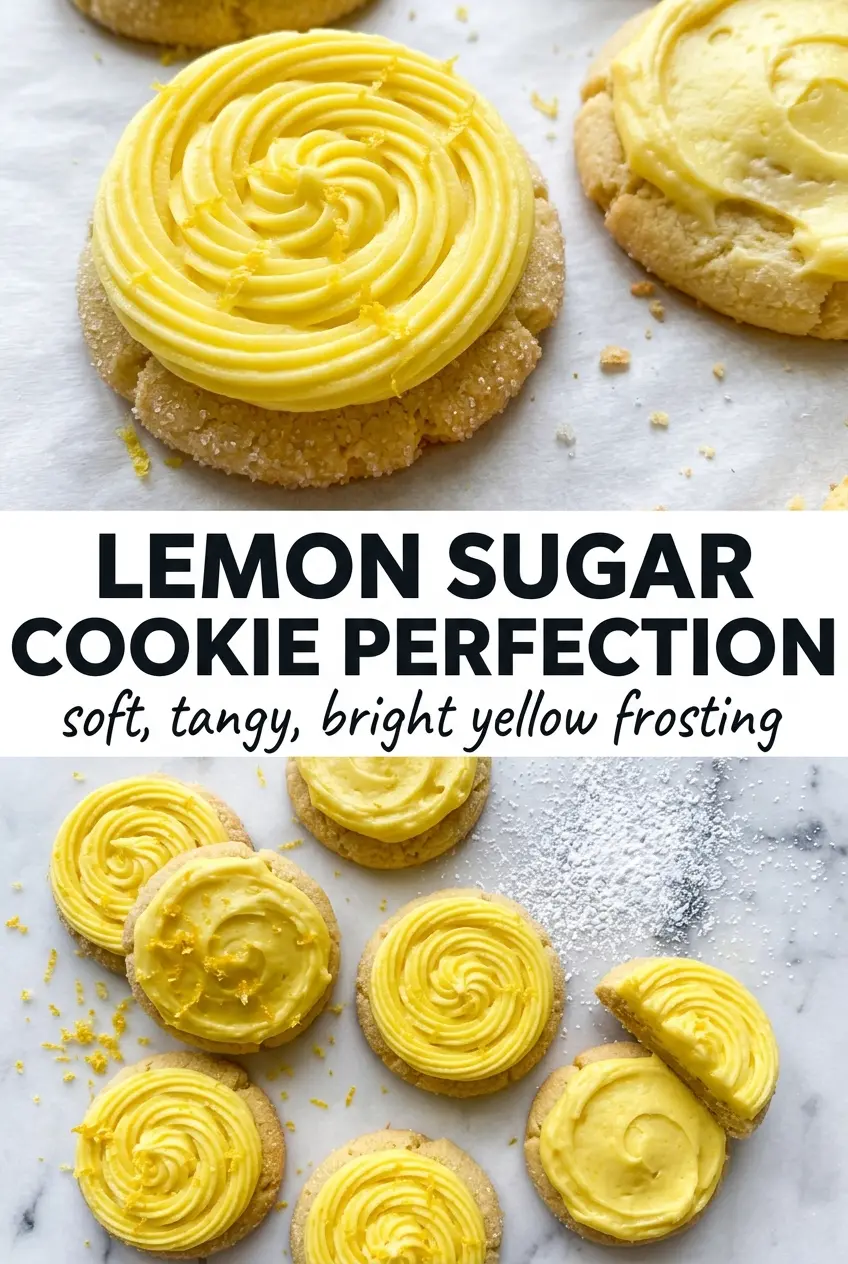
Soft lemon sugar cookies hit the sweet spot between tender and chewy, with crackled tops that give way to a bright, buttery center. The sugar coating bakes into a delicate shell, and the lemon glaze on top brings just enough sharpness to keep each bite from feeling heavy. These are the kind of cookies that disappear one at a time from the cooling rack and somehow never leave leftovers for long.
What makes this version work is the balance of fat, citrus, and a short chill. The dough starts with butter beaten until fluffy, which traps air and keeps the cookies from baking up dense. Fresh lemon juice and zest go into both the dough and the glaze, but the lemon stays clean and lively because the dough isn’t overloaded with liquid. A quick rest in the fridge firms everything up so the cookies hold their shape instead of spreading into thin, flat rounds.
Below, you’ll find the small details that matter most: how to keep the centers soft, why the cookies should come out before they look fully baked, and the easiest way to get that glossy glaze without making the tops soggy.
The cookies came out soft in the middle with those crackly sugar tops, and the lemon glaze set just enough that it didn’t run everywhere. I chilled the dough for the full 30 minutes and they held their shape perfectly.
Save these lemon sugar cookies for the days when you want crackled tops, a soft middle, and a fresh lemon glaze.
The Reason These Cookies Stay Soft Instead of Spreading Thin
The texture here comes down to two things: a chilled dough and a bake that stops just shy of fully set. If the dough goes into the oven warm, the butter melts too fast and the cookies lose that thick, pillowy shape. Chilling gives the flour time to hydrate and keeps the edges from racing outward before the centers have a chance to rise.
The other common mistake is waiting for the cookies to look finished in the oven. By the time the centers look firm, they’ve already gone too far. Pull them when the edges are set and the centers still look a little underbaked; they’ll finish on the hot pan and stay tender instead of turning dry.
- Butter — Softened butter creams with the sugar into a fluffy base that traps air. Cold butter won’t beat up properly, and melted butter will give you flatter cookies.
- Lemon zest — This carries the brightest lemon flavor in the whole recipe. The juice adds tang, but the zest gives you the real lemon aroma, so don’t skip it.
- Chilling time — The 30-minute rest isn’t busywork. It firms the dough enough for clean scoops and helps the cookies bake thicker with those crackled tops.
What Each Ingredient Is Actually Doing in the Dough and Glaze

- All-purpose flour — This gives the cookies their structure without making them bready. Measuring it lightly matters; packed flour makes the dough stiff and dry.
- Baking soda and baking powder — The combination gives lift and spread control. Baking soda helps with browning and spread, while baking powder adds a little extra puff for that soft center.
- Granulated sugar — Sugar sweetens the dough and creates the crackled exterior when you roll the balls in extra sugar before baking. For the roll, plain granulated sugar works better than coarse sugar because it melts into a finer crust.
- Fresh lemon juice and zest — Use fresh lemon here. Bottled juice tastes dull and can make the glaze flat. If your lemons are small, zest first, then juice them so you don’t waste any fragrance.
- Powdered sugar for the glaze — This dissolves into a smooth drizzle without grit. If the glaze seems too thick, add lemon juice a teaspoon at a time until it ribbons off the spoon.
Building the Dough, Baking It Just Enough, and Finishing with Glaze
Creaming the Butter and Sugar
Beat the butter and sugar until the mixture turns pale and looks almost fluffy. That step builds the structure that keeps these cookies soft instead of heavy. Once the eggs, lemon juice, lemon zest, and vanilla go in, mix just until combined. If the batter looks slightly curdled at that point, don’t panic; the flour will bring it back together.
Adding the Dry Ingredients
Stir in the flour, baking soda, baking powder, and salt until a dough forms and the last streaks of flour disappear. Overmixing at this point tightens the dough and makes the cookies tougher. The finished dough should be soft but not sticky enough to leave a thick film on your fingers. If it feels too loose, it needed a little more chill time.
Shaping and Sugar-Coating
Roll the dough into 1.5-inch balls, then coat each one in granulated sugar before setting them on the baking sheets. That outside layer is what gives the cookies their shiny, crackled finish. Space them apart generously because they will spread some, even after chilling. If one tray bakes darker than the other, rotate the pans halfway through for even color.
Knowing When to Pull Them
Bake at 375°F until the edges are just set and the centers still look soft and a little underdone, about 10 to 12 minutes. They should look puffed and pale in the middle, not browned all over. The cookies continue to cook on the hot sheet pan, so transferring them too early can make them collapse, but leaving them until they look dry will cost you the soft middle.
Drizzling the Glaze
Whisk the powdered sugar, lemon juice, and lemon zest until smooth, then drizzle it over completely cooled cookies. If the cookies are even slightly warm, the glaze will slide off and soak into the sugar crust. Let the glaze set for about 15 minutes so it firms into a glossy finish instead of staying tacky.
How to Adapt These Lemon Sugar Cookies Without Losing the Texture
Dairy-Free Version
Use a plant-based butter stick with a solid fat content, not a soft tub spread. The cookies will still hold together and bake up tender, though the flavor will be a little less rich. Skip anything labeled whipped or light, since those hold too much air and can make the dough spread unevenly.
Extra-Zesty Cookies
Add another teaspoon of lemon zest to the dough and a little more to the glaze if you want a brighter, sharper lemon finish. That gives you more aroma without thinning the dough the way extra juice can. This is the best route if you want a punchier cookie without changing the bake.
Glaze-Free Version
Leave off the glaze and roll the warm cookies in a little extra sugar after baking for a simpler finish. You’ll lose the tangy top note, but the cookies will stay a touch cleaner to eat and a little less sweet. This works well if you want a softer, more classic sugar cookie feel.
Storage and Reheating
- Refrigerator: Store in an airtight container for up to 5 days. The glaze may soften a little, but the cookies stay tender.
- Freezer: Freeze the unglazed baked cookies for up to 2 months, or freeze the portioned dough balls and bake from cold with 1 extra minute. Glazed cookies freeze, but the finish can get sticky after thawing.
- Reheating: Let frozen baked cookies thaw at room temperature. If you want that fresh-baked feel, warm them for just a few seconds in the microwave; long heating dries out the centers fast.
Questions I Get Asked About This Recipe
Lemon Sugar Cookies
Ingredients
Equipment
Method
- Beat butter and granulated sugar until very fluffy, about 2-3 minutes. The mixture should look light and noticeably increased in volume before you continue.
- Add eggs, fresh lemon juice, lemon zest, and vanilla extract, then mix until smooth and glossy. Scrape the sides once so no streaks of butter remain.
- Stir in all-purpose flour, baking soda, baking powder, and salt until a dough forms. Mix just until combined and no dry pockets of flour are visible.
- Refrigerate the dough for 30 minutes until firm. The dough should feel cool and hold its shape for rolling.
- Roll the dough into 1.5-inch balls, then roll each ball in extra granulated sugar for coating. Set coated dough balls on parchment-lined sheet pans, spacing them evenly.
- Bake at 375°F for 10-12 minutes until edges are just set but centers look underdone. Look for lightly crackled, pale-golden tops while the middle still appears soft.
- Cool the cookies completely on the sheet pan before glazing. The cookies must be cool so the glaze drizzles without melting in.
- Whisk powdered sugar, fresh lemon juice, and lemon zest until smooth, with no lumps. Adjust texture by whisking until it ribbons off the whisk.
- Drizzle the lemon glaze over cooled cookies, letting it fall and lightly drip down the edges. For the vivid look, aim for thin lines over each cookie.
- Let the glaze set for 15 minutes before serving. The tops should look glossy but not wet or runny when touched lightly.