Tender orzo makes a pasta salad that feels lighter than the usual mayo-based version, but it still eats like something people go back for seconds on. The small shape catches the lemon herb vinaigrette in every bite, and that’s what keeps this salad from tasting flat after it chills. The cucumbers stay crisp, the tomatoes give off a little juice, and the feta ties everything together with just enough salt.
The trick here is cooling the orzo before it meets the dressing. Warm pasta drinks up the oil and lemon too fast, then the herbs wilt and the salad turns soft instead of bright. I also like to fold in most of the feta near the end so some of it melts into the dressing and some stays in clean little crumbles on top.
Below you’ll find the one step that keeps the texture right after chilling, plus a few useful swaps if you’re working around what’s in the fridge. The salad gets even better after a short rest, which makes it a smart make-ahead side for cookouts, lunches, or potlucks.
The dressing coated every piece of orzo instead of pooling at the bottom, and after 30 minutes in the fridge it still tasted bright. The cucumber stayed crisp and the feta gave it just the right salty bite.
Save this lemon herb orzo salad for the next cookout, picnic, or lunch prep day when you want something bright, cold, and sturdy enough to hold up in the fridge.
The Part Most Orzo Salads Get Wrong After Chilling
Cold pasta salads usually fail for one of two reasons: the pasta wasn’t seasoned from the inside out, or the dressing was too thin to cling once everything cooled down. Orzo is small enough to seem forgiving, but that tiny shape also makes it easy to overcook into softness. You want it tender with a little bite, because it will absorb more dressing while it rests in the fridge.
The other thing that matters is balance. Lemon juice gives this salad its brightness, but red wine vinegar keeps the acid from tasting one-note, and Dijon helps the dressing stay emulsified instead of sliding off the pasta. If the salad tastes flat after chilling, it usually needs a pinch more salt before it needs more lemon.
- Cooked and cooled orzo — This is the backbone of the dish, and it needs to be cooled before mixing so it doesn’t absorb the dressing too aggressively. Spread it on a tray for a few minutes if it’s still steaming.
- Lemon juice and zest — Juice brings the tang, but zest gives the dressing its clean citrus aroma. Skip the zest and the salad tastes sharper but less fresh.
- Dijon mustard — This isn’t here for mustard flavor. It helps the dressing emulsify so it coats the pasta instead of breaking into oily puddles at the bottom of the bowl.
What Each Ingredient Is Actually Doing In This Dish
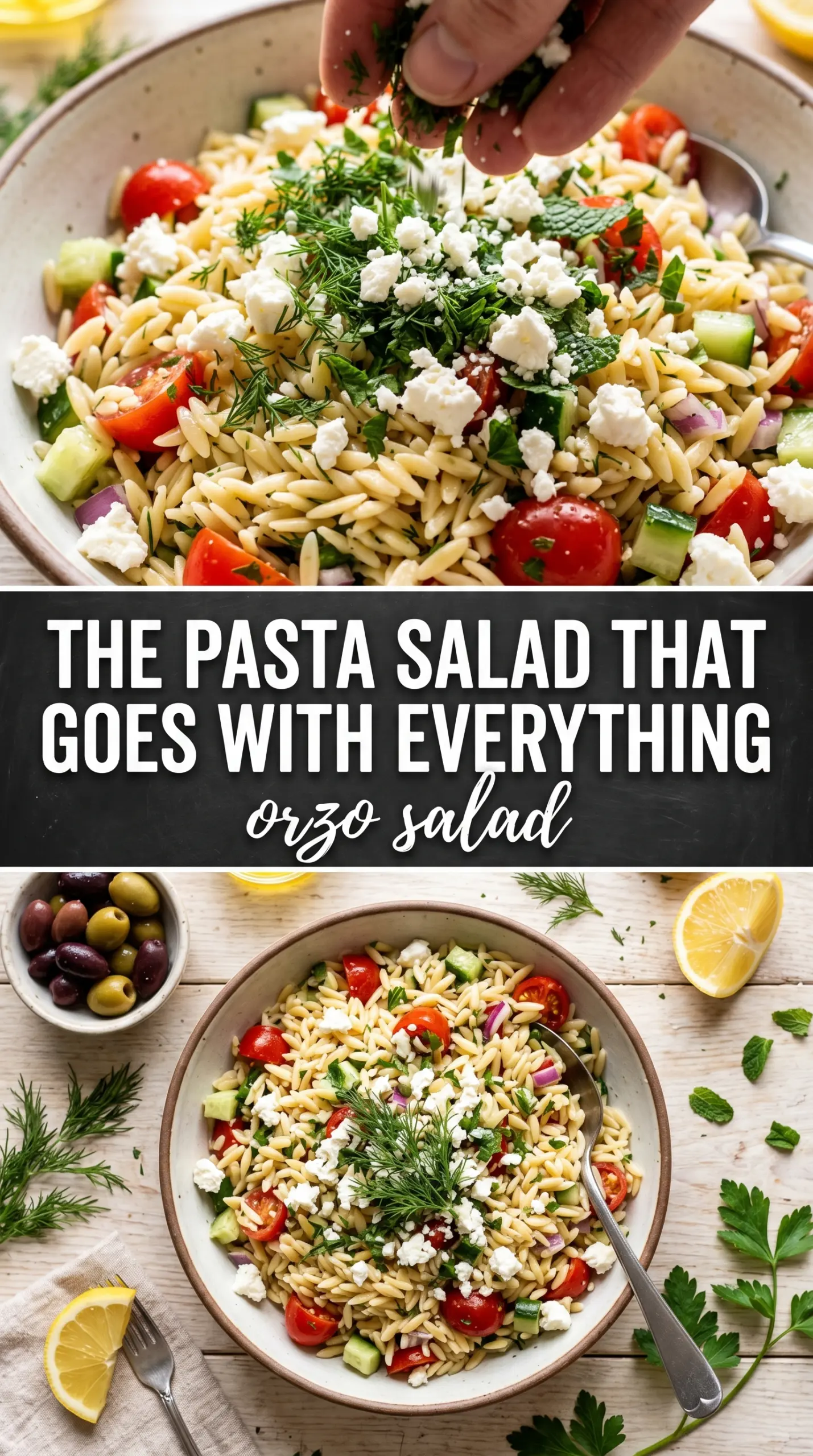
- Cherry tomatoes — Halved tomatoes bring sweetness and a little juice that loosens the dressing just enough. Grape tomatoes work the same way if that’s what you have.
- English cucumber — The thin skin and low seed count keep the salad crisp without watering it down. If you use a standard cucumber, peel it and scoop out the seeds first.
- Kalamata olives — They add the salty, briny edge that makes the salad taste complete. Black olives will work, but the flavor is milder.
- Feta — Feta gives the salad its creamy, salty finish. Buy a block and crumble it yourself if you can, because pre-crumbled feta is drier and less tender.
- Fresh parsley and basil — These herbs keep the salad tasting green and lively after chilling. Dried herbs won’t give the same fresh finish here.
- Olive oil — A good olive oil matters because the dressing is uncooked, so its flavor comes through directly. Use your nicest bottle here.
Building the Salad So It Stays Bright Instead of Soggy
Whisking the Dressing First
Start with the dressing so the acid, oil, and Dijon have time to come together before they hit the pasta. Whisk until it looks glossy and slightly thickened, not separated. If the oil is added too fast, the dressing can break and coat the bowl instead of the salad. The honey softens the sharp edges, but it shouldn’t make the dressing sweet.
Cooling the Orzo the Right Way
Cook the orzo until it’s just tender, then drain it well and let it cool before adding anything else. If you rush this part, the heat will wilt the herbs and soften the cucumber. A quick toss with a tiny drizzle of olive oil can help keep the grains from sticking while they cool, but don’t drown them. You want loose, separate pieces that can grab the vinaigrette.
Layering the Mix-Ins
Add the tomatoes, cucumber, olives, onion, parsley, and basil to the cooled orzo, then pour over the dressing and toss thoroughly. The salad should look evenly glossy, with no dry patches at the bottom of the bowl. Fold in most of the feta last so some of it melts into the dressing and some stays intact. That mix of creamy and crumbly is what gives the salad its best texture.
Letting It Rest Before Serving
Thirty minutes in the fridge is enough for the flavors to settle and for the orzo to soak up the lemon herb dressing. Taste it again after chilling, because cold food always needs a little more salt or acid than it did at the start. If it seems tight or dry, a spoonful of olive oil and a squeeze of lemon fix it fast. Finish with the remaining feta and extra herbs right before serving so the top stays fresh.
How to Adapt This for Different Tables and Pantry Gaps
Make It Dairy-Free
Leave out the feta and add a handful of chopped fresh dill or a few extra olives for more contrast. The salad will lose the creamy-salty finish, so taste it carefully and add a little more salt plus a drizzle of olive oil at the end.
Turn It Into a Heartier Main Dish
Add chickpeas, grilled chicken, or shrimp and keep the dressing amount the same if you want a fuller meal. Chickpeas make the most natural fit because they hold the lemon and herbs without stealing attention from the vegetables.
Swap the Herbs Based on What’s Fresh
Parsley and basil are the best match here, but dill or mint can step in if that’s what you’ve got. Dill pushes the salad in a more Greek direction, while mint makes it feel sharper and cooler. Use one strong herb with one softer herb so the salad doesn’t taste muddled.
Storage and Reheating
- Refrigerator: Keep covered for up to 3 days. The cucumber will soften a bit, but the flavor stays strong.
- Freezer: Don’t freeze this salad. The vegetables turn watery and the feta loses its texture.
- Reheating: Serve it cold or at cool room temperature. If it’s been in the fridge, stir in a little olive oil and a squeeze of lemon before serving because chilled pasta tightens up and can taste muted.
Answers to the Questions Worth Asking
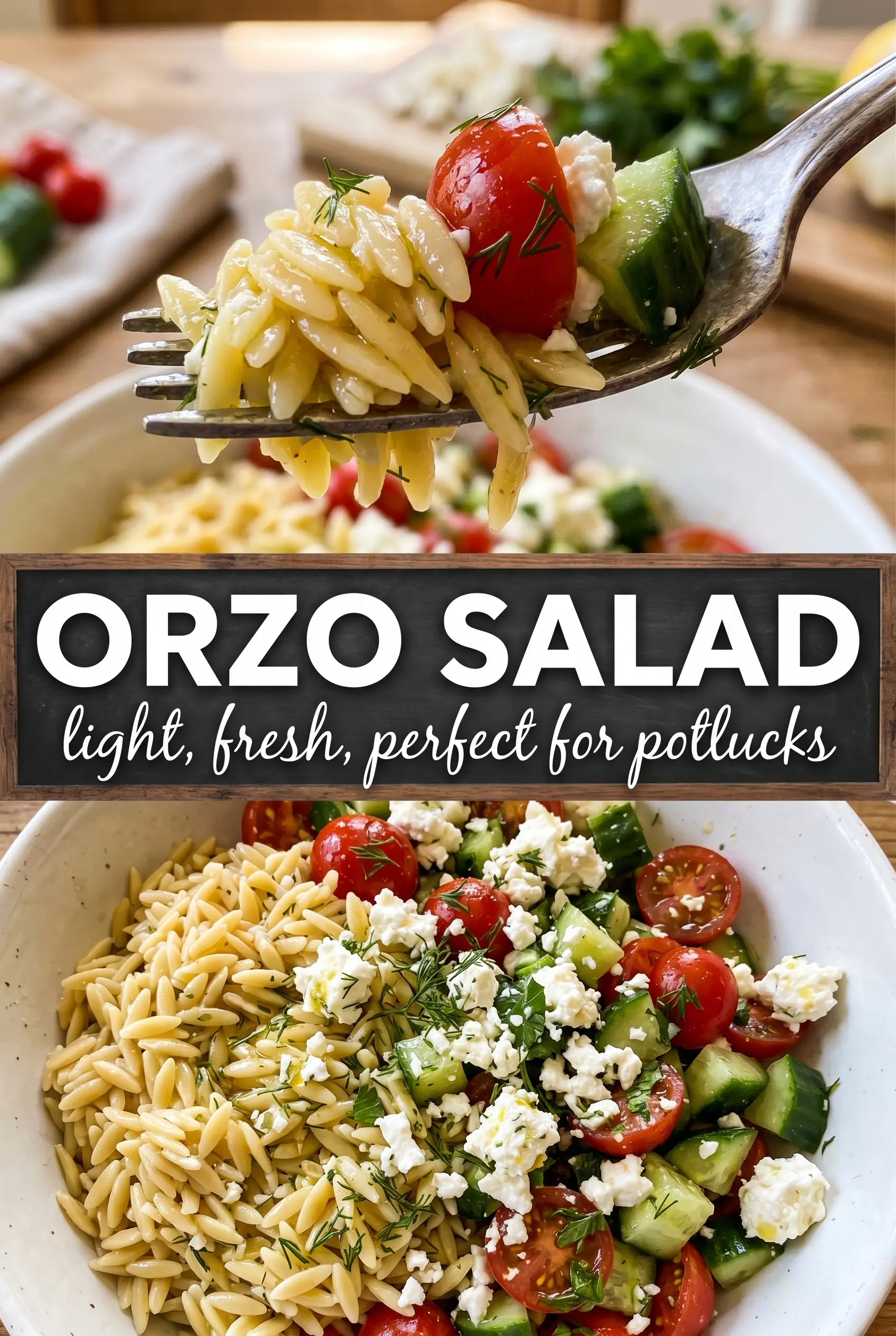
Orzo Salad
Ingredients
Method
- Whisk olive oil, lemon juice, lemon zest, red wine vinegar, Dijon mustard, honey, dried oregano, and salt and pepper until emulsified, glossy and uniform.
- Rest the emulsified dressing for 5 minutes at room temperature so the flavors meld.
- Combine cooled orzo, cherry tomatoes, diced cucumber, halved Kalamata olives, finely diced red onion, chopped parsley, and torn basil in a large bowl.
- Pour the lemon herb dressing over the salad and toss until every small grain is evenly coated and glistening.
- Fold in most of the crumbled feta so it disperses throughout the orzo.
- Refrigerate the salad for at least 30 minutes; the orzo should firm up slightly as it absorbs the tangy dressing.
- Taste and adjust lemon or salt, then top with the remaining feta and extra fresh herbs before serving.