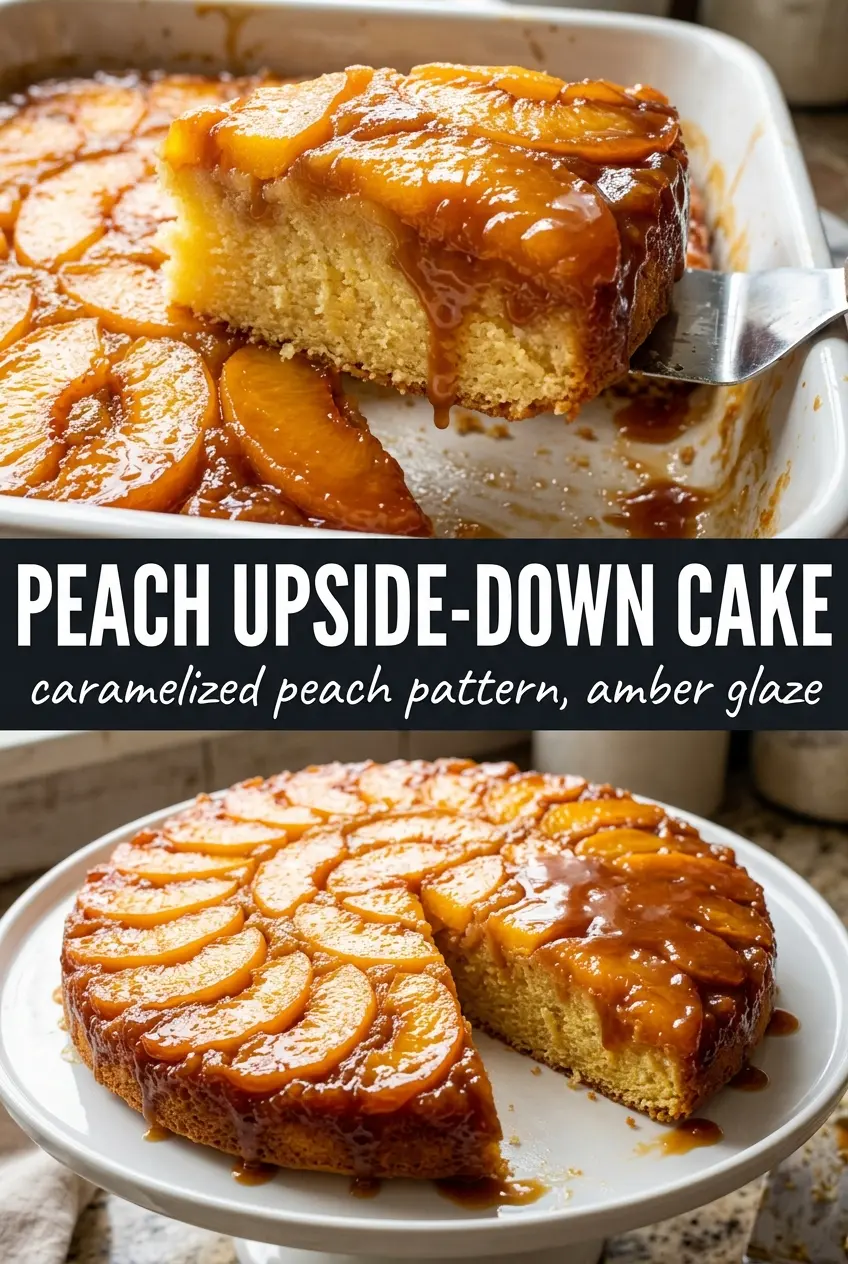
Peach upside-down cake turns a pan of sliced fruit and brown sugar into something that looks bakery-made when it comes out of the oven. The peaches soften into the caramel, the top bakes into a glossy amber layer, and the cake underneath stays tender enough to soak up every bit of that syrup without turning heavy. When it’s inverted cleanly, the whole thing has that satisfying moment of reveal that makes people stop talking for a second.
The part that makes this version work is the balance between the buttery caramel topping and a batter that’s sturdy enough to hold the fruit, but soft enough to stay moist. Brown sugar melts into the butter before the peaches go in, so the topping starts as a real caramel base instead of just sweet fruit on top of cake. I’ve found that using ripe but still sliceable peaches gives you the best texture; too soft and they collapse, too firm and they stay a little sharp against the caramel.
Below, I’ve laid out the little details that matter most: how to arrange the peaches so the top comes out neat, why the pan rest is non-negotiable, and what to swap if you only have sour cream or prefer a cast iron skillet.
The peaches held their shape and the brown sugar layer turned into the prettiest caramel glaze. I let it rest the full 10 minutes before flipping and the cake came out in one clean piece.
Like this peach upside-down cake? Save it for the next time you want glossy caramelized peaches and a tender brown sugar cake in one pan.
The Caramel Layer Has to Start Before the Fruit Goes In
The biggest mistake with upside-down cake is treating the topping like an afterthought. If the butter and brown sugar don’t melt together before the peaches go in, you end up with dry patches of sugar instead of that glossy, spoonable caramel. The oven does the rest of the work, but only if the base is already evenly melted and the peaches are arranged snugly enough to catch the syrup as it bubbles.
That 10-minute rest after baking matters too. Flip too soon and the caramel is still too loose, so it runs off the fruit and leaves the top patchy. Wait too long and the sugar starts to set hard in the pan, which is how you lose slices when you turn it out. Ten minutes is the sweet spot I trust every time.
What the Peaches, Milk, and Butter Are Really Doing Here

- Peaches — Use ripe peaches that still slice cleanly. They should give you fragrance and juiciness without melting into puree while the cake bakes. If your peaches are very soft, slice them a little thicker so they hold their shape better.
- Brown sugar — This is what creates the deep caramel flavor and the sticky top. Light or dark brown sugar both work, but dark brown sugar gives you a darker, more molasses-heavy finish. Don’t swap in white sugar here; it won’t give you the same syrupy layer.
- Butter — The butter is doing two jobs: it melts into the caramel layer and keeps the cake itself rich and tender. In the topping, use the full amount so the sugar can dissolve properly. In the batter, softened butter needs to be beaten until fluffy so the cake rises with a fine crumb.
- Sour cream or whole milk — Whole milk makes a lighter crumb, while sour cream gives you a slightly denser, more plush cake that holds up beautifully under the fruit. If you use sour cream, the batter may look thicker, and that’s fine. It bakes into a moister slice.
- Cinnamon — There’s just enough here to warm the peaches without turning the cake into spice cake. It’s worth keeping in both the topping and batter because the flavor reads as one connected dessert instead of two separate layers.
Building the Batter and Inverting It Without Losing the Top
Melt and Arrange the Topping
Put the butter in the pan and let the oven melt it completely, then swirl it so every corner is coated. Sprinkle the brown sugar and cinnamon over the butter in an even layer; if you leave gaps, those spots turn patchy instead of glossy. Lay the peach slices in overlapping circles so they’re snug but not stacked in clumps, because the fruit will shrink slightly as it bakes.
Mix the Cake Just Until It Comes Together
Beat the butter and sugar until it looks pale and fluffy, then add the eggs and vanilla. Alternate the dry ingredients with the milk or sour cream so the batter stays smooth and doesn’t curdle. If you overmix once the flour goes in, the cake can turn tight instead of tender, and that’s the one thing that makes upside-down cake feel heavy.
Pour, Bake, and Watch for the Right Pull From the Pan
Spoon the batter gently over the peaches and smooth it without pressing hard into the fruit layer. Bake until a toothpick comes out clean and the cake is just starting to pull away from the sides of the pan. That edge pull is a better clue than color alone; if the top browns too fast but the center still feels loose, the cake needs a few more minutes.
Rest, Flip, and Let the Caramel Set
Set the pan on a rack and leave it alone for exactly 10 minutes. Run a knife around the edge if needed, place your plate on top, and invert in one confident motion. If any peach slices stick, lift them off the pan and place them back on the cake while the caramel is still warm and flexible.
How to Adapt This Cake for a Different Pan or a Different Dairy
Cast iron skillet version
A 9-inch cast iron skillet gives you the prettiest caramel edges and helps the topping heat evenly. The fruit layer may brown a little more at the outer edge, which is a good thing here. Just keep the pan on a stable rack and watch the bake time closely, because cast iron can push the cake toward done a little faster.
Sour cream for a richer crumb
Swap the milk for sour cream if you want a denser, more velvety cake that stands up to the juicy topping. The batter will be thicker, so spread it gently over the peaches instead of pouring it all in one spot. The result is a slightly richer slice with a more bakery-style crumb.
Gluten-free adaptation
Use a good 1:1 gluten-free baking flour in place of the all-purpose flour. The texture will be a little more delicate, so let the cake cool the full 10 minutes before flipping and handle it gently once it’s out of the pan. You’ll still get the caramelized top and soft crumb, just with a slightly more tender finish.
Storage and Reheating
- Refrigerator: Keep covered for up to 4 days. The topping will thicken in the fridge, and the cake will taste firmer cold.
- Freezer: Freeze individual slices tightly wrapped for up to 2 months. The peaches soften a bit after thawing, but the cake still reheats well.
- Reheating: Warm slices in a 300°F oven for 10 to 12 minutes or until just heated through. The microwave makes the caramel gummy, so use it only if you’re not picky about the texture.
Answers to the Questions Worth Asking
Peach Upside-Down Cake
Ingredients
Equipment
Method
- Preheat the oven to 350°F and place a 9-inch round cake pan or cast iron skillet in the process; swirl to coat after melting the butter in the pan. Melt until just liquid and shiny so the brown sugar can dissolve into a glaze.
- Sprinkle the brown sugar and cinnamon evenly over the melted butter in the pan. Let the surface settle so you can see an even amber layer forming.
- Arrange the peach slices in overlapping concentric circles over the brown sugar layer and set aside the pan. Keep the slices tight together so the pattern stays intact when flipped.
- Beat the softened butter and granulated sugar until fluffy. Stop when the mixture looks lighter in color and slightly thicker.
- Add the eggs and vanilla and beat just until combined. Mix until no streaks remain.
- Alternately mix in the flour mixture (all-purpose flour, baking powder, salt, and cinnamon) and the whole milk or sour cream. Mix until the batter is smooth and the last flour disappears.
- Pour the batter gently over the peach arrangement and smooth the top. Spread carefully so peaches remain in concentric rings.
- Bake at 350°F for 38-42 minutes until a toothpick comes out clean and the cake pulls away from the sides. The top should be golden and spring back lightly when touched.
- Cool in the pan exactly 10 minutes to let the caramel set slightly. You should see the edges look firm rather than loose.
- Invert the cake onto a plate and let the peaches release. The caramelized brown sugar glaze should shimmer as the concentric amber rings appear.