Steak, peppers, onions, and mushrooms all steam together in one tight foil packet, and what comes out is the kind of dinner that tastes like it took a lot more work than it did. The vegetables soften just enough to turn sweet at the edges, the steak stays juicy, and the provolone melts into everything so each bite feels rich without needing a separate sauce.
The trick here is keeping the slices thin and the packets sealed well. Thin steak cooks fast enough to stay tender, and the heavy-duty foil traps the heat so the vegetables release their juices and season the meat from the inside. Worcestershire gives the filling that classic savory backbone, while the cheese goes on top before sealing so it melts into a blanket instead of sitting in a separate layer.
Below, I’m walking through the details that matter most: how to keep the steak from overcooking, which ingredients are worth paying attention to, and what to change if you want these packets a little cheesier, lighter, or easier to serve for a crowd.
The foil packets kept the steak so tender, and the onions and peppers came out perfectly soft without turning mushy. I opened them at the table and the melted provolone over everything smelled like a steakhouse dinner.
Save these Philly Cheesesteak Foil Packet Dinners for a grilled meal with juicy steak, melted provolone, and easy cleanup.
The Part That Keeps the Steak Tender Instead of Overdone
Foil packets solve one of the biggest problems in cheesesteaks: the steak and vegetables don’t need the same exact cook time, but they still end up in the same package. Thinly sliced sirloin gives you enough beefy flavor without needing a long grill time, and the packet format keeps the meat from drying out while the onions and peppers soften. The mistake most people make is leaving the packets on the heat too long because they expect the vegetables to need more time than the steak. Thin steak in a sealed packet cooks faster than you think.
Another detail that matters here is the layering. Putting the vegetables and steak together instead of separating them lets the juices mingle, which gives you that classic cheesesteak taste without extra sauce. If your steak is sliced thicker than about 1/4 inch, it will fight you here and turn chewy before the vegetables are done, so start with a sharp knife and slice against the grain as thinly as you can manage.
What the Steak, Vegetables, and Cheese Are Each Doing Here
The ingredients aren’t all pulling the same weight, and that’s what makes this dinner work. Sirloin is the best balance of tenderness and flavor for foil packets, especially when it’s sliced thin. Ribeye tastes richer, but it also brings more fat and cost, which isn’t necessary once the cheese melts over the top. Heavy-duty foil matters more than people think because thin foil can tear when the packets are flipped.
- Sirloin steak — Thinly sliced sirloin stays tender in the short cook time. If you can only find a thicker cut, freeze it for 20 to 30 minutes first so it firms up enough to slice properly.
- Bell peppers, onions, and mushrooms — This trio gives you the sweet, savory, juicy backbone of the filling. Mushrooms are optional in a classic cheesesteak, but here they help the packets feel fuller and add moisture without making the filling watery.
- Provolone cheese — Provolone melts smoothly and gives you that familiar cheesesteak finish. American cheese will melt even more aggressively, but it changes the flavor and makes the filling heavier.
- Worcestershire sauce — This adds depth fast. You don’t need much, but skipping it leaves the filling flatter and less beefy.
- Heavy-duty foil — Regular foil can split when it’s folded and flipped. If that happens, steam escapes and the steak dries out before the vegetables finish softening.
How to Build the Packets So the Fillings Steam, Not Sog
Dividing the Filling Evenly
Spread the steak and vegetables across the four foil sheets in roughly equal piles so every packet cooks at the same pace. Keep the pile centered, not stretched wide, because a compact mound steams better and seals more easily. If one packet is overloaded, the meat in the middle stays cooler while the edges overcook.
Seasoning Before Sealing
Drizzle each portion with olive oil and Worcestershire sauce, then add garlic powder, salt, and pepper. The oil helps conduct heat and keeps the filling from sticking to the foil, while the Worcestershire seasons the meat all the way through as the packets heat up. Don’t pour so much liquid in that the bottom becomes soupy; you want a little juice, not a stew.
Sealing and Grilling
Fold the foil over the filling and crimp the edges tightly so steam stays trapped inside. Grill over medium heat for 18 to 20 minutes, flipping once halfway through to keep the heat even. The packets are done when the peppers have softened, the onions look glossy, and the steak feels just cooked through; if you keep them on the grill until the cheese is bubbling hard for too long, the meat starts to tighten up.
Finishing With the Cheese
Top each packet with the provolone before sealing so it melts directly over the hot filling. When you open the packets, do it carefully and away from your face because the steam rushes out fast. Serve right away in hoagie rolls or straight from the foil while the cheese is still stretchy.
How to Adapt These Foil Packets Without Losing the Cheesesteak Feel
Make it dairy-free
Skip the provolone and finish the packets with a little extra olive oil and a squeeze of lemon after cooking. You lose the melted, creamy top layer, but the steak and vegetables still taste complete because the Worcestershire and grill heat carry the savory side of the dish.
Use a different cheese
Mozzarella melts beautifully but tastes milder, while American cheese gives you a creamier, more classic diner-style finish. Swiss works if you like a nuttier note, but it pulls the flavor a little farther from the traditional cheesesteak taste.
Turn it into a low-carb dinner
Serve the packets over cauliflower rice or eat them straight from the foil without the hoagie rolls. You keep all the same flavors, and skipping the bread makes the meal lighter without changing the cooking method.
Storage and Reheating
- Refrigerator: Store leftovers in an airtight container for up to 3 days. The vegetables will soften a little more after chilling, but the flavor stays strong.
- Freezer: You can freeze the cooked filling, though the peppers and onions will lose some texture after thawing. Freeze without the rolls, and wrap tightly to prevent freezer burn.
- Reheating: Reheat gently in a skillet over medium-low heat or in a 325°F oven until warmed through. High heat dries the steak out fast, so avoid blasting it in the microwave unless you’re only warming a small portion.
Questions I Get Asked About This Recipe
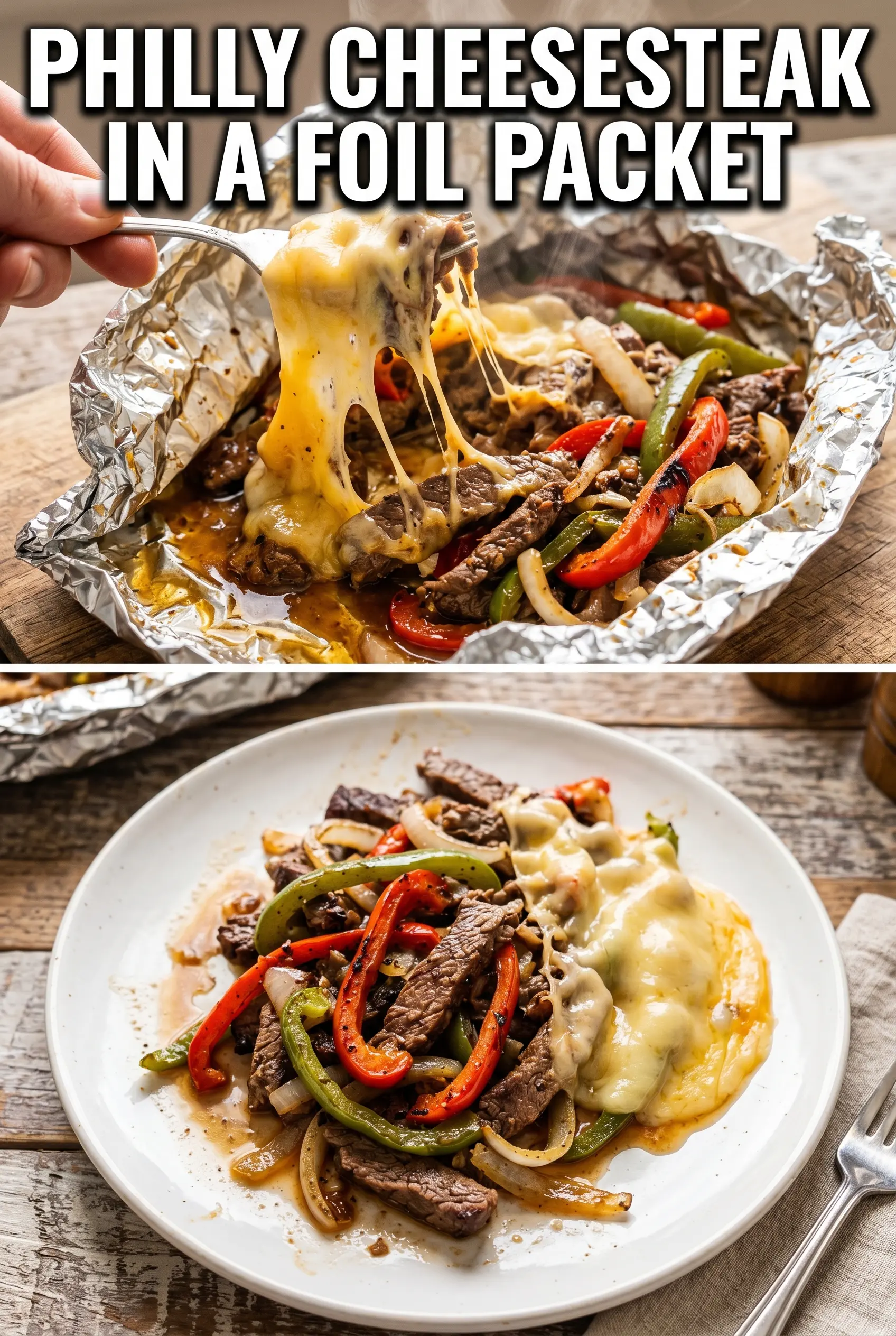
Philly Cheese Steak Foil Packet Dinners
Ingredients
Equipment
Method
- Divide the sirloin steak, bell peppers, onion, and mushrooms among 4 large sheets of heavy-duty foil.
- Drizzle each packet with olive oil and Worcestershire sauce, distributing it over the meat and vegetables.
- Season each packet with garlic powder, salt, and pepper.
- Top each packet with 2 slices of provolone cheese so it sits over the steak and vegetables.
- Fold foil into sealed packets, pressing edges to keep steam in during cooking.
- Grill the packets over medium heat for 18-20 minutes, flipping halfway, until the steak is cooked and the filling is actively steaming.
- Carefully open the packets (steam will be hot) and serve in hoagie rolls or as-is.