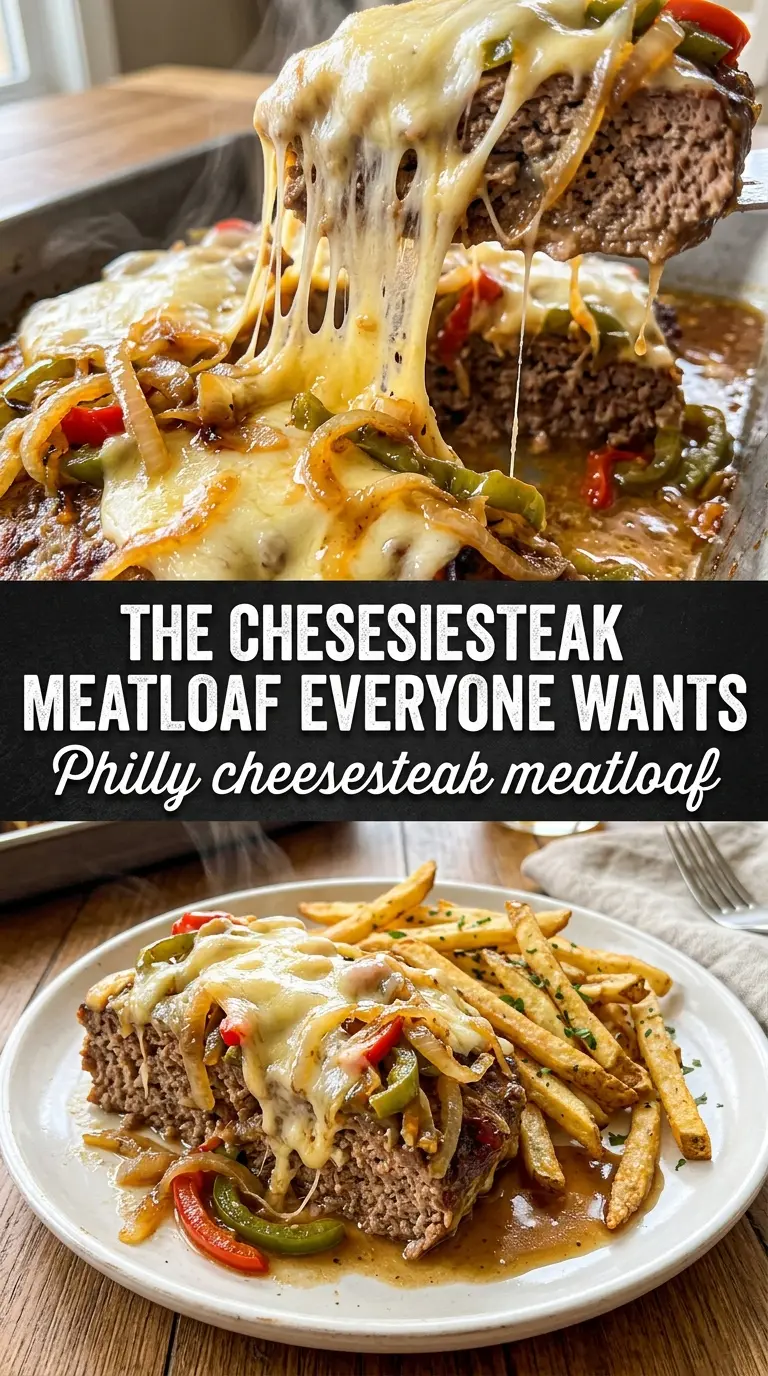
Philly cheesesteak meatloaf brings all the best parts of a cheesesteak into a sliceable dinner with a crisp glazed top, juicy beef, and a molten middle of peppers, onions, mushrooms, and provolone. The filling stays tucked inside the loaf instead of disappearing into the pan, so every slice gives you that beef-and-cheese payoff right through the center.
What makes this version work is the balance between moisture and structure. The sautéed vegetables cook down before they go in, which keeps the loaf from turning soggy, and the meat mixture is just bound enough to hold together without becoming dense. The short rest at the end matters too. Cut in too soon and the cheese runs out before it has a chance to settle back into the meat.
Below, I’ve included the small details that make a stuffed meatloaf behave: how to keep the filling centered, how to seal the top without cracks, and what to do if you want to swap the cheese or make it ahead.
The onions, peppers, and mushrooms stayed tucked in the middle and the provolone melted into the beef instead of leaking all over the pan. I sliced it after the 10-minute rest and it held together perfectly.
Love the gooey provolone center and browned glaze? Save this Philly Cheesesteak Meatloaf for a dinner that slices clean and tastes like a cheesesteak in loaf form.
The part that keeps the filling from disappearing into the loaf
Stuffed meatloaf only works when the filling is treated like a layer, not a mix-in. The peppers, onions, and mushrooms need to be cooked first so they lose enough moisture to stay inside the loaf instead of steaming the beef from the middle outward. That quick sauté also concentrates their flavor, which matters because raw vegetables inside meatloaf can taste flat by the time the center reaches temperature.
The other thing that trips people up is sealing the top. If the upper layer of beef is too thin, the filling breaks through and leaks cheese. Press the top layer all the way to the edges and pinch any seams closed before the glaze goes on. The goal is a tight meat shell with no gaps for the provolone to escape.
What each ingredient is doing in this Philly-inspired loaf
- Ground beef — Use 80/20 if you can. It has enough fat to keep the loaf juicy without turning greasy, and leaner beef tends to bake up dry and crumbly in a stuffed meatloaf.
- Breadcrumbs and eggs — These hold the loaf together and keep the slices from falling apart. If you need a gluten-free version, use gluten-free breadcrumbs or crushed gluten-free crackers in the same amount.
- Worcestershire — This gives the meat mixture a savory backbone that mimics the beefy depth you want in a cheesesteak. There isn’t a perfect substitute, but soy sauce works in a pinch if you use a little less salt elsewhere.
- Provolone — This is the cheese that makes the whole thing taste like a cheesesteak. It melts smoothly and stays creamy without turning oily, so I wouldn’t swap in a strongly flavored hard cheese here.
- Bell pepper, onion, and mushrooms — These are the heart of the filling. Cook them until softened and most of the moisture has cooked off, or the loaf will slice wet and the center will slump.
- Ketchup glaze — The glaze adds a little sweetness and helps the top brown into a sticky finish. Brush it on before baking so it sets into the meat instead of sitting on top like sauce.
Building the loaf so it stays juicy and slices clean
Cooking the vegetables first
Melt the butter in a skillet and cook the peppers, onion, and mushrooms over medium-high heat until they soften and the pan looks less wet. You don’t need deep caramelization here, just enough cooking to drive off excess moisture and wake up the flavor. Let the vegetables cool for a few minutes before layering them into the loaf, because hot filling can start softening the meat mixture before it even goes into the oven.
Forming the meat shell
Mix the beef, breadcrumbs, eggs, Worcestershire, garlic powder, salt, and pepper just until combined. Overmixing makes the texture tight and rubbery, which is the last thing you want in a stuffed loaf. Press half of the mixture into the pan and build up the sides a little so the filling has a sturdy wall to sit inside.
Layering the cheese and filling
Lay the provolone over the beef, then spread the vegetables over the cheese in an even layer. The cheese acts like a buffer, helping keep the vegetables from soaking directly into the meat underneath. Add the remaining slices on top of the vegetables so the center turns molten and stretchy instead of just tasting like seasoned beef with peppers.
Sealing and glazing
Top with the remaining meat mixture and press it gently to seal every edge. If you see an opening, pinch it closed now; once it bakes, that gap becomes a leak point. Stir together the ketchup, brown sugar, and Worcestershire, then brush it over the top so the glaze caramelizes while the loaf finishes baking.
Baking to the right temperature
Bake at 350°F until the center reaches 160°F on an instant-read thermometer, usually 55 to 65 minutes. If the top browns too fast, lay a loose piece of foil over it for the last part of baking. Let the loaf rest for 10 minutes before slicing, or the juices and cheese will run out the second the knife goes in.
How to adapt this loaf when you want a different result
Gluten-free version
Swap the breadcrumbs for gluten-free breadcrumbs or crushed gluten-free crackers. Keep the amount the same so the loaf still holds together, and let the mixture rest for a minute after mixing so the crumbs hydrate before shaping.
Extra-cheesy center
Add another layer of provolone or tuck a few strips into the center before sealing the top. More cheese gives you a richer pull when you slice, but it also makes leaks more likely, so keep the edges sealed tightly.
Swap the mushrooms
If mushrooms aren’t your thing, replace them with extra onion or a few more strips of bell pepper. You lose a little of that savory, steakhouse-style depth, but the loaf still keeps the same Philly-inspired shape and texture.
Make-ahead dinner
Assemble the loaf up to a day ahead, cover it tightly, and refrigerate it before baking. Let it sit on the counter while the oven preheats so it doesn’t go in stone-cold, which can throw off the bake time and leave the center undercooked.
Storage and Reheating
- Refrigerator: Store leftovers in an airtight container for up to 4 days. The cheese will firm up as it chills, but the flavor stays strong.
- Freezer: Freeze sliced portions tightly wrapped for up to 2 months. Thaw overnight in the refrigerator before reheating so the center warms evenly.
- Reheating: Reheat covered in the oven at 325°F or in the microwave at medium power. High heat dries out the beef and makes the cheese split, so warm it gently until just hot through.
Answers to the questions worth asking

Philly Cheesesteak Meatloaf
Ingredients
Equipment
Method
- Preheat the oven to 350°F. Position a sheet pan so it’s ready for the loaf.
- Sauté the green bell pepper, onion, and mushrooms in butter over medium-high heat for 5 minutes until softened. Spread on the pan to cool slightly so the filling doesn’t steam the meat.
- Mix all meatloaf ingredients until combined. Press half of the mixture into a loaf shape on the prepared sheet pan.
- Layer the provolone slices over the beef. Add the sautéed vegetables on top so the filling is evenly distributed.
- Press the remaining meat mixture over the top to seal completely. Press firmly along edges so the cheese stays inside while baking.
- Mix the glaze and brush it over the top. Bake for 55–65 minutes until the internal temperature reaches 160°F, with a browned glaze on the surface.
- Rest for 10 minutes before slicing. Let the juices settle so each slice holds the stuffed provolone filling.