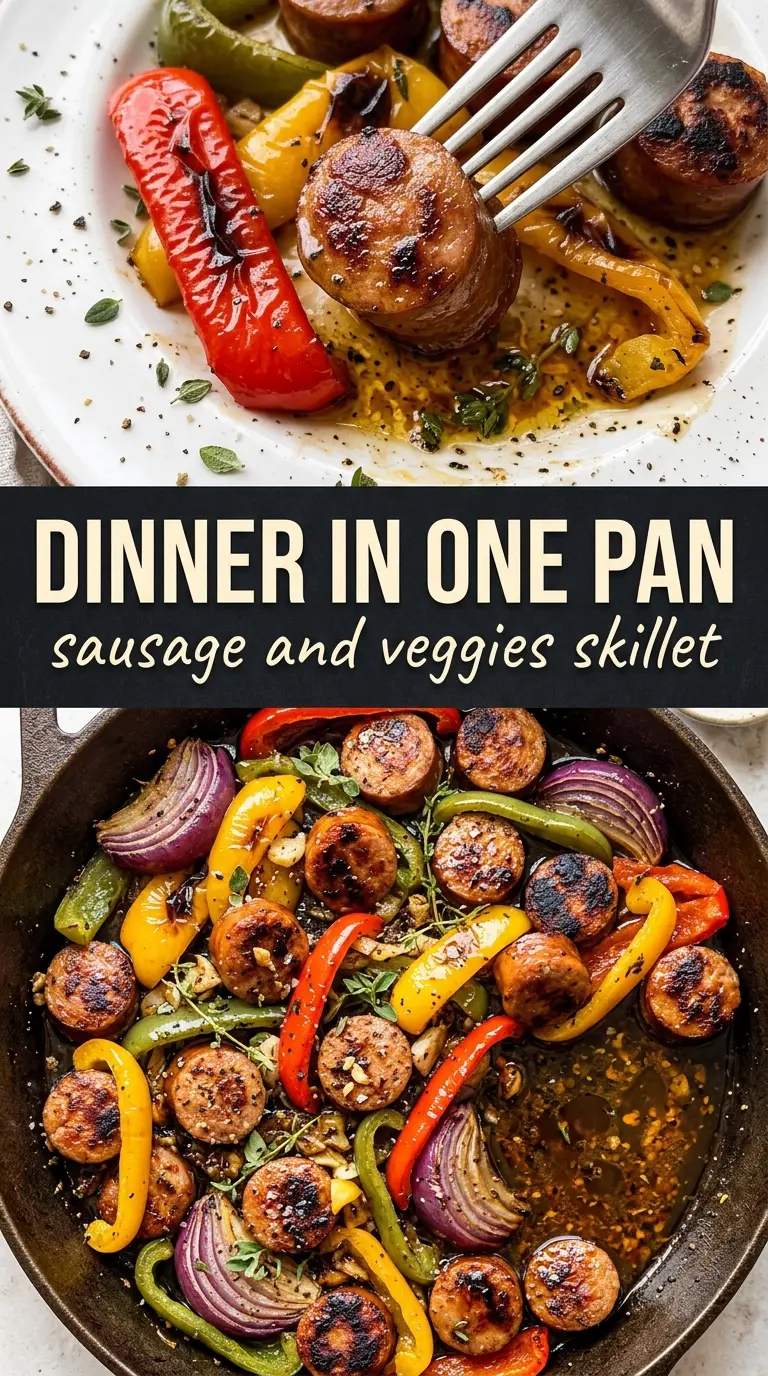
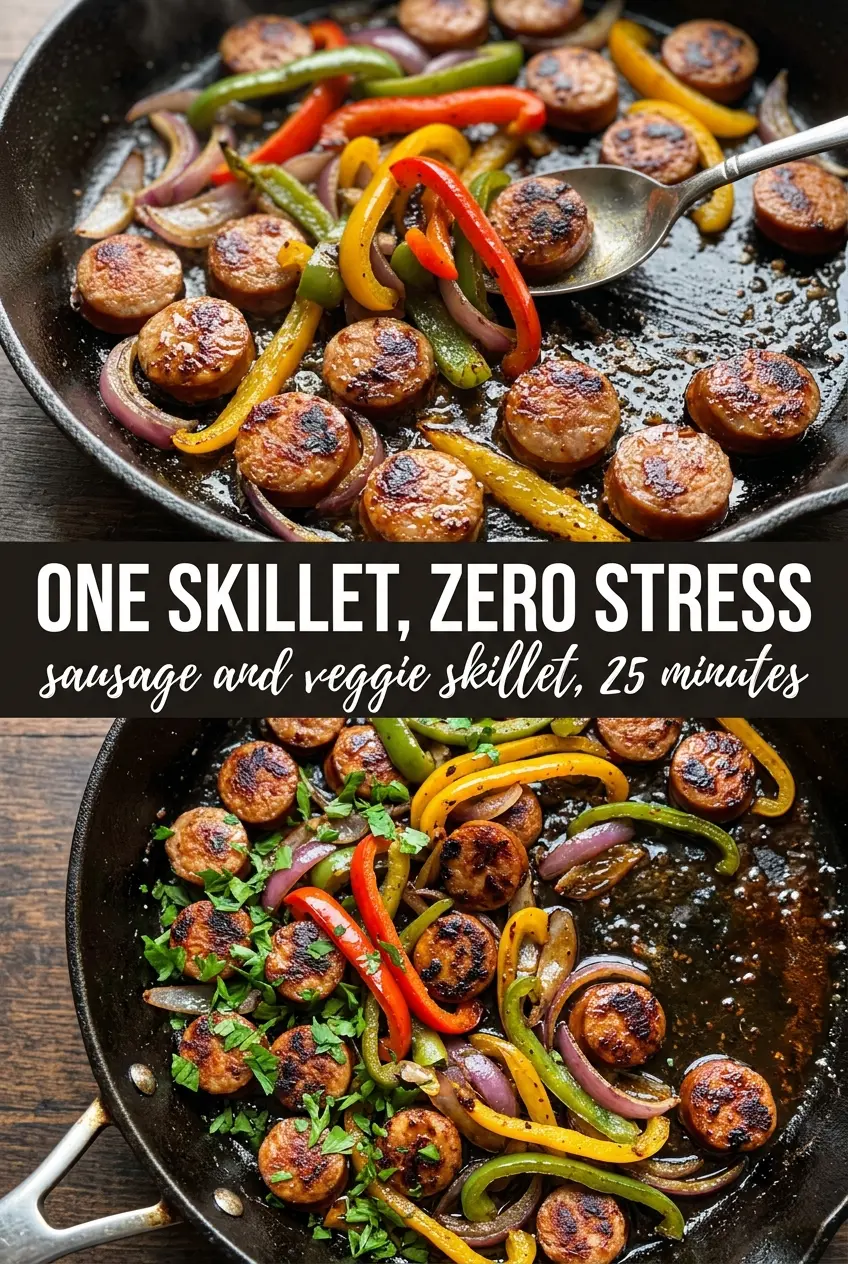
Caramelized sausage, blistered peppers, and tender zucchini make this skillet dinner taste like it took a lot more effort than it did. The sausage gets deeply browned in the pan first, then the vegetables pick up all that savory flavor as they cook in the same fat. What you end up with is a fast, one-pan dinner that still has the kind of edges and texture people remember.
The key is heat. A crowded skillet will steam the vegetables before they ever char, so this version gives the sausage its own minute to brown and lets the peppers and onion sit in a hot pan long enough to blister. Zucchini goes in later because it softens fast, and garlic only needs a short finish so it stays fragrant instead of turning bitter. The lemon at the end matters more than it sounds like it should; it wakes up the sausage and keeps the whole pan from tasting heavy.
Below, I’ve included the technique that keeps the vegetables from going soft, plus a few smart swaps if you want to adjust the skillet for what’s in your fridge.
The sausage browned beautifully and the vegetables stayed crisp-tender instead of turning soggy. I loved the lemon at the end — it made the whole skillet taste brighter and pulled everything together.
Save this sausage and veggies skillet for the nights when you want browned sausage, charred peppers, and one pan to clean.
The Trick to Getting Char on the Vegetables Instead of Steam
The biggest mistake with a skillet like this is crowding. If the pan is packed, the vegetables release moisture, the temperature drops, and you end up with soft peppers and pale zucchini instead of those browned edges that make the dish taste cooked with intention. A cast iron skillet helps because it holds heat well, but it still needs space to do its job.
Cook the sausage first and pull it out. That step leaves flavorful fat in the pan, which coats the vegetables and keeps them from sticking while they brown. Once the peppers and onion are in, leave them alone long enough to pick up color before adding the zucchini. Zucchini softens fast and goes from tender to mushy in a narrow window, so it belongs near the end, not at the start.
- Smoked sausage or kielbasa — Choose a fully cooked sausage with good browning potential. Fresh sausage needs a different treatment and won’t give you the same quick caramelized edges.
- Bell peppers — Red, green, and yellow peppers bring sweetness, bite, and color. Any combination works, but the mix gives the skillet better balance than using only one type.
- Zucchini — Slice it into half-moons so it cooks quickly but still holds some texture. Cut it too thin and it disappears into the pan; too thick and it lags behind the rest of the vegetables.
- Cast iron skillet — This isn’t mandatory, but it’s the easiest way to get the deep browning you want. A heavy stainless skillet works too if you preheat it properly.
What Each Ingredient Is Actually Doing in This Recipe
- Primary ingredient (the star) — Quality matters most. Choose the best you can find.
- Cooking medium (oil, butter, or broth) — This carries flavors and prevents dryness.
- Seasonings (salt, pepper, spices, herbs) — Layer flavors so nothing overpowers. Build depth gradually.
- Aromatics (garlic, onion, herbs) — Cook with fat to bloom flavors. Become the foundation.
- Supporting ingredients — Complement the main ingredient without overpowering it.
- Sauce or liquid (if applicable) — Brings flavors together. Balance richness with acid.
- Acid (lemon, vinegar, wine, or other) — Brightens and prevents flat-tasting results.
- Final finish (garnish, glaze, or sauce) — Prevents one-dimensional taste and adds visual appeal.
How to Layer the Heat So Nothing Turns Soft
Brown the Sausage First
Heat the olive oil over medium-high until it shimmers, then lay the sausage in a single layer. Leave it alone for 3 to 4 minutes so the first side can turn deeply golden; if you keep moving it, you lose the crust. Flip and cook the second side for about 2 minutes, then transfer it out of the pan. That browned fond left behind is where the best flavor starts.
Char the Vegetables in Stages
Add the peppers and onion to the same skillet and keep the heat high enough that they sizzle on contact. Stir only occasionally so some edges can blister and pick up color. When you add the zucchini, the pan should still look dry and hot; if there’s a puddle of liquid, the vegetables are steaming, not browning. Garlic goes in with the zucchini because it burns fast and turns harsh if it sits on the heat too long.
Finish With the Seasoning and Lemon
Once the zucchini is just tender, add the smoked paprika, Italian seasoning, salt, and pepper. Return the sausage to the pan and toss everything for 1 to 2 minutes so the seasoning coats every piece and the sausage reheats without overcooking. The parsley goes on at the end for freshness, and the lemon wedge should be squeezed over the skillet right before serving. That little hit of acid sharpens the sausage and keeps the peppers from tasting flat.
How to Change the Skillet Without Losing the Good Parts
Make it dairy-free and gluten-free
This skillet already fits both of those diets as long as your sausage is labeled gluten-free. The only thing to watch is seasoning blends and packaged sausage, since some brands use fillers or starches that can sneak in gluten. Keep the rest exactly the same and you’ll still get the same browned, savory result.
Swap in chicken sausage for a lighter version
Chicken sausage works well, but it usually browns a little less aggressively than smoked pork sausage, so give it a little extra time before flipping. You’ll get a leaner finish with a slightly milder flavor, which is nice if you want the vegetables to lead.
Use whatever vegetables are in the drawer
Broccoli, mushrooms, and summer squash all work here, but cook them according to how much water they hold. Mushrooms and broccoli can go in earlier; watery vegetables need more heat and a little patience so they don’t dilute the pan. The goal is still the same: keep the skillet hot enough that the vegetables color before they soften.
Add potatoes for a heartier dinner
Diced baby potatoes make this feel more like a full-pan meal, but they need a head start. Par-cook them first or cut them very small, then let them brown before adding the sausage and vegetables. If you skip that step, the peppers will be done before the potatoes are tender.
Storage and Reheating
- Refrigerator: Store in an airtight container for up to 4 days. The vegetables soften a little as they sit, but the flavor holds up well.
- Freezer: It freezes, but the zucchini turns softer after thawing. If you want to freeze it, cool it completely and pack it in a freezer-safe container for up to 2 months.
- Reheating: Reheat in a skillet over medium heat with a small splash of water or oil until hot. The mistake to avoid is blasting it in the microwave until the vegetables collapse and the sausage gets rubbery.
Questions I Get Asked About This Recipe
Sausage and Veggies Skillet
Ingredients
Equipment
Method
- Heat 2 tablespoons olive oil in a large cast iron skillet over medium-high heat until shimmering. Add the sausage rounds in a single layer and cook undisturbed for 3-4 minutes until deeply golden on one side.
- Flip the sausage rounds and cook for 2 minutes more, until caramelized at the edges and browned through. Remove the sausage and set it aside.
- Add the bell peppers and onion to the same skillet and cook over high heat for 4-5 minutes. Stir only as needed so the vegetables blister and char at the edges.
- Add the zucchini and garlic and cook for 3-4 minutes until just tender. Keep the heat high enough to maintain light browning.
- Sprinkle in smoked paprika and Italian seasoning, then season with salt and pepper to taste. Toss briefly to coat the vegetables evenly.
- Return the sausage to the pan and toss everything together for 1-2 minutes until heated through. Garnish with fresh parsley and serve with lemon wedges.