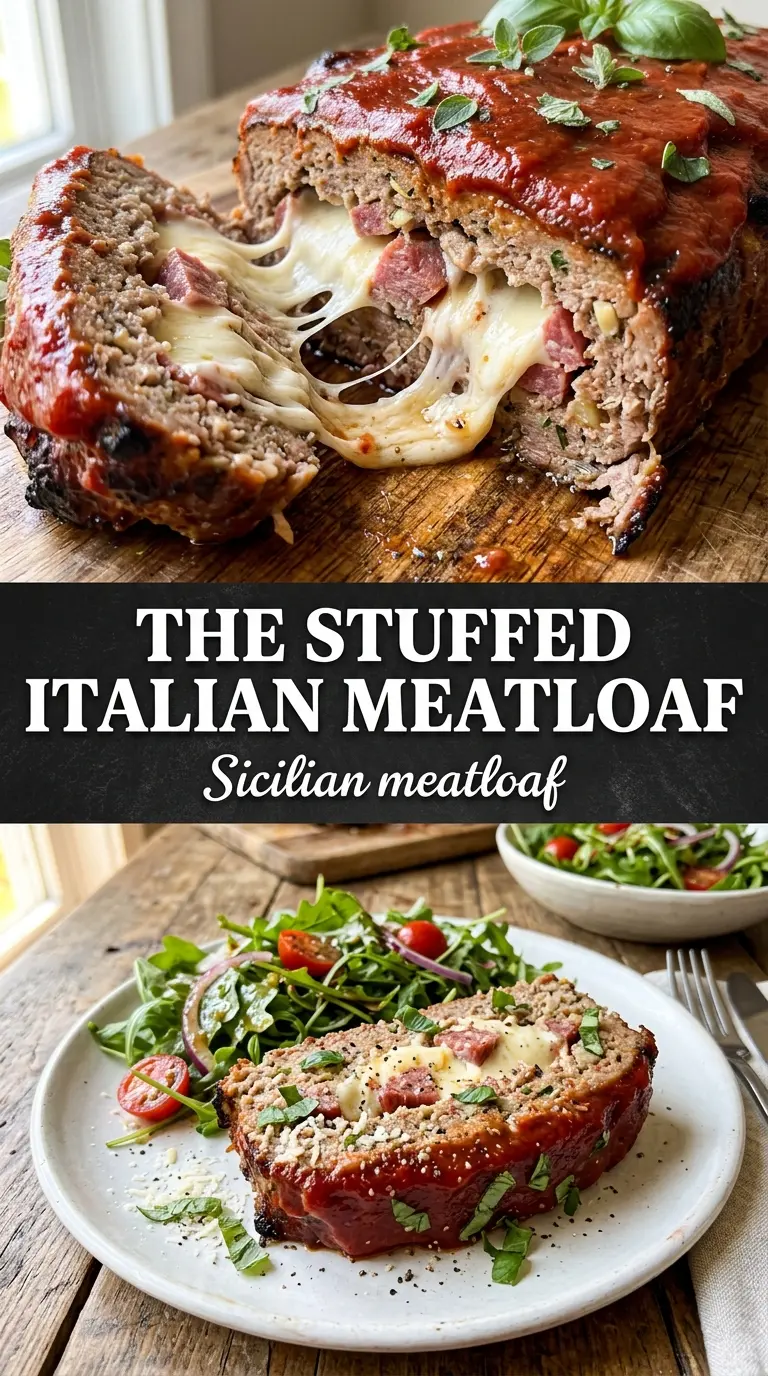
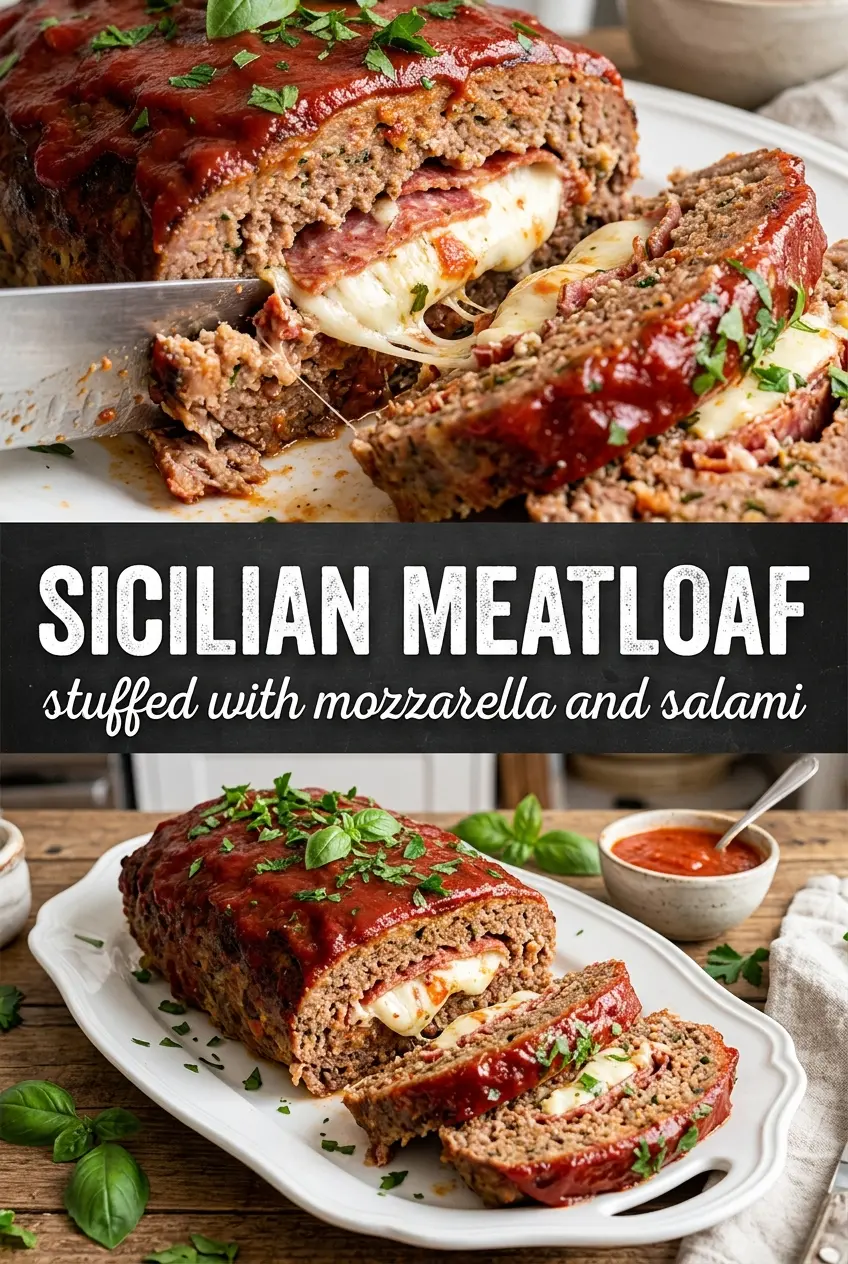
Sicilian meatloaf has that rare kind of table presence that makes people go quiet for a second when you slice into it. The spiral of beef, salami, spinach, provolone, and hard-boiled eggs turns an everyday meatloaf into something that feels special without being fussy. It still eats like comfort food, but the cross-section gives you a little drama on every plate.
What makes this version work is the balance inside the roll. The meat mixture is seasoned simply so the filling can stand out, and the breadcrumb-parmesan base keeps the loaf tender enough to slice cleanly after a short rest. The plastic wrap step matters more than it sounds like it should; it helps you press the meat into an even layer so the filling stays centered instead of tearing out the side.
Below, you’ll find the timing that keeps the loaf from splitting, the ingredient swaps that still hold the shape, and the one serving trick that makes the slices look as good as they taste.
The eggs stayed right down the center and the meatloaf sliced into clean layers without falling apart. I warmed the marinara like you suggested and it brought the whole dish together.
Love the dramatic egg-and-salami spiral in this Sicilian meatloaf? Save it to Pinterest for the next time you want a centerpiece main dish that slices beautifully.
The Part That Keeps the Filling from Blowing Out
The biggest mistake with rolled meatloaf is packing the meat too loose or rolling it before the layer is even. If the rectangle is uneven, the filling shifts toward the thin spots and the loaf splits open in the oven. Press the meat mixture to a steady thickness first, and leave that border empty so the seam has something to seal against.
Hard-boiled eggs look dramatic here, but they also add structure in the center. Cut or arrange them so they sit in a straight line; if they’re scattered, the roll gets lumpy and harder to close. A tight roll is what gives you that clean spiral when you slice it.
- Ground beef — Use an 80/20 blend if you can. Leaner beef works, but the loaf can bake up drier and the slices won’t hold together as neatly.
- Breadcrumbs and eggs — These are the binder that keeps the loaf tender and sliceable. If you need a gluten-free version, use GF breadcrumbs or crushed gluten-free crackers in the same amount.
- Parmesan — This adds salt and depth inside the meat itself, so the filling doesn’t have to do all the work. Pre-grated is fine here, though freshly grated melts into the mixture more smoothly.
- Salami or prosciutto — Salami gives more punch; prosciutto makes the inside a little cleaner and less salty. Either one works, but salami gives the more classic braciole-style bite.
- Provolone — This melts into the filling and helps hold the layers together. Mozzarella can work in a pinch, but it’s milder and less assertive.
What Each Ingredient Is Actually Doing in This Recipe
- Primary ingredient (the star) — Quality matters most. Choose the best you can find.
- Cooking medium (oil, butter, or broth) — This carries flavors and prevents dryness.
- Seasonings (salt, pepper, spices, herbs) — Layer flavors so nothing overpowers. Build depth gradually.
- Aromatics (garlic, onion, herbs) — Cook with fat to bloom flavors. Become the foundation.
- Supporting ingredients — Complement the main ingredient without overpowering it.
- Sauce or liquid (if applicable) — Brings flavors together. Balance richness with acid.
- Acid (lemon, vinegar, wine, or other) — Brightens and prevents flat-tasting results.
- Final finish (garnish, glaze, or sauce) — Prevents one-dimensional taste and adds visual appeal.
Rolling the Loaf Without Losing the Spiral
Building the Rectangle
Mix the beef, breadcrumbs, parmesan, eggs, garlic, parsley, oregano, salt, and pepper just until combined. Overmixing makes the loaf dense, and you’ll feel it when the texture turns pasty instead of cohesive. Press the mixture into a 10×12-inch rectangle on plastic wrap, keeping the corners as even as you can. Uneven edges are what make the roll bulge in one spot and tear in another.
Layering the Filling
Lay down the salami or prosciutto first, then the wilted spinach, provolone, and hard-boiled eggs. Leave about a 1-inch border all the way around so the filling doesn’t squeeze out the sides when you roll it. The spinach needs to be wilted and squeezed dry; wet greens steam inside the loaf and can make the center watery.
Sealing and Baking
Use the plastic wrap to help you lift and roll the meatloaf into a tight log, then place it seam-side down in the baking dish. If the seam isn’t sealed, it will open as the loaf expands in the oven. Bake until the center reaches 160°F, which usually takes 60 to 70 minutes, then rest it for 10 minutes before slicing. That rest is what keeps the juices in the loaf instead of running out onto the cutting board.
Make it a little lighter
Use ground turkey instead of beef and add 1 tablespoon olive oil to the meat mixture so it doesn’t bake up dry. The flavor gets a little cleaner and less rich, but the spiral still holds if you keep the filling tightly packed.
Dairy-free version
Skip the provolone and replace the parmesan with a dairy-free hard cheese or nutritional yeast if that’s what you keep on hand. You’ll lose some of the salty richness, so lean harder on the salami and marinara for flavor.
Make-ahead assembly
Form and roll the loaf up to 24 hours ahead, then cover it tightly and refrigerate before baking. Cold meatloaf can go straight into the oven, but plan on adding a few extra minutes since it starts from a lower temperature.
Storage and Reheating
- Refrigerator: Store leftovers in an airtight container for up to 4 days. The slices firm up as they chill, which actually makes them easier to reheat cleanly.
- Freezer: This freezes well. Wrap individual slices or the whole loaf tightly and freeze for up to 2 months; thaw in the refrigerator before reheating.
- Reheating: Warm slices covered in a 325°F oven with a spoonful of marinara so they don’t dry out. The common mistake is blasting them in the microwave until the filling bursts and the edges get tough.
Questions I Get Asked About This Recipe
Sicilian Meatloaf
Ingredients
Equipment
Method
- Preheat oven to 350°F.
- In a bowl, mix ground beef, breadcrumbs, parmesan, eggs, garlic, parsley, oregano, salt, and pepper until combined.
- On a large sheet of plastic wrap, press the meat mixture into a 10x12 inch rectangle.
- Layer salami, wilted spinach, and provolone over the meat, leaving a 1-inch border.
- Place the hard-boiled eggs in a row down the center.
- Using the plastic wrap, roll the meatloaf tightly around the filling, sealing the ends, then place seam-side down in a baking dish.
- Bake at 350°F for 60–70 minutes, until the center reaches 160°F.
- Rest the Sicilian meatloaf for 10 minutes before slicing carefully.
- Serve with warmed marinara sauce drizzled over the slices.