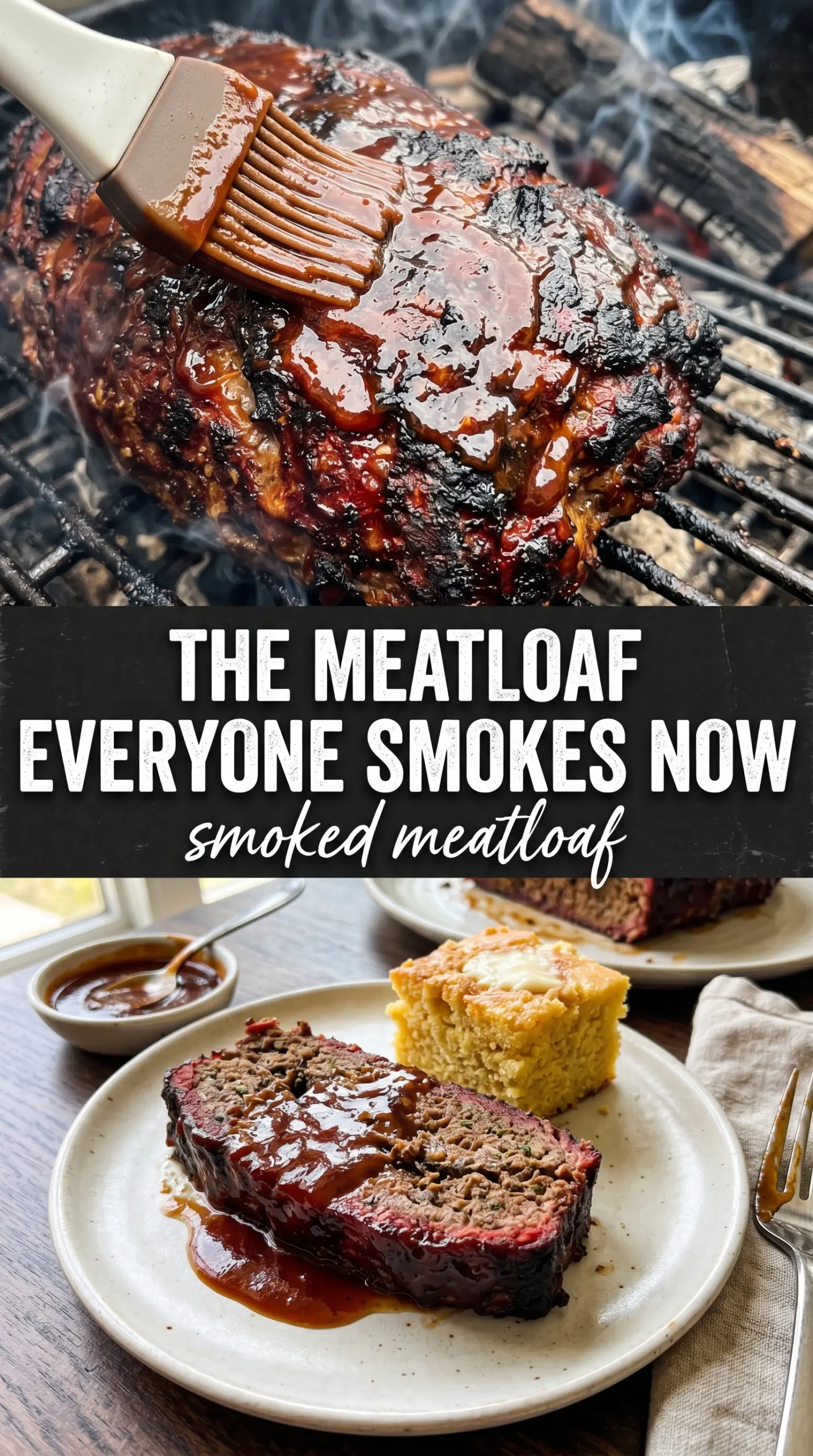
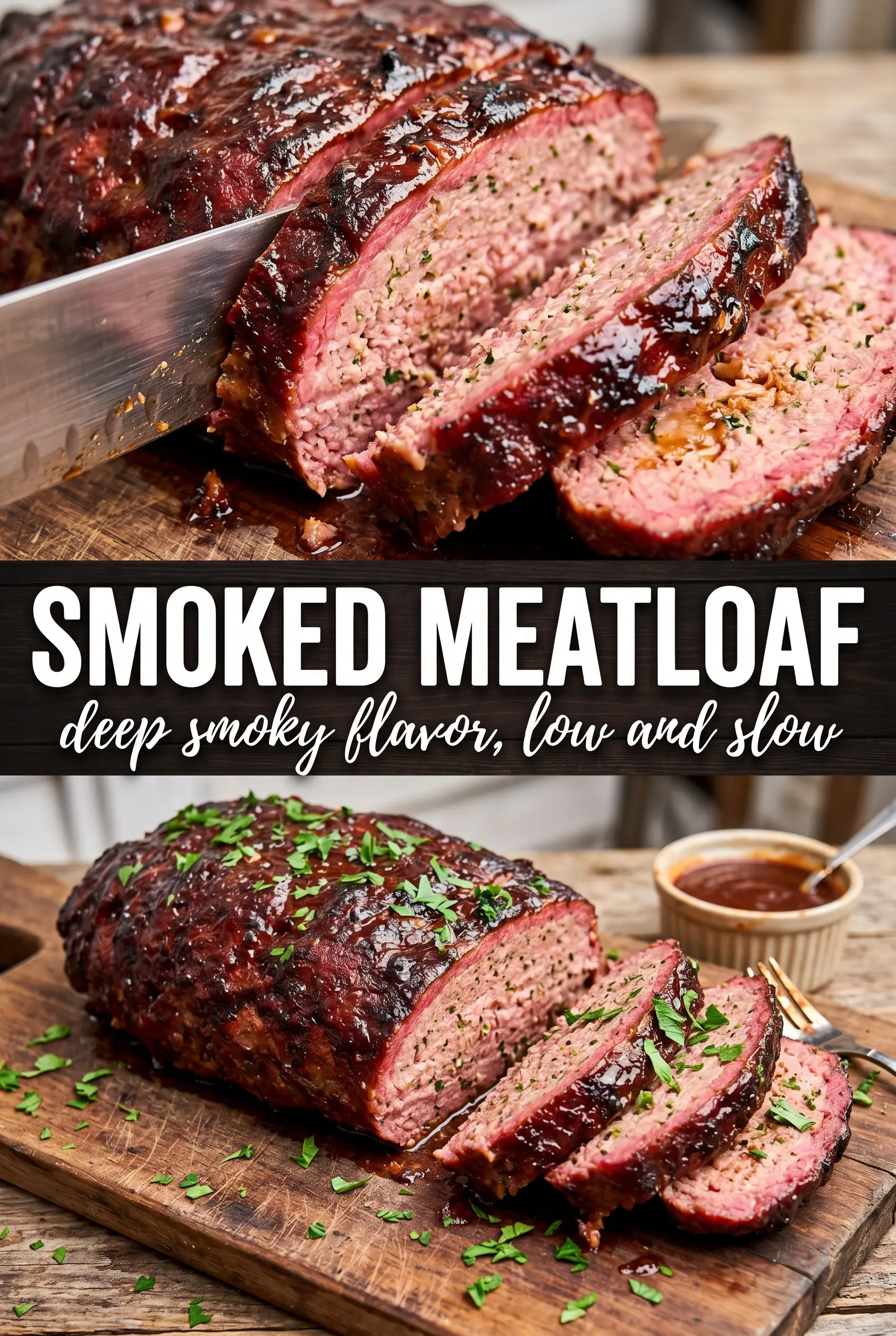
Smoked meatloaf earns its place on the dinner table because it’s everything regular meatloaf wants to be, only with a deep mahogany crust, a steady smoke ring, and a glaze that turns sticky and lacquered in the last stretch. The slices hold together cleanly, but the inside stays tender and juicy instead of dense or dry. That balance is what makes people go back for a second piece before they’ve finished the first.
The trick is treating the mixture gently and letting the smoker do the heavy lifting. Ground beef with enough fat, a little pork for softness, and grated onion for moisture keep the loaf from tightening up too much over the long cook. The glaze goes on late, after the loaf has already set, so it can caramelize instead of burning or sliding off the surface.
Below, you’ll find the exact points that matter most: how to shape the loaf so it smokes evenly, why the temperature climb matters more than the clock, and the swaps that still give you a solid result when you need them.
The smoke ring came out gorgeous and the glaze set up shiny instead of burning. I used cherry wood and the whole loaf stayed juicy all the way through.
Smoked meatloaf with that glossy BBQ glaze belongs in your weekend smoke session.
The Reason Smoked Meatloaf Stays Juicy Instead of Turning Dense
Most meatloaf problems start before the loaf ever hits the smoker. If you pack the mixture too tightly, it turns heavy and slices like a brick. If you cook it too hot, the outside dries out before the center has time to catch up. This version leans on a looser hand with the mix and a moderate smoker temperature so the fat stays in the meat instead of rendering out too fast.
The other mistake is shaping it like a tight loaf in a loaf pan. A free-form shape on a wire rack or grill-safe pan lets smoke move around the meat and keeps the bottom from steaming. That’s how you get bark on the outside and a moist interior instead of a gray, wet center.
- 80/20 ground beef — The fat keeps the loaf tender through a long smoke. Leaner beef can work, but it dries out faster and tastes flatter.
- Ground pork — This adds softness and a little sweetness that beef alone doesn’t give you. If you skip it, the meatloaf still works, but the texture gets a little firmer.
- Grated onion — Grating, instead of chopping, melts the onion into the mix and adds moisture without big chunks that can leave pockets in the slice.
- Breadcrumbs and milk — This is the binder that keeps the loaf cohesive without making it rubbery. Panko or plain breadcrumbs both work here, as long as they’re fully moistened before the meat goes in.
What Each Ingredient Is Actually Doing in This Recipe
- Primary ingredient (the star) — Quality matters most. Choose the best you can find.
- Cooking medium (oil, butter, or broth) — This carries flavors and prevents dryness.
- Seasonings (salt, pepper, spices, herbs) — Layer flavors so nothing overpowers. Build depth gradually.
- Aromatics (garlic, onion, herbs) — Cook with fat to bloom flavors. Become the foundation.
- Supporting ingredients — Complement the main ingredient without overpowering it.
- Sauce or liquid (if applicable) — Brings flavors together. Balance richness with acid.
- Acid (lemon, vinegar, wine, or other) — Brightens and prevents flat-tasting results.
- Final finish (garnish, glaze, or sauce) — Prevents one-dimensional taste and adds visual appeal.
How to Build the Loaf for Even Smoke and a Clean Slice
Mixing Without Overworking
Combine the ingredients just until they look evenly distributed. The second the meat starts to look paste-like, you’ve gone too far and the final texture will tighten up after smoking. Cold hands help, but the real key is stopping as soon as the mixture holds together when pressed.
Shaping for Airflow
Form the loaf into a free-form oval or rectangle, not a compact brick. Keep it even in thickness so the ends don’t dry before the center reaches temperature. A wire rack over a pan is ideal because it lets smoke circulate underneath and prevents the bottom from sitting in rendered fat.
Smoking to Temperature, Not Just Time
Set the smoker to 225–250°F and let the loaf smoke until the center reaches 145°F before glazing. At this point the outside should already look set and slightly darkened. If the surface still looks pale and wet after more than an hour, your smoker is probably running too cool or the loaf is too thick.
Finishing With the Glaze
Mix the BBQ sauce, honey, and vinegar, then brush it on in a generous layer after the first stretch of smoking. That late application lets the sugars caramelize instead of burning early. Keep smoking until the internal temperature hits 160°F, then rest the meatloaf so the juices settle back into the slice instead of running onto the board.
How to Adapt Smoked Meatloaf Without Losing the Bark
Gluten-Free Version
Swap the breadcrumbs for certified gluten-free breadcrumbs or crushed gluten-free crackers. The texture stays close to the original as long as you still let the crumbs soak up the milk before mixing. The loaf may feel a little looser going in, but it firms up well in the smoker.
Dairy-Free Version
Use unsweetened non-dairy milk instead of regular milk. Oat milk works best because it has enough body to hydrate the crumbs without adding a weird flavor. Avoid thin, watery milk alternatives if you can, since they don’t help the binder as much.
All-Beef Meatloaf
You can use 3 pounds of ground beef if you want to skip the pork. Choose beef with enough fat, or the smoke will dry it out before the center finishes. The result is a little firmer and more beef-forward, which works fine with the BBQ glaze.
Storage and Reheating
- Refrigerator: Store leftovers in an airtight container for up to 4 days. The smoke flavor actually settles in a bit more by the next day.
- Freezer: Wrap slices tightly and freeze for up to 3 months. Freeze in portions so you can thaw only what you need.
- Reheating: Warm slices covered in a 300°F oven with a splash of water or extra BBQ sauce until heated through. The common mistake is blasting it in the microwave, which dries the edges and turns the glaze tacky in the wrong way.
Questions I Get Asked About This Recipe
Smoked Meatloaf
Ingredients
Equipment
Method
- Preheat smoker to 225–250°F using hickory or cherry wood, watching for steady temperature before you cook. Use a light wisp of smoke for the best low-and-slow start.
- Mix ground beef (80/20), ground pork, breadcrumbs, eggs, milk, grated small onion, minced garlic, Worcestershire sauce, yellow mustard, smoked paprika, and salt and black pepper to taste until just combined. Stop as soon as the mixture comes together to avoid a dense slice.
- Shape the mixture into a free-form loaf on a wire rack or grill-safe pan. Position it so smoke can circulate around the sides.
- Smoke the meatloaf for 2–2.5 hours at 225–250°F until internal temperature reaches 145°F. Look for a deeper color building on the surface and a smoke ring forming at the edge.
- Mix BBQ sauce, honey, and apple cider vinegar to create the glaze. Stir until smooth so it brushes on evenly.
- Brush the meatloaf generously with the BBQ glaze. Apply a thick, even coating so it caramelizes into a sticky top layer.
- Continue smoking for 30–45 minutes at 225–250°F until the glaze caramelizes and the internal temperature reaches 160°F. Watch for a glossy, darkened glaze with a tacky feel.
- Rest the smoked meatloaf for 15 minutes before slicing and serving. The juices will set slightly for cleaner slices and better bite.