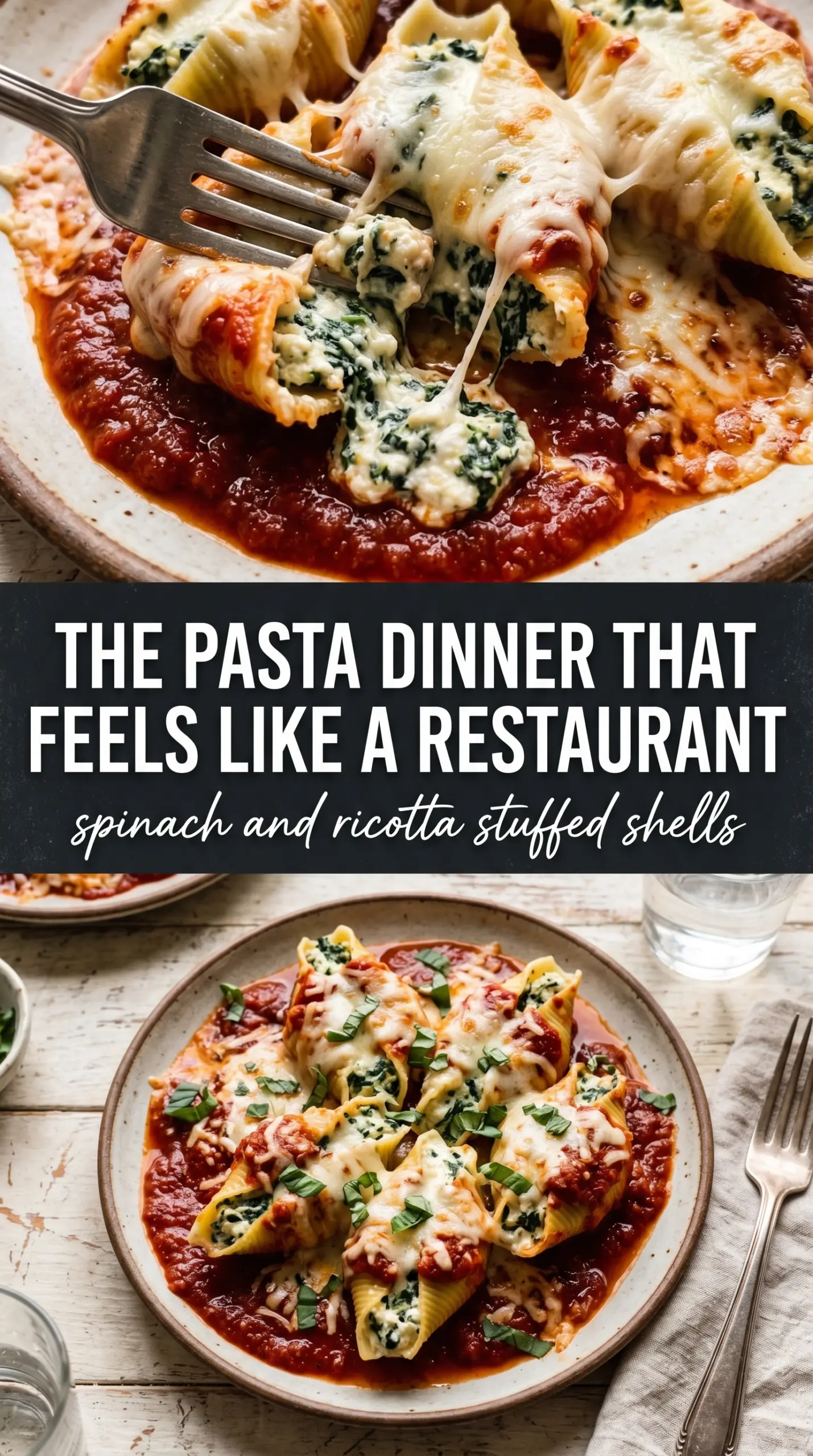
Giant pasta shells hold onto a creamy spinach and ricotta filling in a way that baked ziti never can. Each shell gets its own pocket of sauce, cheese, and tender pasta, so every bite lands with a little bit of everything: savory ricotta, mellow garlic, bright marinara, and that mozzarella cap that turns golden at the edges.
The trick is keeping the filling thick enough to mound inside the shells without slipping out when they bake. That starts with draining the ricotta if it seems wet and chopping the spinach finely so it blends into the cheese instead of clumping in strands. A little nutmeg rounds out the dairy and gives the filling that old-school Italian-American bakery flavor without making it taste sweet.
Below, I’ll walk through the part that matters most: how to keep the shells intact, how to fill them without tearing, and how to bake them so the sauce stays lively and the cheese browns instead of drying out. I’ve also included a few swaps and make-ahead notes that come in handy when you want this on the table with less last-minute work.
The filling stayed thick, the shells held their shape, and the marinara kept everything from drying out. I baked it for dinner on Sunday and the leftovers were even better the next day.
Save these spinach and ricotta stuffed shells for a bubbling baked pasta dinner with creamy filling and golden mozzarella.
The Part That Keeps the Filling from Turning Soupy
Ricotta is the backbone here, but it’s also the ingredient most likely to cause trouble. If it goes into the shells too loose or wet, the filling spreads out into the sauce instead of staying tucked inside the pasta. That’s why the mixture should feel thick, scoopable, and slightly firm before it ever hits the baking dish.
Spinach needs the same kind of attention. Fresh baby spinach cooks down fast, and once it’s chopped fine, it disappears into the cheese without making long stringy bites. If you use frozen spinach, squeeze it dry until it feels almost crumbly. Any extra water in the greens shows up later as a watery filling and a thin sauce.
- Ricotta — Use whole-milk ricotta if you can. It bakes up creamier and richer than part-skim. If your ricotta looks wet, drain it in a fine mesh strainer for 15 to 20 minutes before mixing.
- Spinach — Fresh spinach gives the cleanest flavor and the best texture in this dish. Frozen works too, but it has to be thawed and squeezed dry first or the filling will loosen too much.
- Mozzarella — One portion goes into the filling for stretch and one portion goes on top for browning. Shred it yourself if possible. Pre-shredded cheese melts less smoothly because of the anti-caking coating.
- Nutmeg — Just a small amount makes the ricotta taste fuller and more balanced. It doesn’t read as spice; it reads as depth. Leave it out if you want, but the filling will taste flatter.
What Each Ingredient Is Actually Doing in This Recipe
- Primary ingredient (the star) — Quality matters most. Choose the best you can find.
- Cooking medium (oil, butter, or broth) — This carries flavors and prevents dryness.
- Seasonings (salt, pepper, spices, herbs) — Layer flavors so nothing overpowers. Build depth gradually.
- Aromatics (garlic, onion, herbs) — Cook with fat to bloom flavors. Become the foundation.
- Supporting ingredients — Complement the main ingredient without overpowering it.
- Sauce or liquid (if applicable) — Brings flavors together. Balance richness with acid.
- Acid (lemon, vinegar, wine, or other) — Brightens and prevents flat-tasting results.
- Final finish (garnish, glaze, or sauce) — Prevents one-dimensional taste and adds visual appeal.
How to Build the Shells So They Bake Up Neat
Cooking the Pasta Just Short of Done
Boil the shells until they’re al dente with a little bite left in the center. They keep cooking in the oven, and if you take them all the way to soft in the pot, they’ll tear while you stuff them and collapse once they bake. Drain them gently and lay them out in a single layer so they don’t stick together.
Mixing a Filling That Stays Put
Combine the ricotta, spinach, cheeses, egg, garlic, seasoning, nutmeg, salt, and pepper until the mixture looks even and thick. The egg helps the filling set in the oven, but it won’t save an overly wet mixture. If it looks loose, stop and let it sit a few minutes; the cheese will tighten up a bit as it rests.
Filling Without Tearing the Shells
Spoon the filling generously into each shell and arrange them seam side up in the sauce-lined dish. A small spoon or a piping bag both work, but don’t force the filling in from the side or the shell can split. You want the shells full, not packed so hard they burst open before they bake.
Baking Until the Cheese Blisters
Cover the dish tightly with foil for the first part of the bake so the pasta finishes softening and the sauce keeps the shells moist. Then uncover it for the last stretch so the mozzarella can brown and the sauce bubbles up around the edges. If the top looks dry before the cheese browns, the foil came off too early or the dish was baked too hot.
What to Change When You Want a Different Version
Make it dairy-free
Use a dairy-free ricotta-style cheese and a meltable plant-based mozzarella. The result won’t have the same tang as real ricotta, but it will still hold together if the substitute is thick and not watery. Check the label for a version that’s designed for baking, not just spreading.
Use frozen spinach instead of fresh
Thaw about 1 cup of frozen spinach, then squeeze out every drop of water before chopping it finely. Frozen spinach brings a slightly darker, more concentrated spinach flavor and works well here, but it will water down the filling if it goes in damp.
Make it ahead for a busy night
Assemble the dish up to a day in advance, cover it tightly, and refrigerate it before baking. Cold pasta bakes more slowly, so add a few extra minutes under the foil. If you put it in the oven straight from the fridge, the center needs a little longer than the edges to heat through.
Swap the sauce for a meatier version
A thicker meat sauce can replace the marinara if you want a heavier casserole. The shells will taste richer and less bright, and the filling will feel more like a Sunday supper dish than a lighter vegetarian bake. Keep the sauce loose enough that it can bubble around the shells instead of sitting as a dry layer underneath them.
Storage and Reheating
- Refrigerator: Store leftovers covered for up to 4 days. The shells soften a little, but the flavor holds well.
- Freezer: Freeze baked or unbaked shells in a tightly wrapped baking dish for up to 2 months. Thaw overnight in the refrigerator before baking or reheating.
- Reheating: Cover with foil and warm in a 350°F oven until hot in the center. The biggest mistake is microwaving uncovered, which dries out the cheese and makes the sauce separate at the edges.
Questions I Get Asked About This Recipe
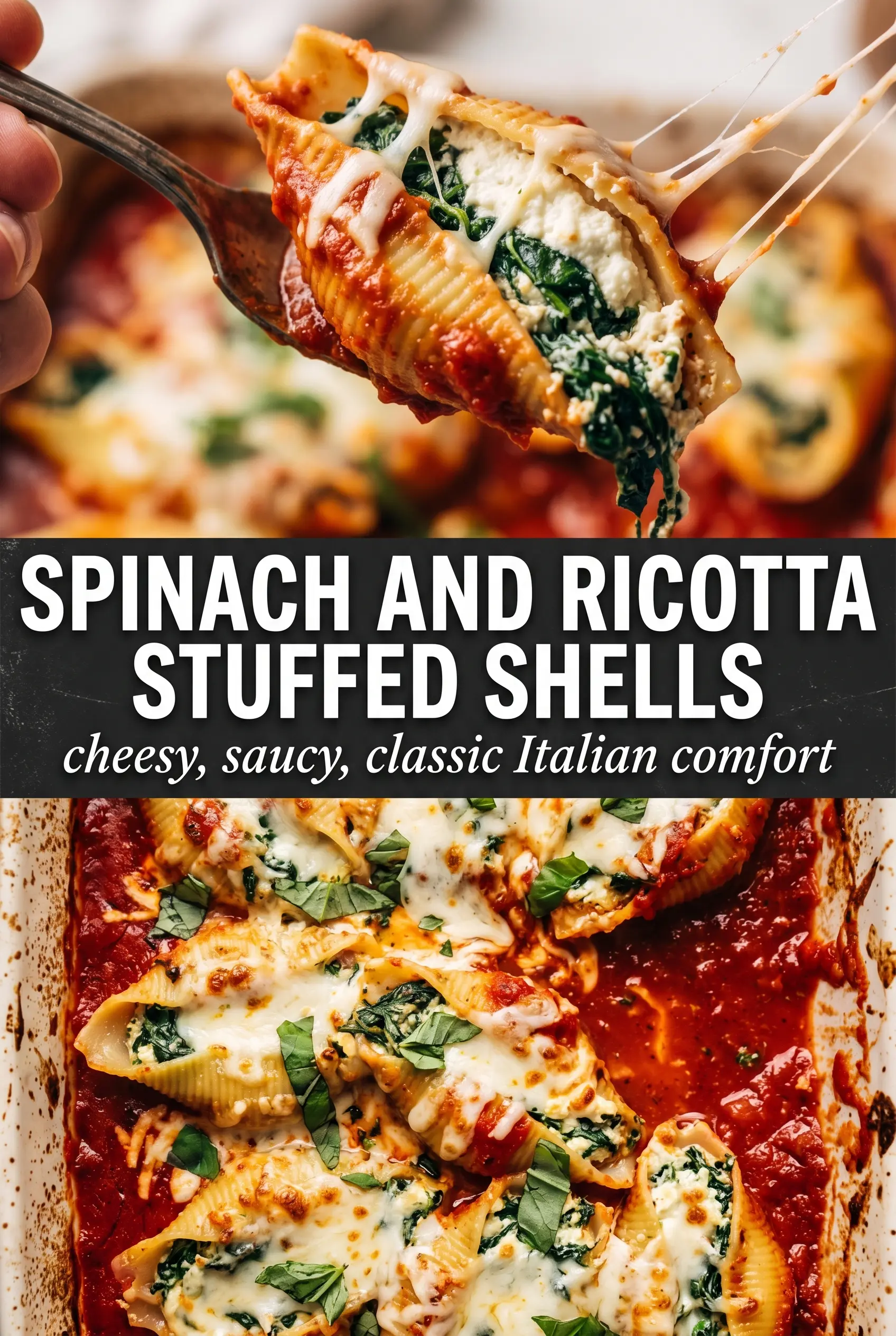
Spinach and Ricotta Stuffed Shells
Ingredients
Equipment
Method
- Preheat the oven to 375°F and spread 1 cup marinara on the bottom of a 9x13 baking dish.
- Cook the jumbo pasta shells al dente, then drain and set aside so they stay firm for stuffing.
- Combine ricotta, chopped spinach, 1 cup mozzarella, Parmesan, egg, garlic, Italian seasoning, nutmeg, salt, and pepper until well mixed.
- Fill each cooked shell generously with the spinach ricotta mixture and arrange them in the baking dish in a snug layer.
- Pour the remaining marinara over the stuffed shells, then top with the remaining 1/2 cup mozzarella.
- Cover tightly with foil and bake at 375°F for 30 minutes, until the sauce is hot and the filling looks set at the edges.
- Remove the foil and bake at 375°F for 10 minutes, until the cheese is golden and the sauce is bubbling.
- Garnish with fresh basil and serve hot.