Stuffed meatloaf bakes up into a sliceable dinner that looks far fancier than the work it takes to get there. The beef stays sturdy enough to hold a spiral of melted mozzarella, spinach, and roasted red pepper, and every slice comes out with a clean center instead of a loose, soggy middle. The glaze on top gives you that familiar sweet-savory meatloaf finish, but the filling turns each piece into something a little more special.
The part that makes this version work is moisture control. Spinach needs to be wilted and squeezed dry, and the roasted peppers need to be patted dry, or the filling will steam the meat from the inside and the loaf can slide apart when you slice it. The meat mixture also needs enough breadcrumb and egg structure to roll without cracking, but not so much that it turns dense.
Below you’ll find the exact trick for rolling the loaf tightly, the ingredients that matter most, and a few ways to adapt it if you want to change the cheese or make it ahead.
The loaf held together beautifully and the spiral stayed neat when I sliced it after the rest. My kids picked out the cheese and asked for the same filling again next week.
Save this stuffed meatloaf with spinach, roasted red peppers, and mozzarella for the night you want a neat spiral slice and a dinner that feels a little more special.
The Part Most Stuffed Meatloaves Get Wrong
The mistake with stuffed meatloaf is usually heat management. If the loaf is packed too loosely, the filling leaks and the meat dries out before the center reaches temperature. If it’s rolled too tightly with wet filling, the loaf can split along the seam or collapse when you cut it. The goal is a firm log that still has room for the cheese to melt and the vegetables to stay in place.
The other trap is overmixing the beef. Once the breadcrumb, egg, milk, and seasonings are in, mix just until the ingredients look evenly distributed. If you work it like sausage, the meatloaf turns springy and dense instead of tender enough to slice cleanly. A gentle hand here pays off at the table.
What Each Ingredient Is Actually Doing in the Spiral
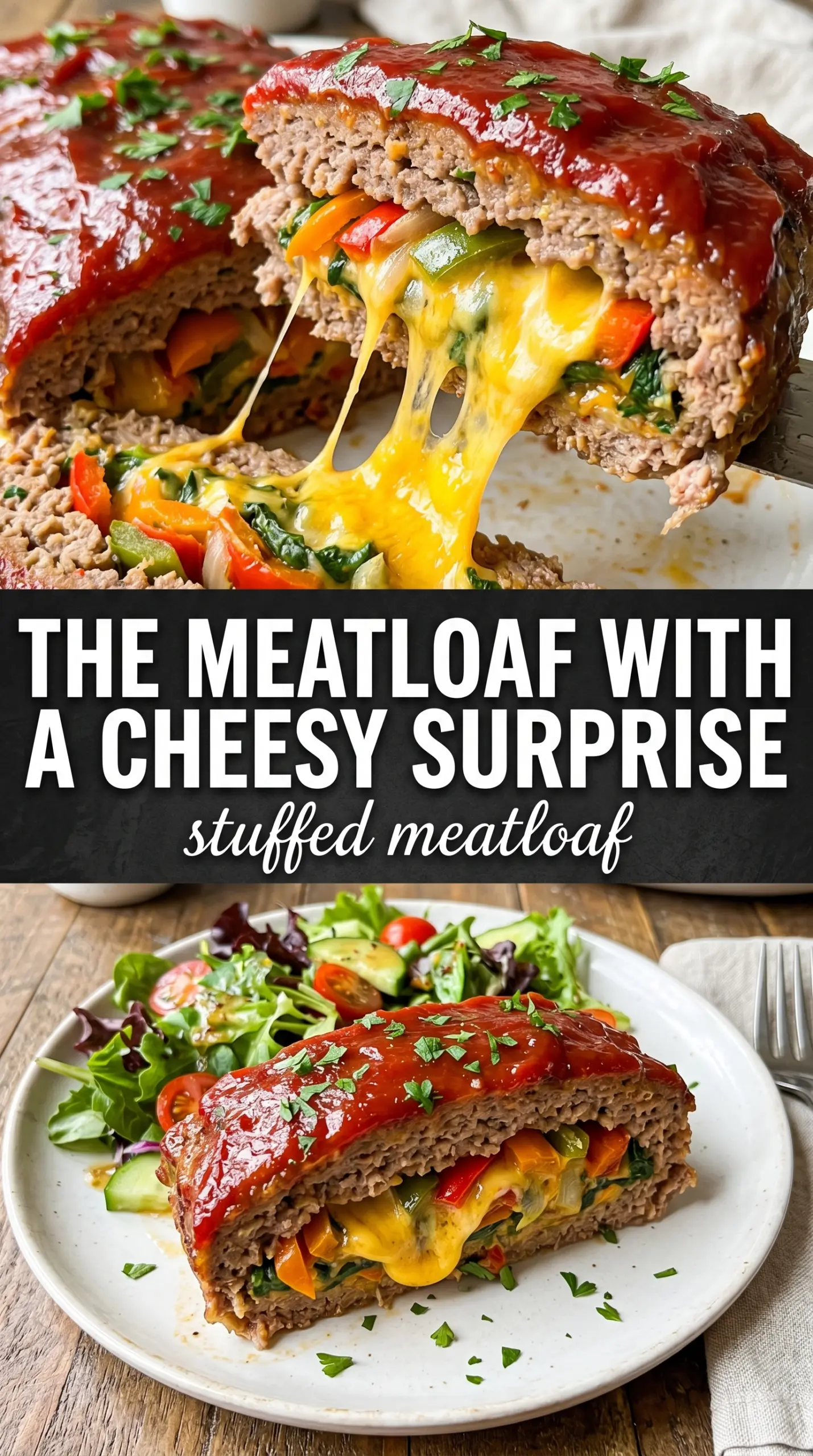
- Ground beef — Use 80/20 if you can. Leaner beef can work, but the loaf gets less juicy and the filling starts to feel disconnected from the meat instead of tucked into it.
- Breadcrumbs, eggs, and milk — This is the binder that keeps the loaf from cracking when you roll it. Regular plain breadcrumbs are fine; the milk softens them so the texture stays tender instead of bready.
- Grated onion and minced garlic — Grating the onion is worth the extra minute because it disappears into the meat and adds moisture without leaving chunks that can break the roll.
- Spinach — Fresh spinach works best here because you can wilt it fast and squeeze out the excess liquid. Frozen spinach can stand in, but it has to be thawed and squeezed almost dry or the center gets watery.
- Roasted red peppers — Jarred peppers are convenient and bring a sweet, smoky note, but they must be patted dry. Wet peppers are the main reason the filling slides around.
- Mozzarella — Shredded mozzarella melts into that clean spiral you want when you slice the loaf. Pre-shredded works, though block mozzarella melts a little silkier if you have the time.
- Ketchup glaze — The little bit of brown sugar rounds out the ketchup and gives the top a sticky finish. Brush it on before baking so it caramelizes instead of sitting on top like sauce.
How to Roll the Loaf So the Filling Stays Put
Mixing the Beef Without Turning It Tough
Combine the beef, breadcrumbs, eggs, milk, onion, garlic, Worcestershire, Italian seasoning, salt, and pepper in a large bowl and mix only until everything is evenly blended. The mixture should hold together when you squeeze it, but it shouldn’t feel pasty. If you keep mixing after that point, the meat tightens up and the finished loaf turns heavy.
Building the Filling Layer
Press the meat into a 10-by-12-inch rectangle on parchment or plastic wrap. Aim for even thickness, especially at the corners, because thin spots are where tears start once you roll. Leave a one-inch border around the edges so the cheese doesn’t ooze out the sides as it bakes.
Rolling and Sealing the Log
Layer the spinach, red peppers, and mozzarella over the meat, then use the plastic wrap or parchment to lift one long edge and roll it into a tight log. The seam should end up underneath when you transfer it to the loaf pan. If the log looks loose, the filling will shift and the slices won’t stay centered, so tuck it snugly rather than trying to stretch it bigger.
Baking Until the Center Sets
Spread the glaze over the top and bake at 350°F until the internal temperature reaches 160°F, usually 60 to 70 minutes. The top should look browned and slightly sticky, and the juices around the loaf should be bubbling, not rushing. Let it rest for 10 minutes before slicing or the filling will spill out before it has a chance to set.
How to Adapt This Stuffed Meatloaf for Different Nights
Swap the Cheese for a Stronger Melt
Mozzarella gives you that classic stretchy center, but provolone or fontina will add a little more flavor without changing the texture much. Use the same amount and keep the cheese in a thin layer so it melts through the middle instead of clumping in one pocket.
Make It Gluten-Free
Swap the breadcrumbs for certified gluten-free breadcrumbs or crushed gluten-free crackers. Keep the amount the same, then check the texture after mixing; it should still be soft enough to press into a rectangle without cracking.
Use Turkey Instead of Beef
Ground turkey works, but it needs the moisture from the milk, onion, and cheese more than beef does. Choose turkey with some fat if you can, and pull it from the oven as soon as it reaches 160°F so it doesn’t dry out before the rest time finishes it off.
Make It Ahead for a Busy Night
You can assemble the loaf, cover it tightly, and refrigerate it up to 24 hours before baking. The chill helps it hold its shape, but let the pan sit at room temperature for about 20 minutes while the oven heats so the center doesn’t go in ice-cold.
Storage and Reheating
- Refrigerator: Store slices in an airtight container for up to 4 days. The filling stays tasty, though the cheese won’t be as stretchy after chilling.
- Freezer: Freeze baked slices wrapped tightly and packed in a freezer container for up to 2 months. Thaw overnight in the refrigerator for the best texture.
- Reheating: Warm slices covered in a 300°F oven until heated through. Microwaving works in a pinch, but use short bursts or the edges can turn rubbery before the center is hot.
Questions I Get Asked About This Recipe
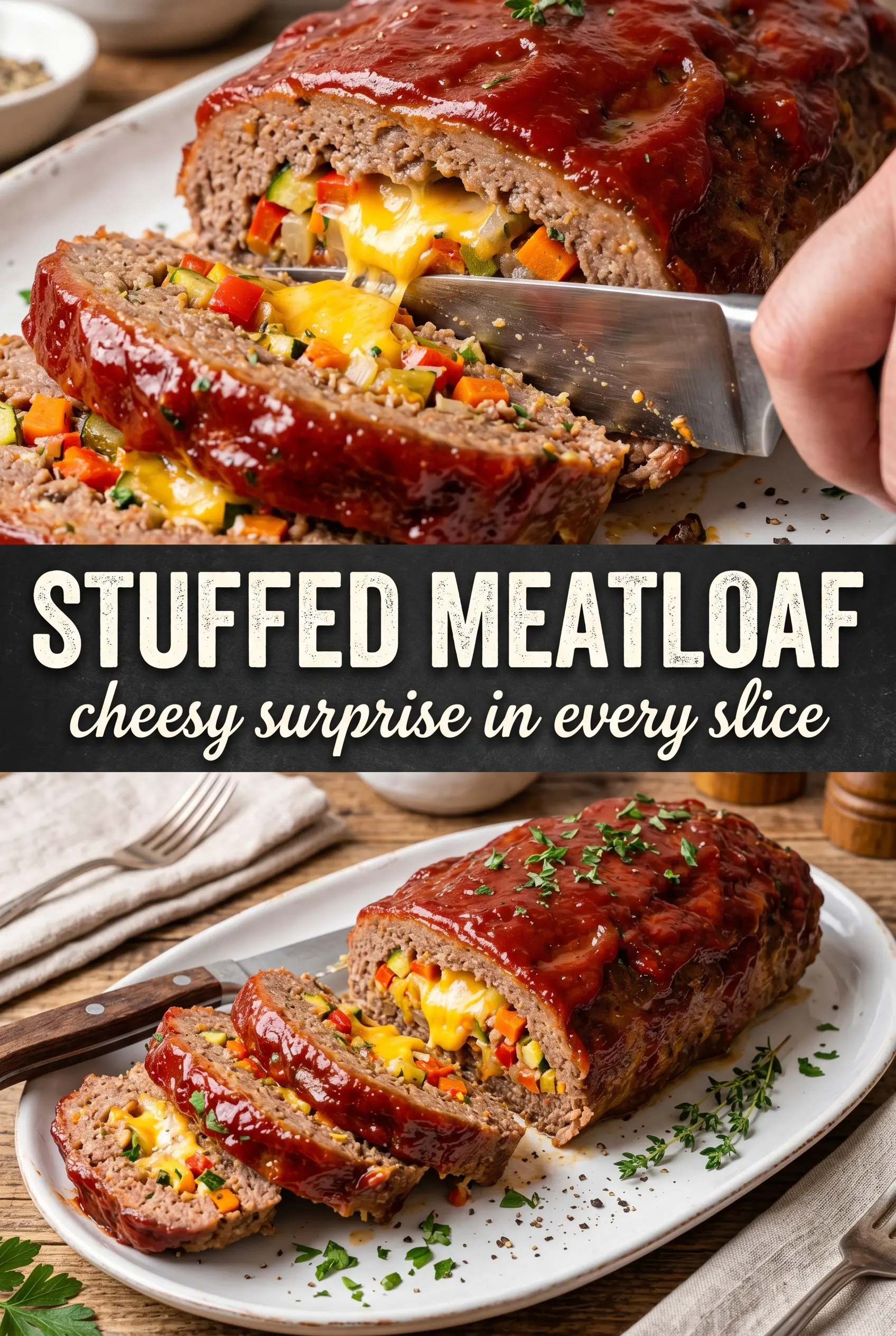
Stuffed Meatloaf
Ingredients
Equipment
Method
- Preheat the oven to 350°F and set a loaf pan aside for assembly.
- In a large mixing bowl, combine ground beef, breadcrumbs, eggs, milk, grated onion, minced garlic, Worcestershire sauce, Italian seasoning, salt, and pepper until evenly mixed.
- On plastic wrap or parchment, press the meat mixture into a 10x12 inch rectangle, keeping an even thickness so it rolls uniformly.
- Layer wilted spinach, roasted red peppers, and shredded mozzarella over the meat surface, leaving a 1-inch border around the edges.
- Roll tightly using the plastic wrap into a log, seal the ends, and place the loaf seam-side down in a loaf pan so the filling stays in the center.
- Spread the ketchup and brown sugar glaze over the top.
- Bake at 350°F for 60–70 minutes, until the internal temperature reaches 160°F for a safe, sliceable center.
- Let the meatloaf rest for 10 minutes before slicing so the spiral filling holds its shape.