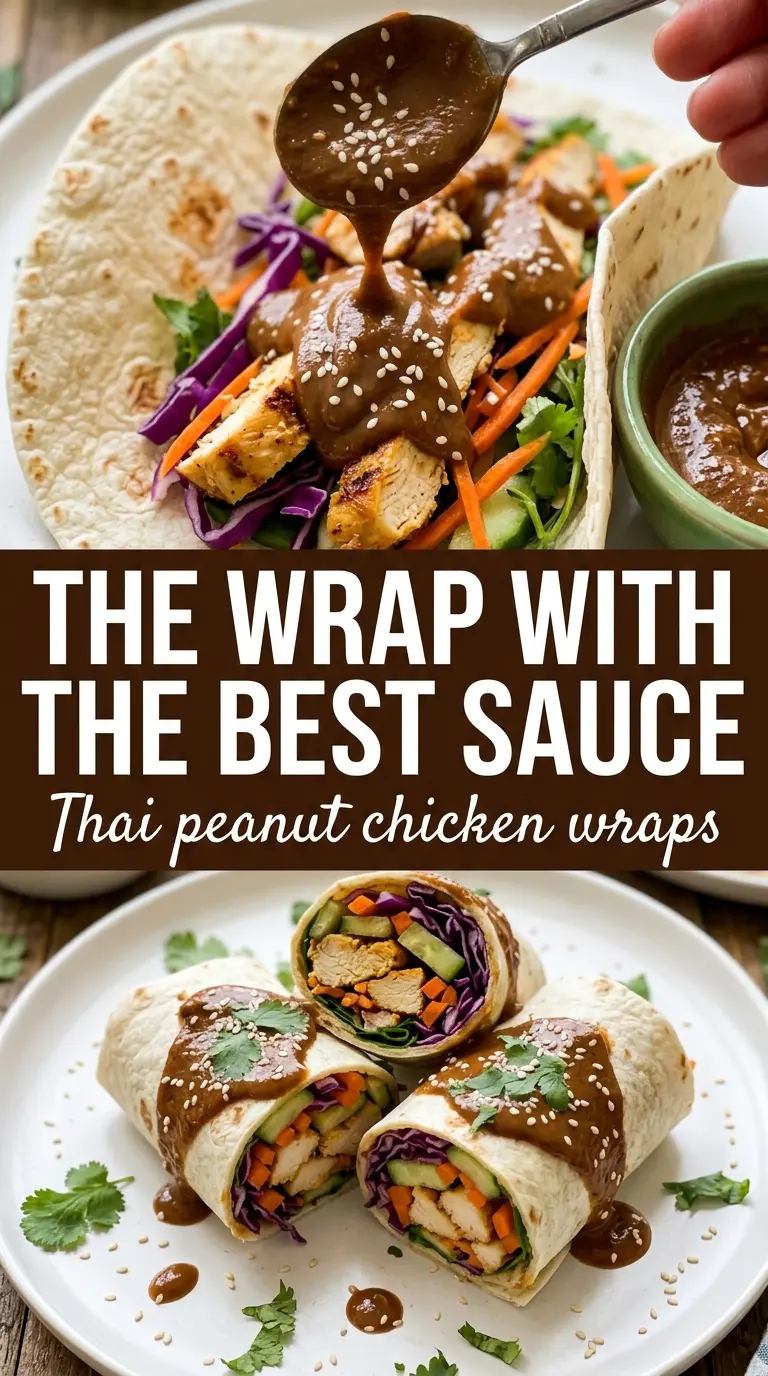
Thai peanut chicken wraps hit that sweet spot between fresh and satisfying. The chicken is savory and golden, the vegetables stay crisp, and the peanut sauce pulls everything together with a thick, glossy coating that clings to every bite instead of sliding to the bottom of the wrap.
What makes this version work is balance. The chicken gets a quick soy and sesame oil marinade before it hits the pan, which gives it flavor all the way through without turning the wraps heavy. The sauce leans on peanut butter, rice vinegar, lime, and a little honey, so it tastes full and round instead of flat or overly sweet. Thinly sliced cabbage and cucumber keep the texture lively, even after the wraps sit for a few minutes.
Below, I’ve included the small details that keep the sauce smooth, the chicken juicy, and the tortillas from tearing when you roll them. If you’ve ever ended up with a wrap that fell apart halfway through lunch, this version fixes that.
The peanut sauce turned out silky and coated the chicken instead of soaking into the tortillas, and the cucumber kept the wraps crisp even after lunch.
Save these Thai Peanut Chicken Wraps for a fast dinner with crisp vegetables, juicy chicken, and that thick peanut sauce that actually stays in the wrap.
The Trick to Keeping the Peanut Sauce Thick, Not Runny
The sauce needs to start thicker than you think. Peanut butter loosens up fast once the vinegar, lime, and sesame oil go in, and warm water should be added a little at a time until it’s pourable but still glossy and spoon-coating. If it turns thin, the wraps lose their structure and the flavor gets washed out.
The other place people trip up is heat. This isn’t the kind of sauce that should simmer on the stove. Once the chicken is cooked and sliced, the sauce stays off the burner and gets used as a drizzle and dip, which keeps the peanut butter smooth instead of oily or grainy.
What Each Ingredient Is Actually Doing in This Chicken Dish
- Chicken (pat dry for browning) — Room temperature cooks more evenly. Even pieces ensure uniform doneness.
- Oil or butter (the browning medium) — High-heat oil essential for proper searing. Creates pan flavor.
- Seasonings (salt, pepper, spices) — Apply generously. Chicken carries the entire flavor profile.
- Aromatics (garlic, ginger, herbs) — Cook with fat to bloom flavors. Become the foundation.
- Sauce or braising liquid (if using) — This keeps chicken moist. Balance richness with acid.
- Vegetables (if using) — Layer by cooking time so everything finishes together.
- Acid (vinegar, wine, lime, or pineapple) — This brightens and prevents one-dimensional flavor.
- Proper doneness (165°F internal temperature) — Use thermometer for accuracy. Overcooked is dry.
What Each Ingredient Is Actually Doing in These Wraps
- Boneless skinless chicken breasts — They stay lean and slice cleanly, which matters here because the wraps are already rich from the peanut sauce. If you swap in chicken thighs, you’ll get a juicier, slightly richer result; cook them the same way, but give them a minute or two longer if they’re thicker.
- Sesame oil — A little goes a long way. It adds the toasted note that makes the chicken taste more like a takeout-style filling instead of plain pan-seared chicken. Don’t replace it with neutral oil unless you have to; you’d lose that background flavor.
- Flour tortillas — Ten-inch tortillas are the right size for a tight roll without tearing. If yours are stiff, warm them briefly in a dry skillet or microwave wrapped in a damp towel so they bend instead of crack.
- Peanut butter — Creamy peanut butter makes the sauce smooth enough to drizzle. Natural peanut butter works too, but stir it well first; the separated oil can make the sauce harder to judge and sometimes thinner than expected.
- Rice vinegar and lime juice — These keep the sauce from tasting heavy. Both matter here because peanut butter needs acid to wake it up. If you’re out of rice vinegar, use a mild apple cider vinegar, but keep it light so the sauce doesn’t turn sharp.
- Cabbage, cucumber, and bell pepper — These are the crunch that keeps the wrap from feeling soft all the way through. Slice them thin so they layer neatly and don’t poke through the tortilla when you roll it.
How to Build These Wraps Without Soggy Tortillas
Seasoning the Chicken First
Toss the chicken with soy sauce, sesame oil, and garlic powder before it hits the skillet. That quick coating seasons the meat and helps it brown faster, especially on a dry pan. Cook over medium-high heat until the outside is golden and the center reaches doneness, then let it rest before slicing. If you cut it right away, the juices run out and the chicken ends up dry in the wrap.
Whisking the Sauce Until It Flows
Combine the peanut butter, soy sauce, rice vinegar, honey, lime juice, sesame oil, and garlic first, then add warm water a little at a time. The sauce should fall off the spoon in a slow ribbon, not pour like dressing. If it looks broken or gritty, keep whisking; peanut butter often needs a minute to fully loosen once the acid and liquid go in.
Layering for the Cleanest Roll
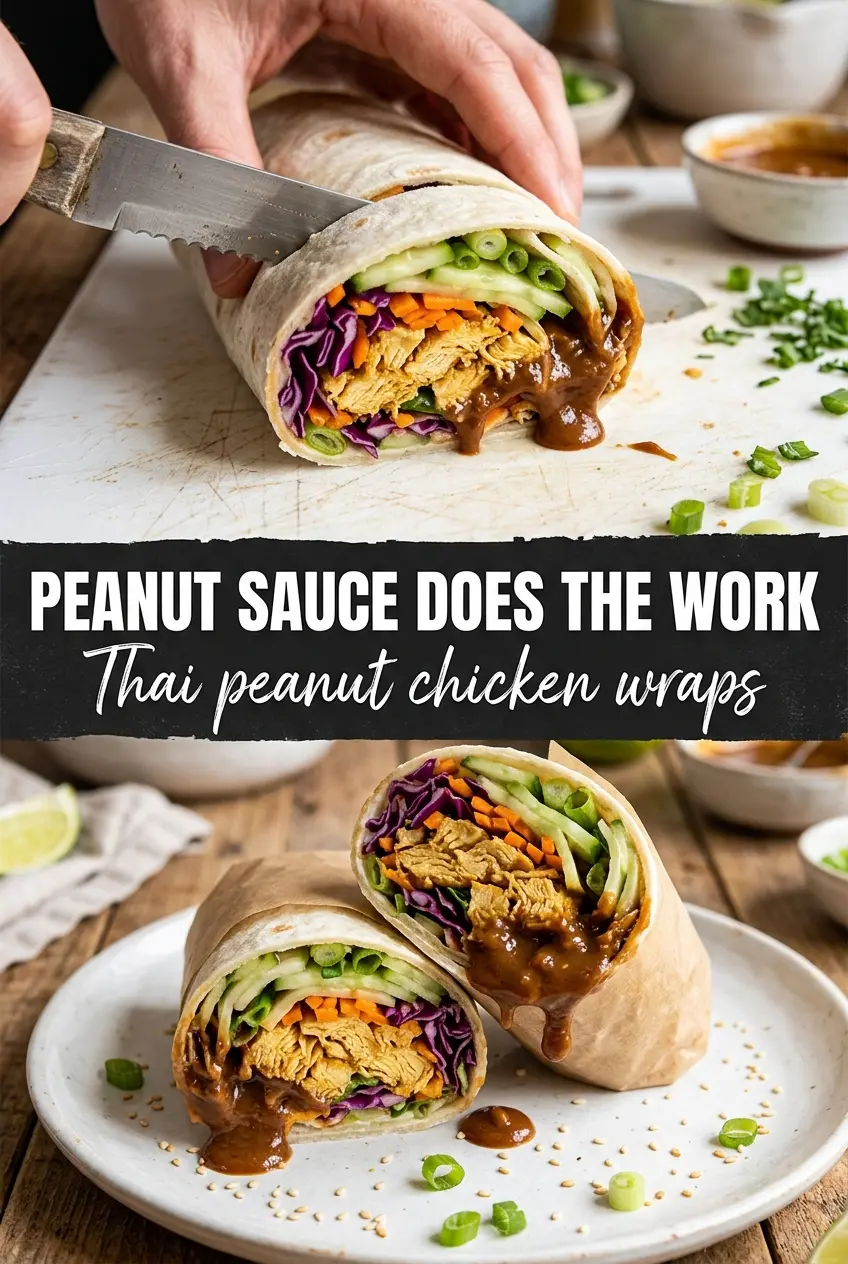
Spread a thin line of sauce across the center of each tortilla, then add the vegetables before the chicken. That order helps the sauce catch on the filling instead of soaking straight into the tortilla. Keep the filling in a narrow strip, not a mound, or the wrap will burst when you roll it. A tight roll and a diagonal slice make the wrap feel finished and keep the layers visible.
Adding the Final Drizzle
Use the extra sauce on top after rolling, not just inside the wrap. That final layer gives you the glossy look and extra peanut flavor without making the tortilla slippery before you fold it. A scatter of crushed peanuts right at the end adds crunch and keeps the top from looking flat.
Three Ways to Make These Wraps Fit What You’ve Got
Make it gluten-free
Swap the flour tortillas for certified gluten-free tortillas and use tamari instead of soy sauce. The flavor stays close to the original, but the gluten-free tortillas usually need gentler warming so they don’t crack when rolled.
Make it dairy-free without changing a thing
This recipe is naturally dairy-free as written, which is part of why it works so well for a fast mixed-diet dinner. Just check your tortillas and soy sauce if you’re buying packaged versions, since some brands add unexpected dairy ingredients or flavorings.
Use chicken thighs for a richer filling
Chicken thighs give you a juicier bite and a little more forgiveness if you cook them a minute too long. They also stand up well to the bold peanut sauce, though the finished wraps will taste a bit richer and less lean than the breast meat version.
Turn them into lunch boxes
Pack the sauce separately and assemble the wraps just before eating if you want the vegetables to stay crisp. If you need them fully assembled ahead of time, keep the cucumber away from the tortilla side closest to the seam so the wrap holds together a little longer.
Storage and Reheating
- Refrigerator: Store the chicken, vegetables, tortillas, and sauce separately for up to 3 days. Fully assembled wraps soften quickly, so they’re best made fresh.
- Freezer: The cooked chicken freezes well for up to 2 months, but the vegetables and sauce don’t freeze well for this recipe. Freeze the chicken on its own, then thaw and rebuild the wraps.
- Reheating: Reheat the chicken in a skillet over low heat or in the microwave just until warm. Don’t heat the sauce hard, or it can turn oily and separate.
Answers to the Questions Worth Asking
Thai Peanut Chicken Wraps
Ingredients
Equipment
Method
- Whisk together creamy peanut butter, soy sauce, rice vinegar, honey, lime juice, sesame oil, and minced garlic, adding warm water until the sauce is pourable. Taste and adjust seasoning, aiming for a thick but drizzling consistency.
- Toss chicken breasts with soy sauce, sesame oil, and garlic powder until evenly coated. Cook in a skillet over medium-high heat for 5-6 minutes per side until golden and cooked through.
- Remove the chicken to rest briefly, then slice thin. Keep the slices ready for layering in the wraps.
- Warm flour tortillas until pliable so they roll without cracking. Keep them covered to retain softness.
- Spread about 2 tablespoons of peanut sauce across the center of each tortilla. Layer purple cabbage, red bell pepper, shredded carrots, cucumber, sliced chicken, and fresh cilantro.
- Drizzle additional peanut sauce over the filling, add crushed peanuts, roll tightly, and slice diagonally. Serve with extra peanut sauce for dipping.