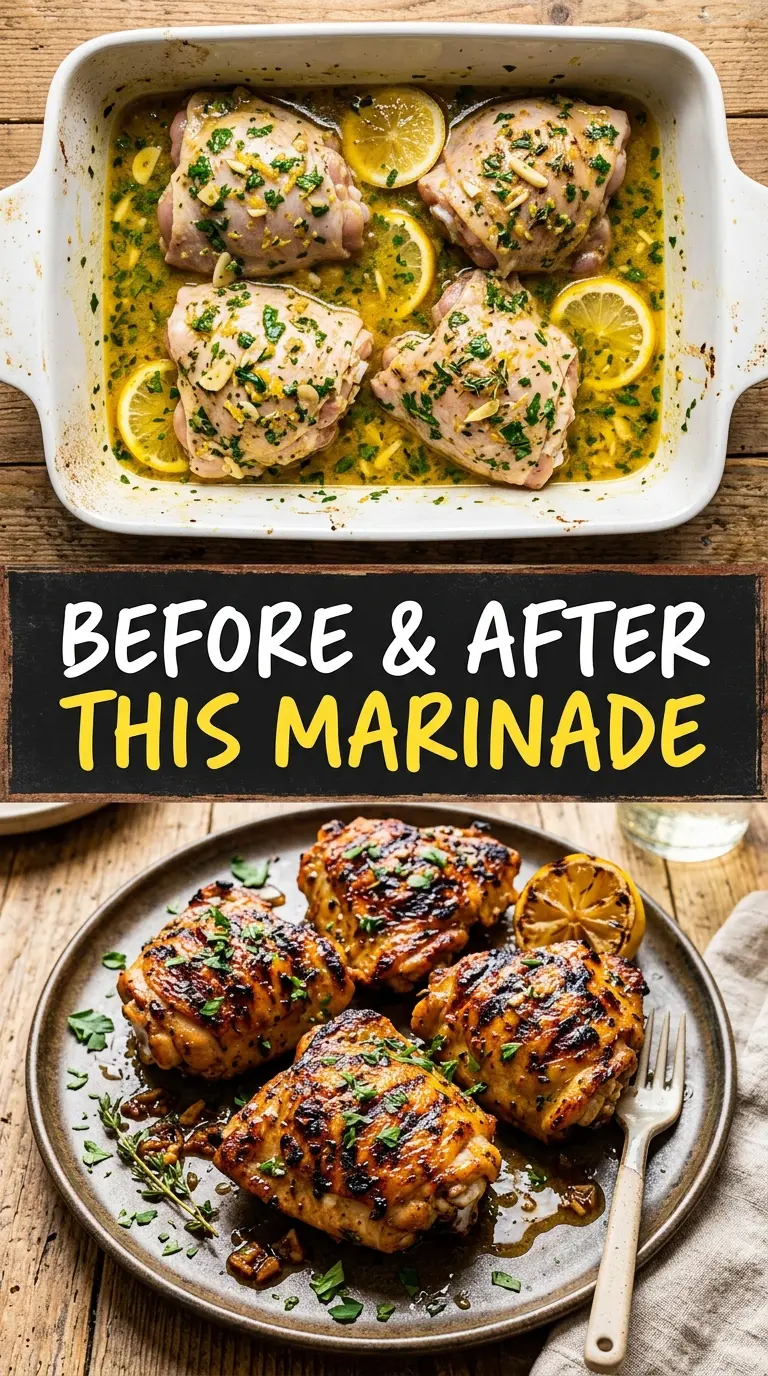
Juicy grilled chicken starts with a marinade that seasons all the way through, not just on the surface. This one gives you browned, slightly sticky edges on the grill and meat that stays tender instead of turning stringy and dry. The balance is what makes it a repeat recipe: enough acid to brighten, enough salt to penetrate, enough sugar to help the grill marks develop without burning too fast.
The trick is in the ratio. Olive oil carries the flavors and keeps the chicken from clinging to the grates, while soy sauce, Worcestershire, and Dijon build depth without tasting heavy. Lemon juice brings lift, but it needs the fat and sugar around it so the chicken stays balanced after a long soak. I’ve made this with breasts, thighs, and drumsticks, and the method holds up across all of them.
Below, I’ve included the detail that matters most with grilled chicken: how long to marinate, what changes when you switch cuts, and the one mistake that leaves people with dry chicken even after a good marinade.
I marinated boneless thighs for about 8 hours and they grilled up juicy with great char. The Dijon and lemon gave it a clean flavor, and the chicken stayed tender even after resting.
Save this grilled chicken marinade for juicy, grill-marked chicken with a bright Dijon-lemon finish.
The Part Most Marinades Get Wrong Before the Grill Even Heats Up
The biggest mistake with grilled chicken marinade is treating acid like the whole story. Lemon juice brings brightness, but if it dominates the mix, the outside of the chicken can turn tight before the grill ever sees it. The oil, soy sauce, Dijon, and brown sugar keep the marinade balanced so it seasons deeply without pushing the meat into a tough, cured texture.
Timing matters too. Four hours gives you a noticeable flavor lift; overnight gives you deeper seasoning, especially on thicker pieces. Push it past 24 hours and the texture starts to go mushy around the edges, which is especially obvious with boneless breasts. If you’ve had grilled chicken come out bland in the middle, the issue usually wasn’t the fire — it was a marinade that sat on the surface without enough salt or time to do its job.
What Each Ingredient Is Actually Doing in This Marinade
- Olive oil — This helps the marinade coat evenly and protects the chicken on the grill. A neutral oil works in a pinch, but olive oil adds a roundness that fits the rest of the ingredients.
- Soy sauce — This is the salt and depth in the marinade. Low-sodium soy sauce works if that’s what you keep in the pantry; just don’t skip it, because plain salt alone won’t give you the same savory backbone.
- Lemon juice — Fresh lemon juice gives the marinade its clean edge. Bottled juice will work, but it tastes flatter, and that brightness matters here because it keeps the chicken from tasting heavy.
- Dijon mustard — Dijon helps emulsify the marinade so the oil and acid don’t separate into two layers in the bag. It also leaves a faint sharpness that makes the grilled chicken taste more complete, not just salty.
- Brown sugar — This doesn’t make the chicken sweet. It helps the surface caramelize and gives you better color on the grill, especially on thinner cuts that cook fast.
- Garlic and dried herbs — Fresh garlic brings punch, but mince it finely so it doesn’t burn in clumps on the grill. Dried thyme, oregano, or Italian seasoning all work; use what you have, but keep the herbs dry rather than using fresh leafy herbs that can scorch.
Building the Marinade So the Flavor Actually Sticks
Whisk the marinade until it turns glossy
Start by whisking the olive oil, soy sauce, lemon juice, Worcestershire, Dijon, garlic, brown sugar, pepper, and herbs until the mixture looks unified and a little glossy. If the sugar clings to the bottom of the bowl, keep whisking until it dissolves as much as possible. A separated marinade still works, but an emulsified one coats the chicken more evenly and clings better in the bag.
Let the chicken soak without overdoing the clock
Place the chicken in a zip-top bag or shallow dish and coat every piece well. Turn the bag a couple of times during the first hour if you remember, because that helps the marinade reach all sides. Breasts do best in the 4 to 12 hour range, while thighs can go longer. If you leave delicate cuts too long, the edges can start to lose their springy texture.
Grill over medium-high heat, then watch for the color change
Preheat the grill fully before the chicken goes on. You want hot grates that give you those clean marks fast, not a slow cook that dries out the meat before it browns. Grill until the chicken releases more easily from the grates and the thickest part reaches 165°F. If the sugar in the marinade starts darkening too fast, move the chicken to a cooler spot and finish it there.
Rest before slicing or serving
Let the chicken rest for 5 to 10 minutes after it comes off the grill. This keeps the juices where they belong instead of running onto the cutting board. If you slice too soon, even well-marinated chicken will eat drier than it should. Resting is the last step that makes the first bite feel juicy.
How to Adapt This for Different Cuts and Different Kitchens
For chicken breasts that stay juicy
Use boneless breasts of even thickness, or pound the thicker end so they cook at the same pace. Pull them as soon as they hit 165°F, because breasts dry out faster than thighs and don’t benefit from extra grill time.
For a gluten-free version
Use gluten-free soy sauce or tamari in place of regular soy sauce. You’ll keep the same salty backbone and caramelizing help without changing the rest of the marinade.
For boneless thighs, drumsticks, or mixed cuts
This marinade handles darker meat beautifully because thighs and drumsticks can take a longer soak and still stay tender. Use the same marinade, but cook by temperature rather than by time so the smaller pieces don’t overcook while the larger ones finish.
If you want to make it ahead
Mix the marinade up to 2 days in advance and keep it chilled. Add the chicken only when you’re ready to marinate, because the acid keeps working once the meat goes in and the texture changes over time.
Storage and Reheating
- Refrigerator: Store cooked chicken in an airtight container for up to 4 days. It stays moist if you keep the pieces whole instead of slicing them first.
- Freezer: Cooked grilled chicken freezes well for up to 2 months. Wrap tightly or seal in a freezer bag, then thaw overnight in the fridge before reheating.
- Reheating: Warm gently in a covered skillet with a splash of water or broth over low heat, or microwave in short bursts. High heat dries out grilled chicken fast, especially breasts, so keep the reheating slow.
Questions I Get Asked About This Recipe

The Best Ever Grilled Chicken Marinade
Ingredients
Equipment
Method
- Whisk together olive oil, soy sauce, lemon juice, Worcestershire sauce, Dijon mustard, minced garlic, brown sugar, black pepper, and dried herbs until evenly combined; the mixture should look smooth and glossy.
- Add chicken to a large zip-top bag, then pour the marinade over the chicken so it’s well coated, pressing out excess air.
- Refrigerate the bag of chicken for 4-24 hours for best results, turning the bag once halfway so the chicken absorbs the flavors evenly.
- Preheat the grill to medium-high heat, and wait until it’s hot enough to sizzle when the chicken hits the grates.
- Grill chicken until the internal temperature reaches 165°F, timing varies by cut and thickness; look for strong grill marks and juices that run clear when pierced.
- Rest the grilled chicken for 5-10 minutes before serving so the juices redistribute and the meat stays tender.