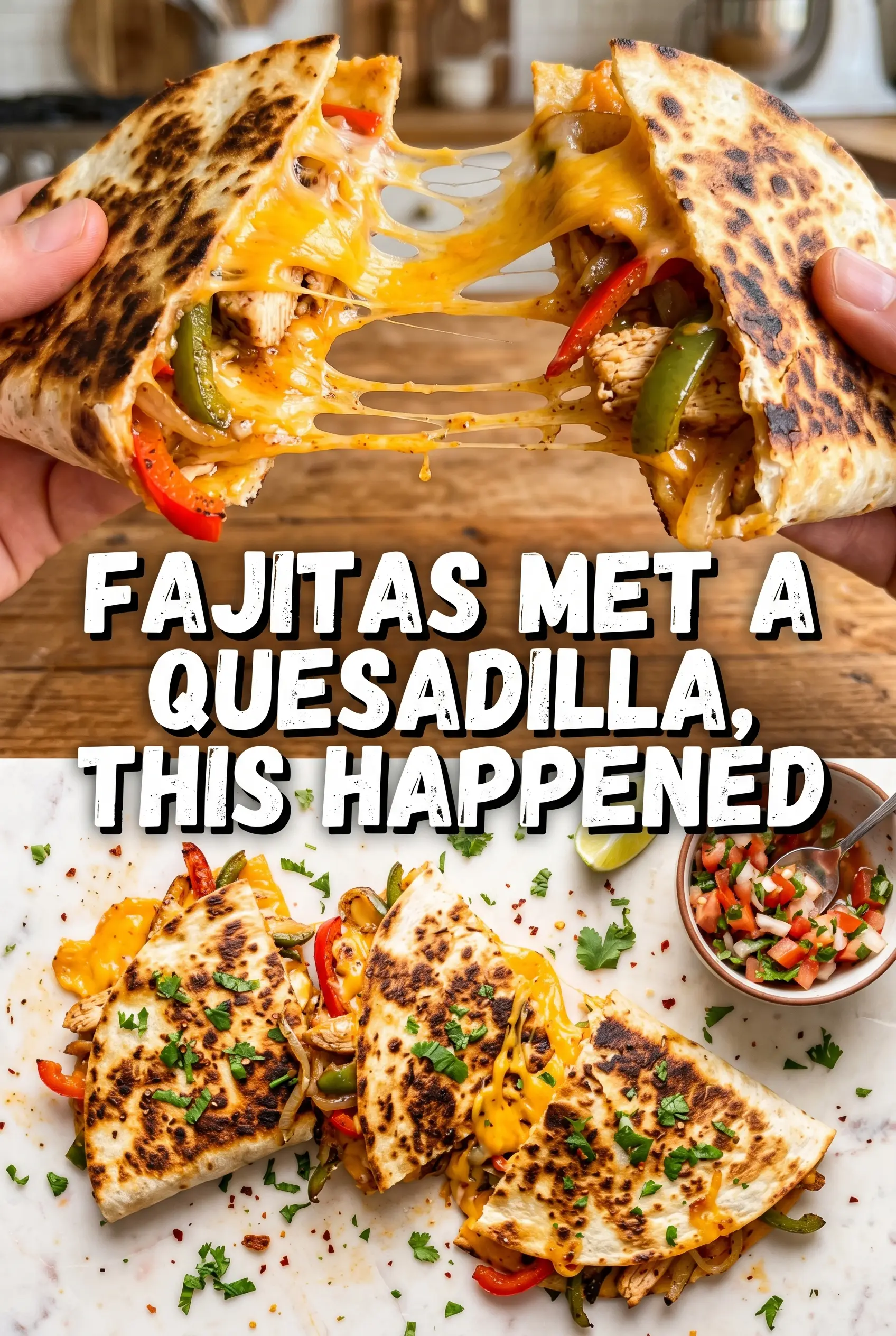
Blackstone chicken fajita quesadillas hit that sweet spot between fast and satisfying: crisp, golden tortillas on the outside, melted cheese holding everything together, and a filling that tastes like fajitas without needing a stack of pans. The griddle gives you a wide enough surface to cook the chicken, soften the peppers and onions, and build the quesadillas all in the same place, which means the tortillas pick up just enough of that seasoned drippings flavor without going greasy.
The key is cooking each part with a little intention. The chicken gets seasoned first so it develops flavor before the vegetables go in, and the peppers and onions only need enough time to lose their raw bite while keeping some texture. Use enough cheese on both sides of the filling to glue the quesadilla together, and cook it until the tortilla is deeply golden before you cut it. That’s what keeps the wedges from collapsing the second they hit the plate.
Below, I’ll walk through the parts that matter most: how to keep the chicken juicy on the griddle, how to layer the quesadilla so it seals properly, and what to change if you want to stretch the filling or swap in a different protein.
The chicken stayed juicy, the peppers still had a little bite, and the cheese melted into that perfect pull without making the tortillas soggy.
Save these Blackstone chicken fajita quesadillas for the nights when you want crisp tortillas, melty cheese, and fajita filling on the table fast.
The Trick to Keeping the Quesadillas Crisp Instead of Soggy
The biggest mistake with griddle quesadillas is overloading them with wet filling. Once the chicken and vegetables hit the tortilla, the steam has nowhere to go, and the bottom starts softening before the cheese has a chance to set. The fix is simple: cook the filling until the vegetables are tender and any liquid has cooked off, then build the quesadillas with cheese on both sides of the filling so the tortilla stays protected.
Another thing that matters here is heat. Medium-high works for the chicken and vegetables, but the quesadillas themselves need enough time to brown without burning the tortillas before the cheese melts. If the griddle runs hot, pull it back a notch for the assembly stage. You want a steady sizzle, not loud popping oil and scorched spots.
- Chicken breast — Thin slices cook fast and stay tender if you stop as soon as the center is no longer pink. Cut against the grain if you want a softer bite. Chicken thighs work too and give you a richer result, but they take a little longer.
- Bell peppers and onion — These need enough heat to soften and pick up a little color, but not so much that they collapse into jam. Slicing them evenly helps them cook at the same pace, which keeps the filling balanced.
- Fajita seasoning — This is doing most of the flavor work, so don’t bury it under extra sauces in the filling. If your seasoning blend is salt-heavy, taste the cooked chicken before adding more, since the cheese adds plenty of salt on its own.
- Flour tortillas — Large flour tortillas hold up best on the griddle and crisp nicely without splitting. If you use smaller tortillas, the quesadillas will be harder to flip cleanly and the filling will crowd the edges.
- Cheddar and Monterey Jack — Monterey Jack gives you the melt, cheddar brings a sharper finish. Pre-shredded cheese works, but freshly shredded cheese melts with a smoother pull because it doesn’t have the anti-caking coating.
Building the Filling and Folding It Before the Cheese Sets
Searing the Chicken First
Start with the chicken on the hot, oiled griddle so it gets direct contact and picks up color before the vegetables go in. Spread it out in a single layer and let it sit long enough to brown on one side before stirring, or you’ll steam it and lose that fajita flavor. Seasoning half the spice mix at this stage helps the chicken taste finished on its own instead of relying on the vegetables and cheese to carry everything.
Softening the Peppers and Onions
Add the peppers and onions after the chicken has cooked through, then use the remaining seasoning to coat them while they soften. They should turn glossy, lightly charred at the edges, and just tender enough to bend without going limp. If the pan looks dry, add a small splash more oil rather than letting the vegetables scorch; a little fat helps the seasoning bloom instead of tasting dusty.
Assembling for the Best Melt
Lay down four tortillas and put cheese directly on the tortilla first. That bottom layer acts like glue and gives you a sealed surface once it melts. Spoon the chicken and vegetables over the cheese, then add another layer of cheese before the top tortilla goes on. This double-cheese method is what keeps the filling from sliding out when you flip the quesadillas.
Getting the Golden Finish
Cook each quesadilla until the bottom is deeply golden and you can see the cheese softening at the edges, then flip with a wide spatula. If you flip too early, the tortilla can tear before the cheese has had a chance to bind the layers. After the second side browns, cut the quesadillas right away while the cheese is still stretchy and the wedges slice cleanly.
How to Adapt These Quesadillas Without Losing the Griddle Texture
Make Them with Steak Instead of Chicken
Use thin-sliced skirt steak or flank steak and cook it just until it’s browned and tender. Steak gives you a deeper, beefier fajita flavor, but it also takes a little more care because overcooking makes it chewy faster than chicken does.
Go Vegetarian with Mushrooms and Extra Peppers
Swap the chicken for sliced mushrooms and an extra bell pepper. Mushrooms bring a meaty texture, but they release more moisture, so cook them until the liquid evaporates before assembling or the quesadillas will soften underneath.
Make It Gluten-Free with Corn Tortillas
Corn tortillas work if you want a gluten-free version, but they’re more fragile and won’t fold the same way. Turn them into smaller quesadillas or cook them open-faced, because large stuffed corn quesadillas tend to crack when you flip them.
Storage and Reheating
- Refrigerator: Store leftovers in an airtight container for up to 3 days. The tortillas soften a little, but the flavor holds up well.
- Freezer: These freeze better as individual cooked quesadilla wedges wrapped tightly and stored flat for up to 2 months. Let them cool completely first, or trapped steam will make the tortillas gummy.
- Reheating: Reheat in a dry skillet or on the griddle over medium heat until the tortilla crisps back up and the center is hot. The mistake to avoid is the microwave, which turns the tortilla rubbery before the cheese loosens again.
Questions I Get Asked About This Recipe
Blackstone Chicken Fajita Quesadillas
Ingredients
Equipment
Method
- Heat the Blackstone griddle to medium-high and add the oil.
- Season the chicken with half the fajita seasoning and cook for 6-7 minutes until done, stirring occasionally so it cooks through evenly.
- Add the peppers and onions along with the remaining fajita seasoning, cooking for 5-6 minutes until softened with a light char on the edges, stirring as needed.
- Place 4 tortillas on the griddle and layer each with cheese, the chicken mixture, and more cheese so everything is in an even layer.
- Top with the remaining 4 tortillas and cook for 3-4 minutes per side until golden and the cheese is fully melted, using a gentle press for better contact.
- Cut the quesadillas into wedges and serve immediately with sour cream, salsa, guacamole, and lime wedges.