Smoky, spicy pork shoulder with a deep jerk crust is the kind of main dish that disappears fast and still gets talked about the next day. The smoke softens the heat, the brown sugar helps the edges caramelize, and the pork shoulder turns tender enough to pull apart in big, juicy strands. What you end up with is not just seasoned pork. It’s layered pork with a bark that tastes like it spent the whole day earning its keep.
This version works because the marinade is blended smooth, then pushed into the score marks so the seasoning doesn’t just sit on the surface. The overnight rest matters here. Jerk needs time for the garlic, thyme, lime, allspice, and peppers to settle into the meat before the smoker starts doing its part. Once that pork goes over fruit wood at a low temperature, the fat renders slowly and the spice rub turns into a dark, crackly crust.
Below, I’ve included the specific places where people usually lose control of the cook, plus the little adjustments that help if your pork shoulder is larger, hotter, or not pulling as easily as expected.
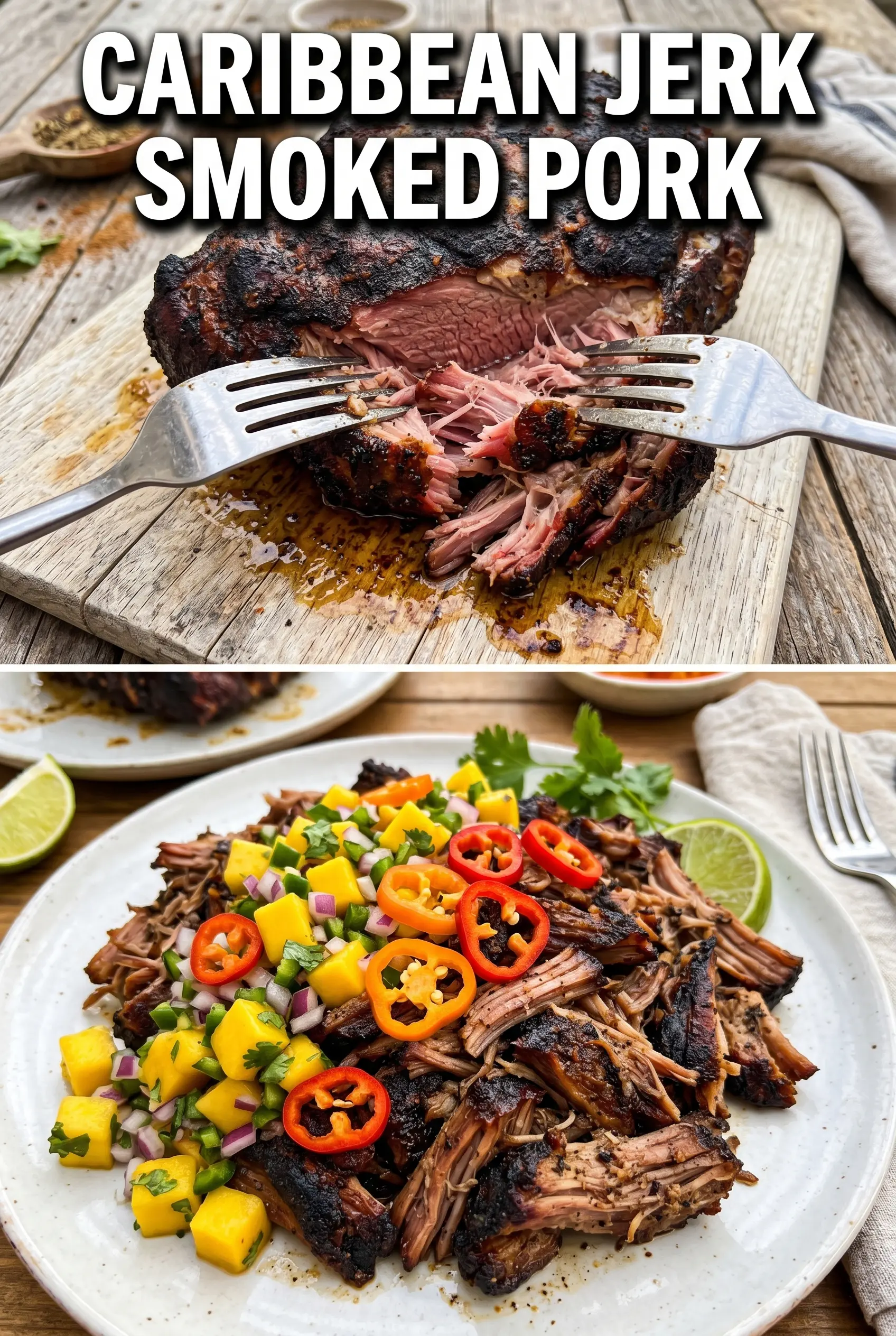
The pork picked up an incredible smoke ring and the bark stayed dark and spicy without getting bitter. I let it rest before pulling, and the juices soaked right back in.
Save this Caribbean Jerk Smoked Pork for the days when you want a smoke-kissed crust, tender pulled meat, and big island heat.
The Overnight Marinade Is Doing More Than Adding Heat
Jerk pork can go wrong when all the flavor stays on the outside. The marinade here is built to get into the meat before the smoke even starts working. Scoring the shoulder gives the paste somewhere to settle, and the overnight rest lets the lime, salt from the soy sauce, and aromatics penetrate far enough that the pork tastes seasoned all the way through, not just bark-deep.
The other trap is rushing the smoke. Pork shoulder needs time for the collagen to break down, and that usually happens after the stall, not before it. If the bark looks perfect but the meat still resists a fork, keep going until the internal temperature lands in the 195-203°F range and the probe slides in with little resistance.
What the Jerk Paste Is Actually Bringing to the Pork

- Pork shoulder — This cut is built for long smoke. The fat and connective tissue keep the meat juicy as it cooks, and that’s what gives you shreddable pork instead of dry slices. Don’t swap in pork loin unless you want a leaner, much less forgiving result.
- Scotch bonnet peppers — They bring the signature jerk heat and fruitiness. Seed them if you want the spice level a little more manageable, but don’t replace them with plain hot sauce unless you’re fine losing the bright, distinct pepper flavor.
- Fresh thyme and allspice — These are the backbone of the seasoning. Dried thyme can work in a pinch, but allspice should stay in the mix because it’s what makes the pork taste like jerk instead of just “spiced.”
- Lime juice and soy sauce — Lime wakes up the pork and balances the sugar, while soy sauce adds salt and depth. Tamari works if you need a gluten-free swap, and it keeps the marinade just as savory.
- Brown sugar — This helps build the bark and smooths out the heat. Use dark brown sugar if you want a deeper molasses note; light brown sugar gives a cleaner, slightly brighter finish.
How to Get a Dark Bark and Tender Pull Without Drying It Out
Blending the Marinade
Blend everything until the peppers, onions, and garlic disappear into a thick paste. If it still looks chunky, the seasoning won’t coat the shoulder evenly and you’ll get hot spots instead of a balanced crust. You want something that clings, not a thin sauce that runs off the meat. A food processor works too, but stop and scrape down the sides so the thyme and spices don’t hide at the bottom.
Scoring and Marinating the Shoulder
Cut shallow slashes across the fat cap and along the thickest parts of the pork. That gives the marinade more surface area to grip and helps the seasoning work deeper into the meat. Rub it in with your hands and push some into the cuts so you can see the paste tucked into the score marks. Cover the pork and chill it overnight; a few hours is better than nothing, but it won’t give you the same depth.
Smoking Low and Slow
Set the smoker to 225-250°F and use fruit wood for a softer smoke that plays nicely with the jerk spices. Put the pork in once the smoker is steady, not while it’s still climbing, or the bark can turn harsh before the meat has time to cook through. Plan on 6 to 8 hours, but go by temperature and tenderness, not the clock. If the outside is dark early, that’s fine; if it’s getting too dark too fast, lower the heat a little and keep the lid closed.
Resting Before You Pull
Let the pork rest for 30 minutes after it comes off the smoker. This is where a lot of people lose the juices they worked all day for. The fibers relax, the rendered fat settles back in, and the meat pulls apart with less effort. If you shred it the second it leaves the smoker, the juices run straight to the cutting board.
Make It Less Spicy Without Losing Jerk Flavor
Use one seeded scotch bonnet instead of four, then keep the thyme, allspice, garlic, and lime exactly as written. The pork will still taste like jerk, but the heat will sit in the background instead of taking over. If you leave out the pepper entirely, the dish loses its signature edge.
Gluten-Free Swaps That Keep the Marinade Strong
Swap the soy sauce for tamari or coconut aminos. Tamari keeps the same savory depth with the cleanest flavor match, while coconut aminos tastes a little sweeter and softer. Either one works; just keep the lime and brown sugar balanced so the marinade doesn’t turn flat.
Using Pork Butt or a Larger Shoulder
Pork butt and pork shoulder cook almost the same way, so this recipe handles either one. If your cut is closer to 8 pounds, expect the smoke time to lean toward the longer end and don’t pull it early just because the bark looks done. Tenderness at 195-203°F is the target, not a fixed number of hours.
Storage and Reheating
- Refrigerator: Keep leftovers in an airtight container for up to 4 days. The bark softens a bit, but the flavor stays bold.
- Freezer: Pulled jerk pork freezes well for up to 3 months. Portion it into freezer bags with a little of the juices so it reheats moist instead of stringy.
- Reheating: Warm it covered in a low oven or in a skillet with a splash of water or broth until just hot. High heat dries out smoked pork fast and turns the edges tough before the center is warm.
Questions I Get Asked About This Recipe
Caribbean Jerk Smoked Pork
Ingredients
Equipment
Method
- Blend green onions, scotch bonnet peppers, garlic, fresh thyme, brown sugar, allspice, black pepper, cinnamon, nutmeg, soy sauce, lime juice, and vegetable oil until smooth, scraping down as needed for an even paste.
- Score the pork shoulder with shallow cuts, then rub jerk marinade all over and into every cut for full spice coverage (wear gloves if desired for heat control).
- Place the pork in a covered container and marinate overnight in the refrigerator so the seasonings penetrate deeply.
- Prepare the smoker to 225-250°F using fruit wood and allow the temperature to stabilize before adding the pork.
- Smoke the marinated pork shoulder for 6-8 hours until the internal temperature reaches 195-203°F, looking for a dark, charred spice bark and a smoky, pull-apart texture.
- Rest the smoked pork for 30 minutes so the juices settle, keeping it loosely tented to hold warmth without steaming the bark.
- Pull the pork and serve while hot, aiming for visible spice crust and a pronounced smoke ring around the edges.