Grilled chicken gets a lot more interesting when each cut is treated the way it actually cooks best. A juicy thigh, a quick-cooking breast, and a drumstick with enough time over the fire all want different attention, and that’s where a collection like this earns its place. The payoff is chicken with char, smoke, and a real range of textures instead of one bland, overcooked result after another.
The key is matching the marinade, heat, and timing to the cut. Acid brightens without flattening the meat when it’s used in balance, sugar helps build color, and oil carries herbs and spices across the surface so the grill can do its job. If you’ve ever had chicken that looked done before it tasted done, the issue was usually heat control or skipping the rest time, not the recipe itself.
Below you’ll find the details that matter most: how to keep different cuts juicy, which flavors hold up on the grill, and how to mix and match without ending up with a muddled plate.
I tried two of the marinades from this collection on thighs and breasts, and the difference in grill time was spot on. The thighs stayed juicy with great char, and the citrus-herb version on the breasts never dried out.
Save this grilled chicken collection for the nights when you want smoky char, juicy meat, and a marinade that matches the cut.
The Cut Matters More Than the Marinade
Grilled chicken fails most often because every piece is treated like it cooks the same way. Breasts dry out fast over high heat, thighs stay forgiving and benefit from a little more char, and drumsticks need time for the meat near the bone to finish without burning the skin. The marinade helps, but it can’t fix a heat mismatch.
The other thing that trips people up is overcrowding the grill. If the pieces sit too close together, they steam instead of sear, and you lose the crisp edges that make grilled chicken worth eating. Give each piece space and let it sit undisturbed long enough to pick up color before turning.
- Chicken breasts — Best when pounded to an even thickness so the thinner end doesn’t dry out before the center cooks through.
- Chicken thighs — The most forgiving cut in the collection. They stay juicy even when cooked to a deeper char.
- Chicken drumsticks — Need lower, steadier heat or an indirect finish so the outside doesn’t scorch before the meat is done near the bone.
- Marinades and rubs — Acid, salt, and oil do different jobs. Acid brightens, salt seasons through, and oil carries the herbs and spices across the surface for better browning.
What Each Ingredient Is Actually Doing on the Grill
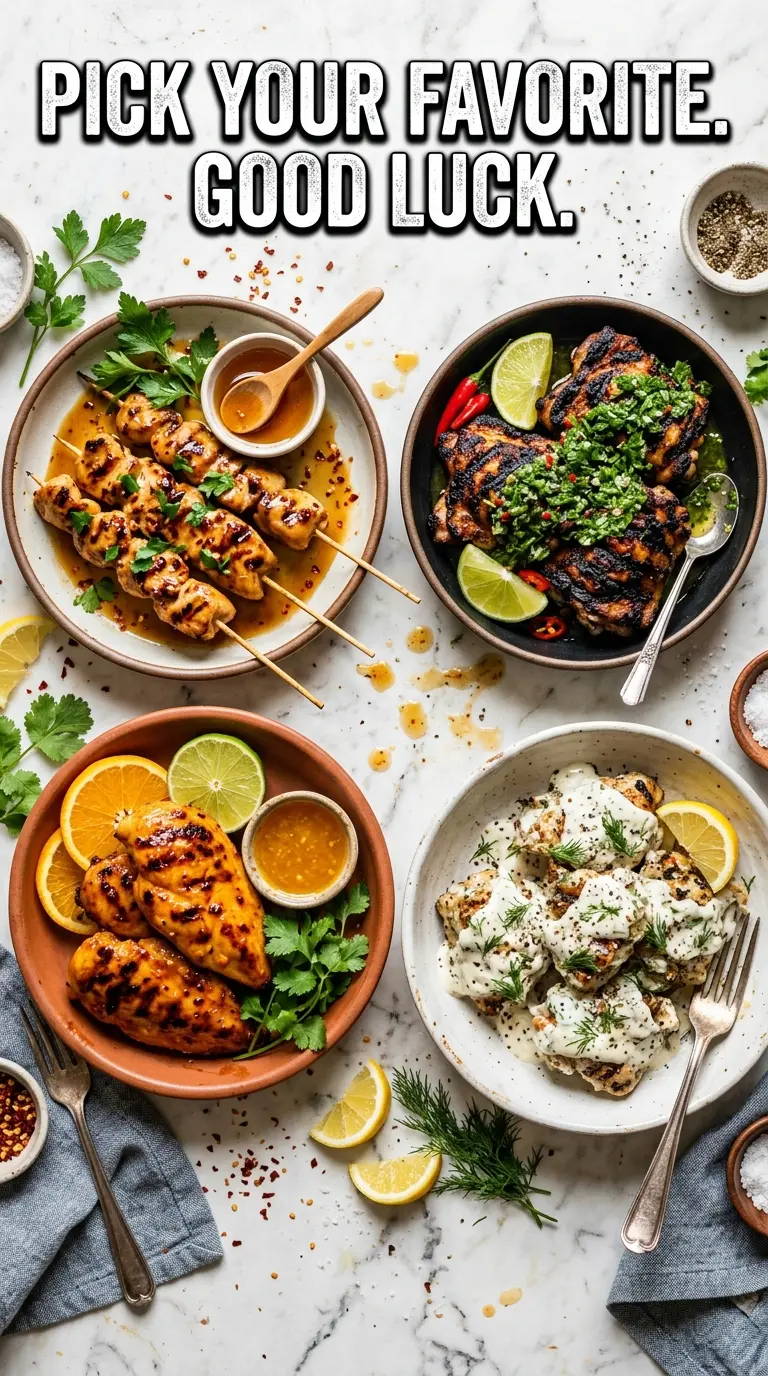
Chicken cuts — Different cuts change the whole experience. Breasts give you a leaner, quicker-cooking option, while thighs and drumsticks hold up better to bold seasoning and longer grill time. If you only have one cut, use the marinade that suits its cooking speed instead of forcing the whole collection to behave the same way.
Fresh herbs and citrus — Herbs bring brightness after the smoke hits the meat, and citrus keeps richer marinades from tasting heavy. Use zest when you want more aroma without adding too much liquid, because too much juice can make the surface wet and slow down browning.
Vegetables for grilling — They turn the meal into something complete and also give you an easy way to use the same grill heat. Slice them thick enough to stay intact, and oil them lightly so they char instead of sticking.
Serving sauces and accompaniments — A sauce works best when it echoes the marinade instead of competing with it. Keep the flavor simple if the chicken is already heavily seasoned; that balance is what makes the plate taste intentional.
Building the Flavor Around the Fire
Choosing the Right Marinade or Rub
Start by deciding what the cut needs, not just what sounds good. A quick citrus marinade works well for breasts because it adds flavor without requiring a long soak, while thighs can handle deeper seasoning and a longer rest. If the seasoning is sweet, keep an eye on flare-ups, because sugar browns fast and can burn before the center is done.
Preheating and Setting the Heat Zones
Get the grill hot enough to sear, then create a cooler zone for thicker pieces or anything that needs longer cooking. Direct heat gives you the char, but indirect heat finishes the meat without blackening the outside. If the grill grates aren’t hot before the chicken goes on, the surface can stick and tear instead of releasing cleanly.
Grilling by Cut, Not by Guesswork
Breasts usually need the shortest time and should come off as soon as they’re just cooked through and still juicy at the center. Thighs can take more color and still stay tender, and drumsticks need enough time for the juices near the bone to run clear. If you rely on color alone, you’ll miss the difference between browned skin and properly cooked meat, so use both timing and texture as your cues.
Resting Before You Slice
Let the chicken rest after it comes off the grill so the juices settle back into the meat instead of running onto the cutting board. This matters most for breasts, which lose their tenderness quickly if sliced too early. A short rest gives you cleaner slices and a moister bite.
How to Adapt This Collection for the Chicken You Have
Dairy-Free Grilled Chicken Options
Skip any yogurt- or butter-based marinade and lean on oil, citrus, herbs, garlic, and spices instead. You’ll lose a little creamy cling, but you gain a cleaner char and a marinade that handles high heat better.
Gluten-Free Flavor Swaps
Most grilled chicken builds are naturally gluten-free, but watch bottled sauces and spice blends for soy sauce, malt vinegar, or thickeners. Use tamari or coconut aminos if you want that savory depth without the gluten, and keep the seasoning simple if the sauce already brings salt.
Turning One Batch Into Three Different Meals
Use one plain grilled batch and finish it three ways: citrus-herb with grilled vegetables, smoky-spiced with a cooling sauce, or garlic-forward with a simple salad and rice. That approach saves time and keeps the meal varied without making three separate marinades from scratch.
Storage and Reheating
- Refrigerator: Store grilled chicken in an airtight container for up to 4 days. Breasts dry out a little faster than thighs, so slice them only when you’re ready to serve.
- Freezer: It freezes well for up to 2 months, especially if the chicken is sliced or portioned before freezing. Wrap it tightly so the grill flavor doesn’t pick up freezer odors.
- Reheating: Warm it gently in a covered skillet with a splash of water or broth, or reheat low and slow in the oven. High heat toughens the meat and wipes out the juiciness you worked for on the grill.
Questions I Get Asked About This Recipe Collection

Creative Grilled Chicken Recipes Collection
Ingredients
Equipment
Method
- Pick your preferred marinade or rub from the chicken collection, then set your chosen chicken cut aside so it can be coated evenly.
- If your selected recipe uses herbs or citrus, mix them into your marinade or rub so the flavor is distributed before it touches the chicken.
- Coat the chicken thoroughly with the selected marinade or press on the dry rub so all surfaces are covered.
- Marinate in the refrigerator for 30 minutes to overnight, until the chicken looks more opaque and absorbs the flavor.
- Preheat your grill to the appropriate temperature for your chosen recipe, aiming for a steady heat before the chicken goes on.
- Grill the chicken according to the cut and recipe timing, turning or rotating as needed so grill marks develop and the outside browns.
- Rest the grilled chicken before serving so juices redistribute; it should look slightly relaxed and glossy instead of tight and dry.
- Serve with the suggested accompaniments and your chosen sauce, then mix and match flavors from the collection for your perfect grilled chicken meal.