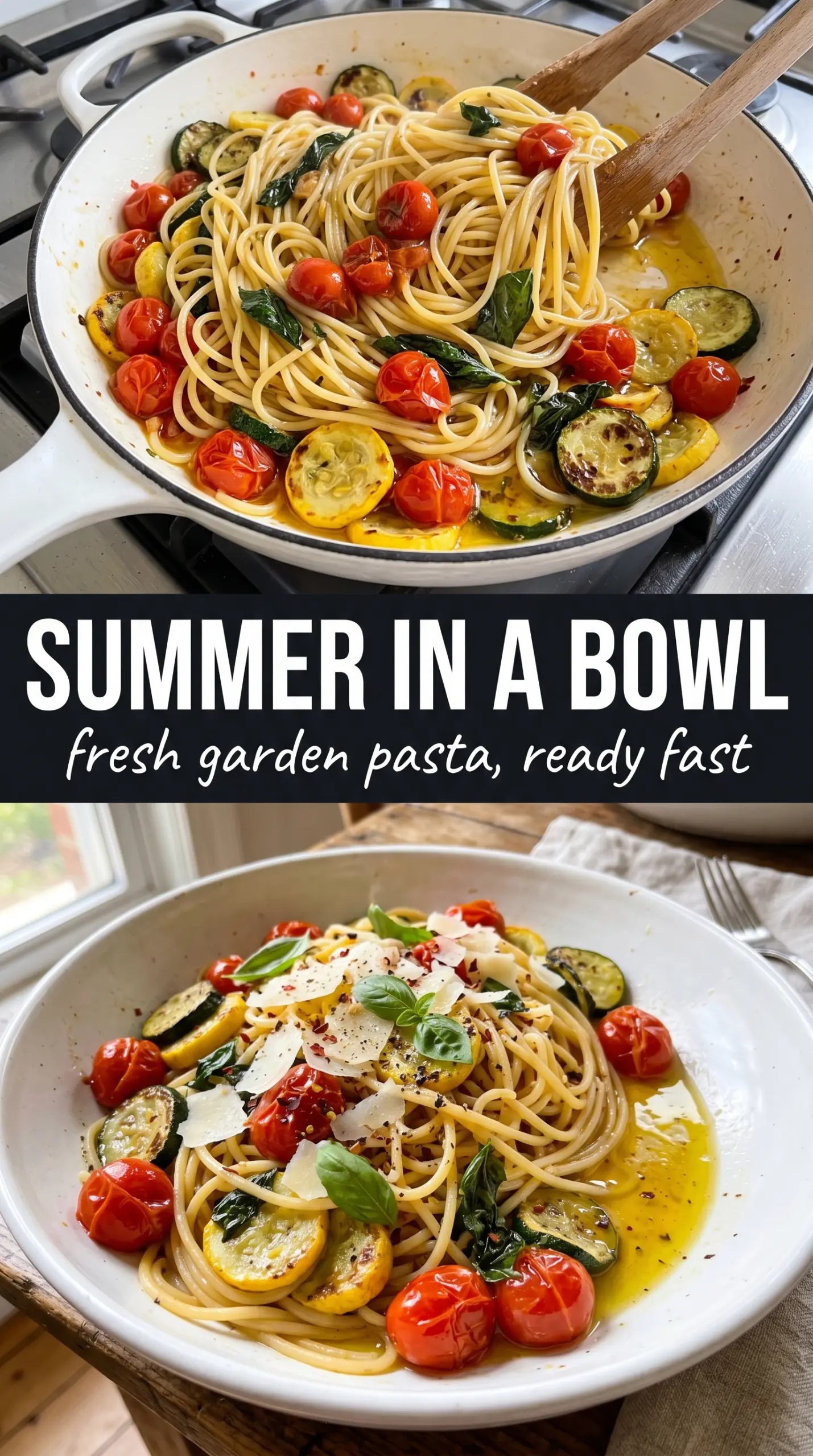
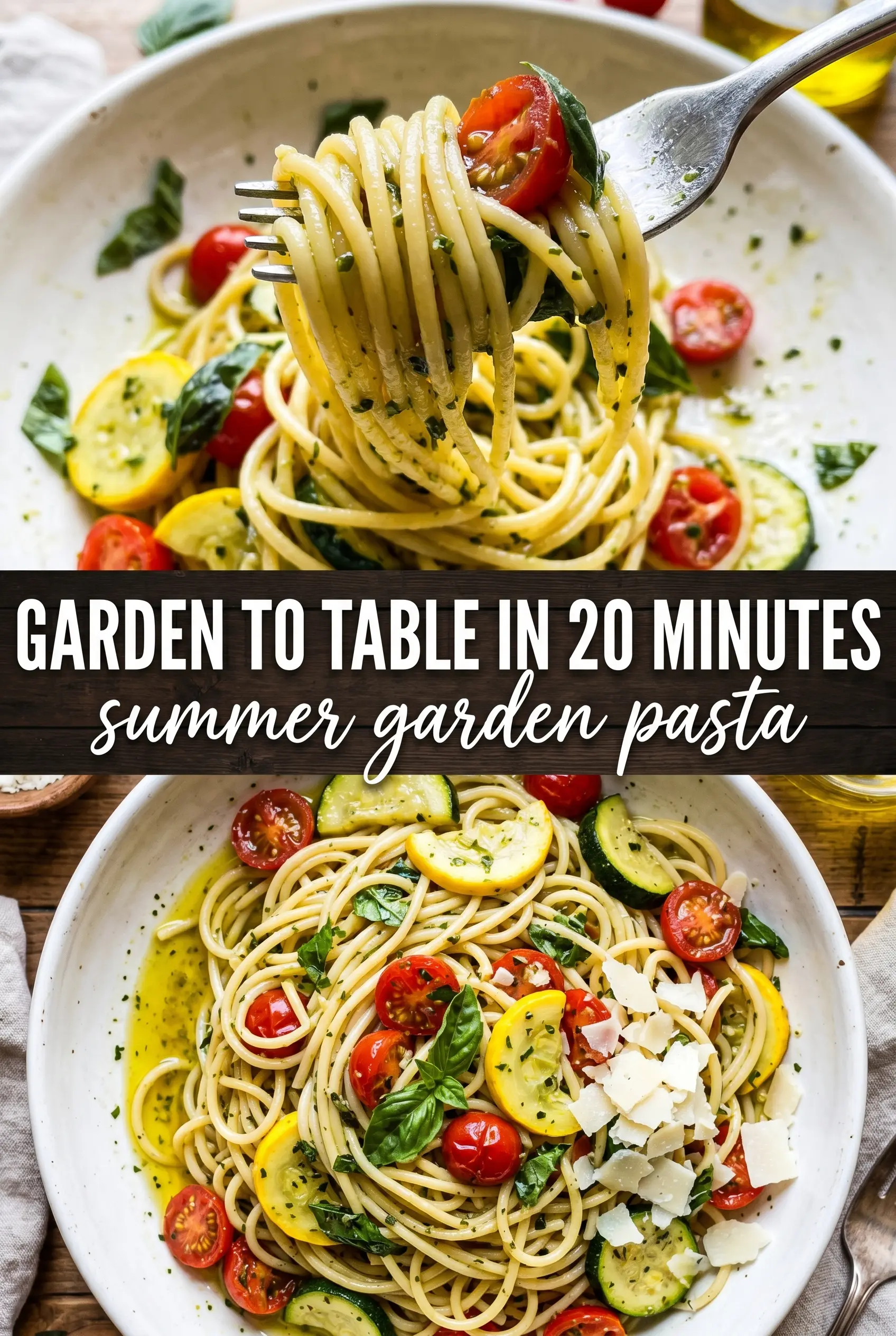
Spaghetti tangled with caramelized zucchini, burst cherry tomatoes, sweet corn, and basil tastes like the best kind of pantry dinner: light enough to keep eating, but still full of the kind of flavor that makes you go back for another forkful. The vegetables don’t just sit on top here. They cook down into the pasta water and olive oil, turning into a glossy sauce that clings to every strand.
The trick is giving the zucchini enough time to take on color before the tomatoes go in. That first bit of browning adds depth, and once the tomatoes burst, they bring just enough juice to help the pan come together without turning soupy. Lemon at the end keeps everything bright, and the shaved Parmesan melts just enough from the heat of the pasta to give the dish a salty finish without weighing it down.
Below, I’ve included the small details that make this pasta work on a weeknight, plus a few smart swaps if your produce drawer looks a little different from mine.
The zucchini actually browned instead of turning watery, and the lemon at the end made the whole bowl taste fresh instead of heavy. I used frozen corn and it still came out perfect.
Save this summer garden pasta for the nights when zucchini, tomatoes, and basil are at their best and dinner needs to stay light.
The Zucchini Has to Brown Before the Tomatoes Go In
The biggest mistake with a vegetable pasta like this is rushing the skillet. Zucchini gives off a lot of moisture, and if you add the tomatoes too early, everything steams in its own liquid and you lose the sweet, browned edges that make the dish taste like more than boiled vegetables tossed with noodles. Give the zucchini a real 4 to 5 minutes in the pan and leave it alone long enough to color on the cut sides.
Once the tomatoes and corn hit the skillet, the heat should stay high enough to burst the tomatoes and reduce their juices quickly. That keeps the sauce loose and glossy instead of thin and watery. You’re looking for vegetables that look tender and a little jammy at the edges, not collapsed into a puddle.
What Each Ingredient Is Actually Doing in This Recipe
- Primary ingredient (the star) — Quality matters most. Choose the best you can find.
- Cooking medium (oil, butter, or broth) — This carries flavors and prevents dryness.
- Seasonings (salt, pepper, spices, herbs) — Layer flavors so nothing overpowers. Build depth gradually.
- Aromatics (garlic, onion, herbs) — Cook with fat to bloom flavors. Become the foundation.
- Supporting ingredients — Complement the main ingredient without overpowering it.
- Sauce or liquid (if applicable) — Brings flavors together. Balance richness with acid.
- Acid (lemon, vinegar, wine, or other) — Brightens and prevents flat-tasting results.
- Final finish (garnish, glaze, or sauce) — Prevents one-dimensional taste and adds visual appeal.
What the Parmesan, Lemon, and Pasta Water Are Each Doing Here
- Spaghetti or linguine — Long pasta works best because it catches the olive oil and vegetable bits without getting lost in the pan. If you only have short pasta, use it, but the sauce will cling a little differently.
- Olive oil — This is the body of the sauce, so use one that tastes good on its own. A standard cooking olive oil is fine, but if you have a peppery extra-virgin bottle you like, it gives the whole dish a cleaner finish.
- Garlic — Thin slices are better than minced here because they soften and perfume the oil without disappearing or burning as fast. If you swap in minced garlic, watch it closely; it goes from fragrant to bitter in seconds.
- Corn — Fresh corn brings the sweetest bite, but frozen corn works well and saves time. No need to thaw it first; just let the skillet heat pull the moisture off before the pasta goes in.
- Lemon juice and zest — These are not optional garnish. The juice wakes up the vegetables, and the zest adds the bright top note that keeps the pasta from tasting flat once the Parmesan goes in.
- Reserved pasta water — This is what turns oil and vegetable juices into a sauce that coats instead of slides off. Add it a splash at a time; too much at once will dilute the flavor and make the pan soupy.
Building a Glossy Sauce in the Skillet, Not a Pile of Sautéed Vegetables
Start the Pasta Water First
Get the pasta water boiling before you even turn to the skillet. The vegetables move fast once they start cooking, and you want the pasta ready to go directly into the pan while everything is still hot. Salt the water well enough that it tastes seasoned; underseasoned pasta makes the whole dish taste dull no matter how good the vegetables are.
Wake Up the Garlic in the Oil
Heat the olive oil over medium-high, then add the garlic and stir for about 30 seconds, just until it smells sweet and sharp. If the garlic starts browning hard before the zucchini goes in, the heat is too high and the oil will taste harsh. Pale golden is the goal. Not brown, not dark, not crisp.
Cook the Zucchini Until It Starts to Take Color
Add the diced zucchini in a single layer as much as the pan allows and let it sit long enough to sear before stirring. You’re looking for spots of gold and a little tenderness around the edges. If the pan is crowded, the zucchini will steam instead of caramelize, so use a large skillet and don’t pile it up.
Let the Tomatoes Burst Before You Add the Pasta
When the cherry tomatoes go in, keep cooking until several of them split and collapse. That released juice mixes with the olive oil and garlic, creating the base of the sauce. The corn should stay crisp-tender, not soft; if you overcook it, the sweetness gets muddled and the whole dish loses contrast.
Toss, Loosen, Finish
Add the drained pasta straight into the skillet and toss with the vegetables. Drizzle in pasta water a splash at a time until the sauce looks glossy and clings lightly to the noodles. Pull the pan off the heat before adding the lemon juice, zest, Parmesan, and basil so the herbs stay fresh and the cheese melts into silky shavings instead of clumping.
How to Adapt Summer Garden Pasta When Your Produce Drawer Changes
Make It Dairy-Free
Skip the Parmesan and finish with an extra drizzle of good olive oil plus a pinch more salt. You’ll lose the salty, savory edge of the cheese, but the lemon, garlic, and browned vegetables still carry the dish cleanly.
Make It Gluten-Free
Use your favorite gluten-free spaghetti or linguine and cook it just to al dente, because GF pasta softens fast once it hits the hot skillet. Keep some pasta water back, since that starch helps the sauce cling just like it does with wheat pasta.
Swap the Corn for Another Vegetable
If corn isn’t in season, use thinly sliced asparagus, small broccoli florets, or chopped snap peas. Each one changes the texture a little, but the same timing works as long as you add the sturdier vegetables early enough to pick up color.
Add Protein Without Weighing It Down
Toss in cooked shrimp, shredded rotisserie chicken, or white beans at the very end just long enough to warm through. Keep the protein simple so it doesn’t crowd out the vegetables; this pasta works because the produce stays front and center.
Storage and Reheating
- Refrigerator: Store leftovers in an airtight container for up to 3 days. The pasta will absorb some of the sauce, so it won’t look as glossy the next day.
- Freezer: Freezing isn’t ideal for this dish. The zucchini and tomatoes soften too much after thawing, and the pasta loses its best texture.
- Reheating: Warm it gently in a skillet over low heat with a splash of water or olive oil. The common mistake is blasting it in the microwave until the pasta gets sticky and the vegetables turn mushy.
Questions I Get Asked About This Recipe
Summer Garden Pasta
Ingredients
Equipment
Method
- Bring a large pot of well-salted water to a boil, then cook the spaghetti or linguine until al dente, about 8-10 minutes. Reserve 1 cup pasta water before draining.
- Heat the olive oil in a large skillet over medium-high heat until shimmering. Add the thinly sliced garlic and cook for 30 seconds until fragrant, stirring constantly.
- Add the diced zucchini and cook for 4-5 minutes, stirring occasionally, until golden. Spread in an even layer to help the edges brown.
- Add the halved cherry tomatoes and corn kernels, then cook for 3-4 minutes until the tomatoes burst and the mixture looks glossy. Keep heat at medium-high so the vegetables release juices quickly.
- Season with red pepper flakes, salt, and black pepper, then add the cooked pasta directly to the skillet. Toss to coat the noodles in the vegetable juices.
- Add reserved pasta water a splash at a time, tossing continuously, until a light sauce forms and clings to the spaghetti. Aim for a silky sheen rather than pooling.
- Stir in the fresh lemon juice and lemon zest, then toss once more to brighten the flavor. Cook just long enough to evenly distribute the lemon.
- Remove the skillet from heat, then scatter shaved Parmesan and torn fresh basil over the top. Serve immediately so the vegetables stay vibrant and the Parmesan begins to soften.