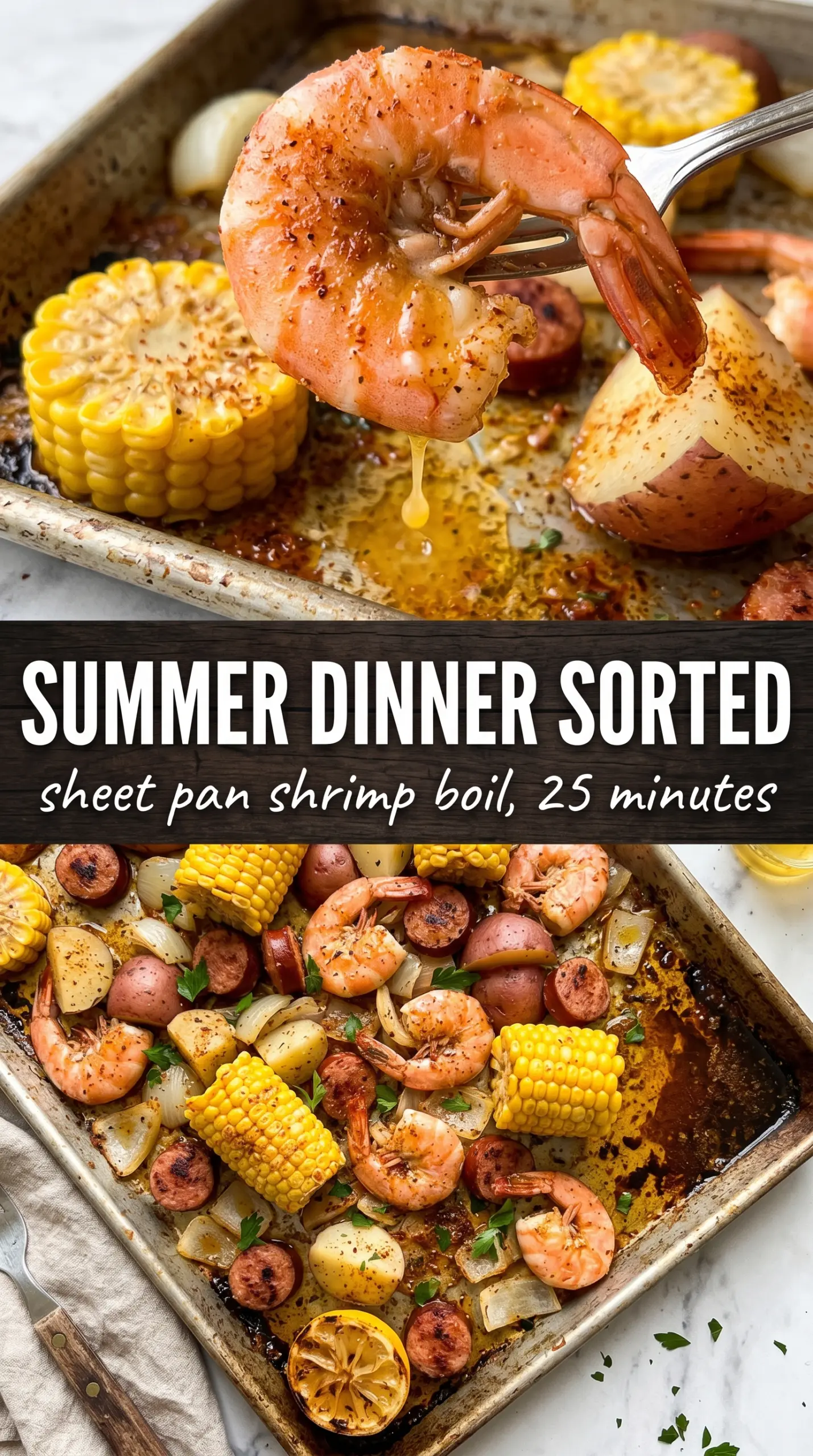
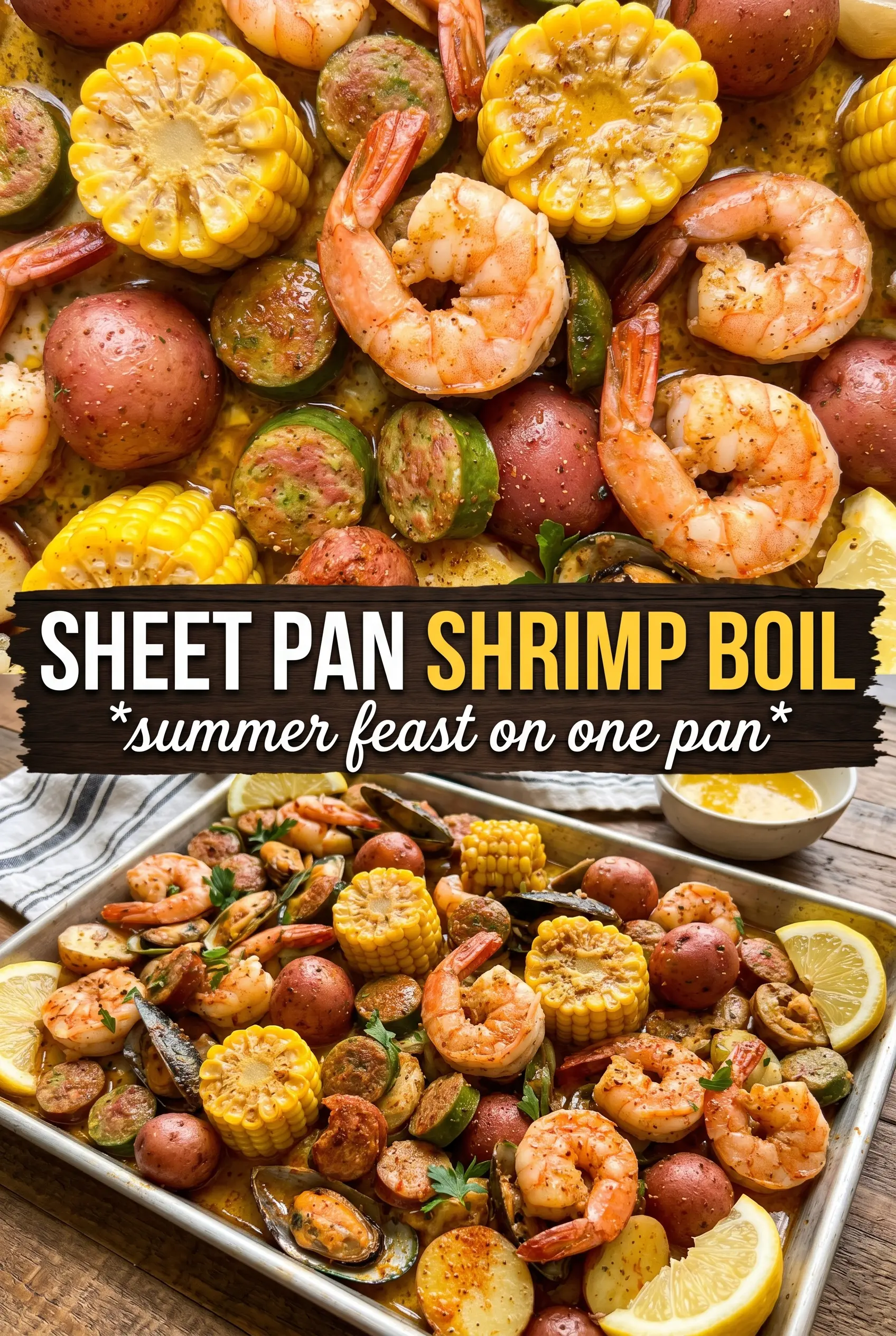
All the best parts of a shrimp boil show up here with a little more control and a lot less mess. The shrimp stay plump, the sausage edges brown instead of getting lost in a pot, and the potatoes pick up that seasoned butter in the oven where they can actually caramelize. You still get the classic corn, lemon, and Old Bay combination, just in a form that fits a weeknight instead of a full production.
The trick is giving the potatoes a head start. They need more time than the shrimp, and if everything goes in at once, the shrimp are overcooked before the potatoes are tender. I also like tossing the shrimp with melted butter and spices separately so the seasoning clings instead of sliding off onto the pan. That little extra step makes the finished sheet pan taste rich, not watery.
Below, I’ve broken down the timing that keeps the shrimp tender, the swap that helps if you need to change the sausage, and the reheating method that keeps leftovers from turning rubbery.
The potatoes had time to get tender before the shrimp went in, and the sausage got those browned edges I never get in a pot. The lemon at the end made the whole pan taste bright instead of heavy.
Love the browned sausage, juicy shrimp, and buttery Old Bay potatoes in this sheet pan shrimp boil? Save it to Pinterest for an easy seafood dinner with almost no cleanup.
The Reason the Shrimp Goes in Last
The biggest mistake in a sheet pan shrimp boil is treating every ingredient like it wants the same amount of heat. It doesn’t. Potatoes need time to soften all the way through, corn needs enough heat to sweeten and char, and shrimp need only a short blast before they turn from tender to tough. Staggering the additions gives each ingredient the time it actually needs instead of forcing the whole pan to finish at the same pace.
Roasting also works in your favor because the dry heat concentrates flavor. The sausage renders a little fat, the corn picks up blistered spots, and the buttered shrimp finish in the seasoned steam that builds on the hot pan. If you crowd the baking sheet too much, though, the vegetables and sausage will steam instead of brown, so use a large rimmed sheet and give everything some breathing room.
What the Old Bay Butter Is Doing Here
- Old Bay seasoning — This is the backbone of the whole dish. It brings salt, spice, celery notes, and a little heat in one shot, which is why it tastes like a shrimp boil instead of just roasted seafood and vegetables. If you swap it, you’ll need to build that same layered seasoning yourself.
- Butter and olive oil — Butter gives the shrimp a rich finish, while olive oil helps the potatoes and corn roast without burning. I wouldn’t replace both with butter alone, because the pan can brown too fast before the potatoes are tender. If you need a dairy-free version, use all olive oil and add a touch more lemon at the end for balance.
- Andouille sausage — Smoked andouille adds the savory, peppery edge that makes the pan taste full and satisfying. Kielbasa works if that’s what you have, but it’s milder and less spicy, so the final dish will taste softer. Slice it into rounds so the edges can brown.
- Baby potatoes — Small potatoes hold their shape and finish in the oven without falling apart. Halving them creates more cut surface, which means more browning and better seasoning pickup. Larger chunks take longer and can throw off the timing.
- Shrimp — Large shrimp are worth using because they stay juicy during the short finish in the oven. Smaller shrimp can overcook fast and curl into little rings before the rest of the pan is ready. If you use frozen shrimp, thaw them fully and pat them dry so the butter sticks.
How to Keep the Pan Moving at the Right Pace
Roasting the Potatoes First
Start with the potatoes alone so they can get a jump on the clock. Toss them with oil and seasoning, spread them cut-side down if you can, and roast until the edges start to take on color and a fork slides in with some resistance. If they go in underdone, the shrimp will be finished before the centers soften, and you’ll end up with two very different textures on one pan.
Adding the Corn and Sausage
Once the potatoes have some color, push them outward and add the corn and sausage. The sausage should sizzle as it hits the pan, and the corn should start to pick up a few browned spots before the shrimp ever show up. If your pan looks crowded, split it between two sheets; this dish depends on roasting, not steaming.
Finishing With the Shrimp
Toss the shrimp with melted butter, garlic, garlic powder, smoked paprika, and the rest of the seasoning before they go on the pan. They need that coating because they only roast for a few minutes, and dry shrimp turn bland fast. Pull the pan as soon as the shrimp are pink, opaque, and curled into a loose C shape. If they’re curled into tight O shapes, they’ve gone too far.
Serving It Straight From the Sheet Pan
Finish with lemon wedges and parsley right at the table. The lemon wakes up the butter and cuts through the sausage, and the parsley keeps the whole pan from tasting heavy. Serve it hot, right off the baking sheet, while the potatoes are still creamy and the shrimp still have their snap.
How to Adapt This for a Different Table
Make It Dairy-Free
Swap the butter for more olive oil and finish with an extra squeeze of lemon. You’ll lose a little richness, but the shrimp still pick up plenty of flavor from the garlic, paprika, and Old Bay.
Use Kielbasa Instead of Andouille
Kielbasa gives you smoke and savoriness without as much heat. The dish will taste milder and a little rounder, so if you like spice, add a pinch of cayenne or a little extra black pepper to the potatoes.
Make It Gluten-Free
This recipe is naturally gluten-free as written, but check your sausage and seasoning blend to confirm there are no fillers. The rest of the pan is built from shrimp, vegetables, oil, butter, and spices.
Add More Heat
A pinch of cayenne or red pepper flakes in the shrimp butter gives the whole pan more bite without changing the structure of the recipe. Add it sparingly, since the sausage and Old Bay already bring their own seasoning.
Storage and Reheating
- Refrigerator: Store leftovers in an airtight container for up to 3 days. The shrimp will lose a little tenderness, but the potatoes and sausage hold up well.
- Freezer: Freezing isn’t ideal once the shrimp are cooked; they turn soft after thawing. If you want to freeze something, freeze only the cooked sausage and potatoes, then add fresh shrimp when you reheat.
- Reheating: Warm leftovers in a 325°F oven until just heated through. Don’t blast them in the microwave for long stretches, or the shrimp will turn rubbery while the potatoes dry out.
Questions I Get Asked About This Recipe
Sheet Pan Shrimp Boil
Ingredients
Equipment
Method
- Preheat oven to 400°F and line a large rimmed baking sheet with foil for easy cleanup.
- Toss baby potatoes with 2 tablespoons olive oil, 1 tablespoon Old Bay seasoning, salt, and pepper, then roast on the sheet pan for 15 minutes until starting to brown.
- Push potatoes to the edges, then add corn and sausage to the center.
- Drizzle with the remaining 2 tablespoons olive oil and Old Bay seasoning, then roast another 8 minutes until sausage is browning and corn looks charred.
- Toss shrimp with melted butter, minced garlic, garlic powder, smoked paprika, and the remaining Old Bay seasoning until evenly coated.
- Add shrimp to the pan and roast for 8-10 minutes at 400°F until shrimp are pink and curled and the pan contents look caramelized.
- Garnish with lemon wedges and fresh parsley, then serve directly from the sheet pan.