Pizza Pasta Salad brings all the best parts of a pepperoni pizza into one cold, scoopable side dish. The rotini catches the dressing in every twist, the mozzarella stays pleasantly firm instead of melting away, and the pepperoni gives each bite that salty, familiar pizza-shop bite people keep going back for. It lands somewhere between picnic salad and game-day snack, which is exactly why it disappears fast.
The trick is keeping the pasta cold before anything else goes in. Rinsed pasta stops cooking, cools quickly, and gives the dressing a chance to cling instead of soaking straight through. A good Italian dressing does most of the heavy lifting here, but the Parmesan, garlic powder, and Italian seasoning round out the flavor so it tastes like a finished dish instead of plain pasta tossed with toppings.
Below, I’m sharing the little details that keep this salad from turning gummy after chilling, plus a few easy ways to adjust it for different crowds and diets.
The pasta stayed nicely firm after chilling, and the dressing soaked into the rotini just enough without making it soggy. My kids picked out the pepperoni first, which tells me this one’s a keeper.
Save this Pizza Pasta Salad for potlucks, cookouts, and the nights you want pizza toppings without turning on the oven twice.
The Pasta Has to Cool Before the Dressing Goes In
Warm pasta drinks up dressing fast, which sounds harmless until you end up with a bowl that tastes flat and greasy by the time it hits the table. Rinsing the rotini under cold water stops the cooking and pulls off excess starch, which helps the dressing cling in a light coating instead of turning the whole bowl heavy. This is the difference between a pasta salad that stays lively and one that clumps together after an hour in the fridge.
- Rotini — The spirals trap bits of pepperoni, cheese, and seasoning in every forkful. Any short pasta with ridges will work, but smooth shapes don’t hold the dressing as well.
- Italian dressing — Use a good bottled version here if that’s what you have. It brings the acid and oil balance this salad needs, and a homemade version works too if it’s well-emulsified.
- Mozzarella cubes — Cubes hold their shape better than shredded cheese, which tends to disappear into the dressing. Fresh mozzarella is softer and creamier, while low-moisture mozzarella gives you a firmer, snackier bite.
- Pepperoni — Halving the slices spreads the flavor through the bowl instead of leaving giant rounds on top. Turkey pepperoni works if you want something lighter, but the finished salad loses a little of that classic pizza flavor.
Building the Bowl So It Tastes Like Pizza, Not Just Pasta
Cooking the Pasta the Right Way
Boil the rotini in well-salted water until it’s just tender with a little bite left in the center. Overcooked pasta softens after chilling and starts to fall apart once the dressing gets involved. Drain it, rinse it cold, and shake off as much water as you can so the dressing doesn’t slide right off.
Layering the Pizza Toppings
Stir the pepperoni, mozzarella, tomatoes, bell pepper, olives, and red onion into the cooled pasta before adding the dressing. That order keeps the mix even, so the heavier ingredients don’t sink to the bottom while you’re tossing. If your onion tastes sharp, dice it smaller or soak it in cold water for 10 minutes first.
Letting the Dressing Soak In
Add the Italian dressing, Parmesan, Italian seasoning, and garlic powder, then toss until every piece looks lightly coated. The salad needs that two-hour chill so the pasta can absorb some flavor and the cheese can firm up again. If it looks a little dry after chilling, add a small splash more dressing and toss again right before serving.
How to Adjust Pizza Pasta Salad for Different Tables
Make it vegetarian
Leave out the pepperoni and add extra olives, diced roasted red peppers, or chopped artichokes for more punch. You’ll lose the salty, meaty bite, so bump up the Parmesan a little and use a dressing with good garlic and herb flavor.
Make it gluten-free
Use a gluten-free rotini that holds its shape after chilling. Cook it just to tender, because gluten-free pasta can go soft faster than wheat pasta once it sits in dressing.
Make it a little lighter
Swap half the mozzarella for extra tomatoes and bell pepper, then use a lighter Italian dressing. The salad still tastes like pizza, but the texture shifts a little fresher and less rich.
Storage and Reheating
- Refrigerator: Keeps well for 3 to 4 days. The pasta softens a little as it sits, but the flavors get better by day two.
- Freezer: Don’t freeze this salad. The pasta turns mushy and the vegetables lose their crunch after thawing.
- Reheating: Serve it cold straight from the fridge. If it has dried out, stir in a spoonful or two of Italian dressing before serving instead of trying to warm it up.
Answers to the Questions Worth Asking
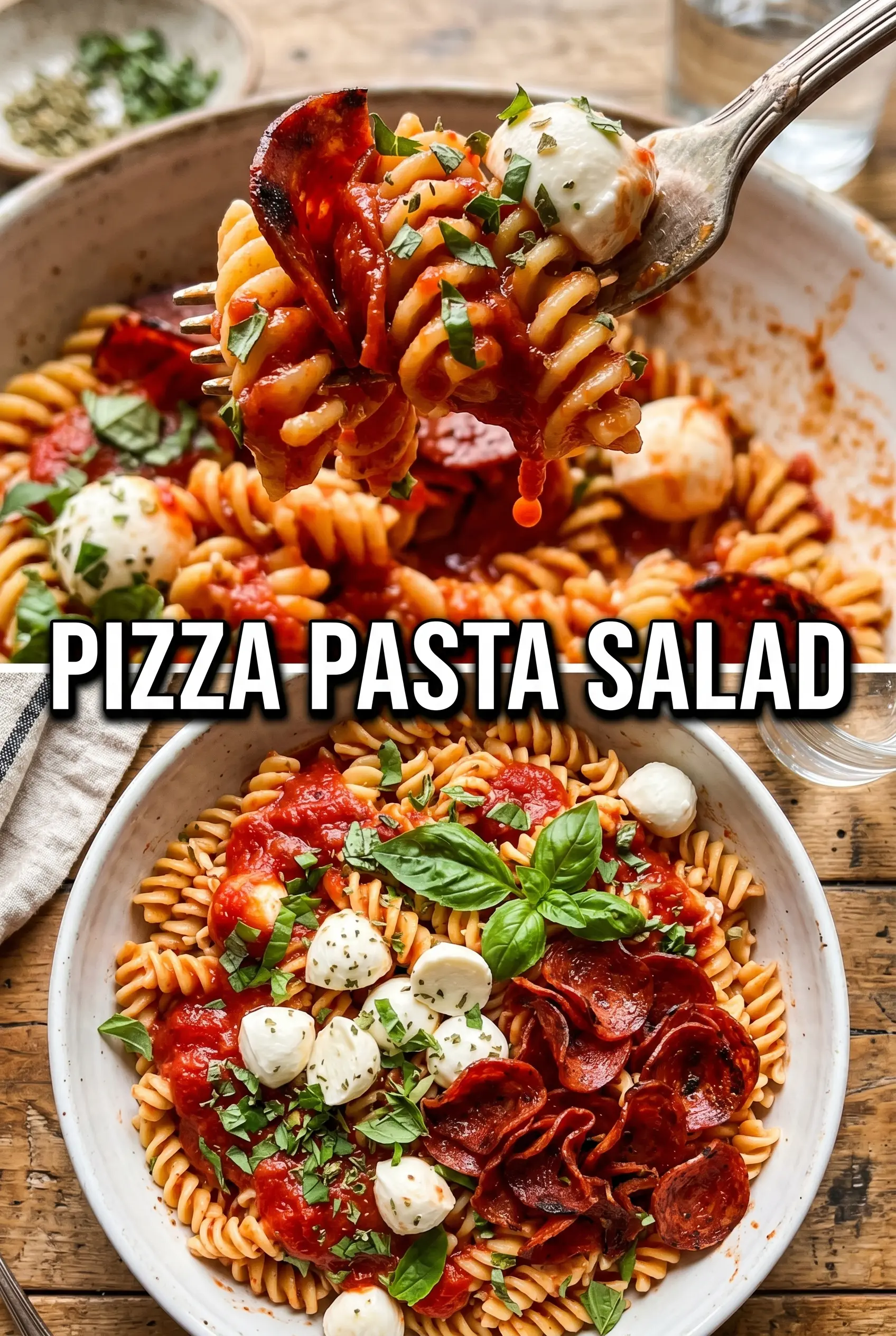
Pizza Pasta Salad
Ingredients
Method
- Cook rotini pasta according to package directions, then drain it and rinse with cold water until cooled. Keep rinsing until the surface stops steaming.
- Combine pasta, pepperoni slices, mozzarella cheese, cherry tomatoes, green bell pepper, black olives, and red onion in a large bowl. Mix to distribute the toppings evenly.
- Add Italian dressing, Parmesan cheese, Italian seasoning, and garlic powder to the bowl. Pour steadily so the seasonings spread through the pasta.
- Toss everything together until well coated, scraping the bottom so no dry pasta remains. Continue until the pasta looks evenly glossy from the dressing.
- Refrigerate the salad for at least 2 hours before serving. Chill until the mixture feels cold throughout.
- Toss again right before serving, then serve chilled. Stir briefly so ingredients stay suspended and evenly distributed.